


Display stands represent one of the most versatile and cost-effective tools in modern marketing and retail environments. Whether you're promoting products at a trade show, guiding visitors through a corporate reception, or showcasing merchandise in a retail setting, the right display solution can dramatically influence customer behaviour and purchasing decisions. As businesses across South Africa seek innovative ways to capture attention in increasingly competitive markets, understanding the strategic deployment of display stands has never been more critical.
Understanding the Strategic Value of Display Solutions
Display stands serve multiple functions beyond simply holding signage or products. They create visual hierarchy, direct foot traffic, and communicate brand identity through physical presence. Research demonstrates that visual presentation significantly affects purchase willingness, with well-designed displays increasing consumer engagement by measurable margins.
The psychology behind effective display placement centres on three core principles:
- Visibility: Ensuring the display occupies sightlines at natural eye levels and decision points
- Accessibility: Positioning stands where customers can comfortably engage without obstruction
- Relevance: Matching display type and content to the immediate environment and audience intent
Businesses that align these principles with their specific objectives consistently report higher conversion rates and improved brand recall. The investment in quality display infrastructure pays dividends through repeated use across multiple campaigns and venues.
Material Selection and Durability Considerations
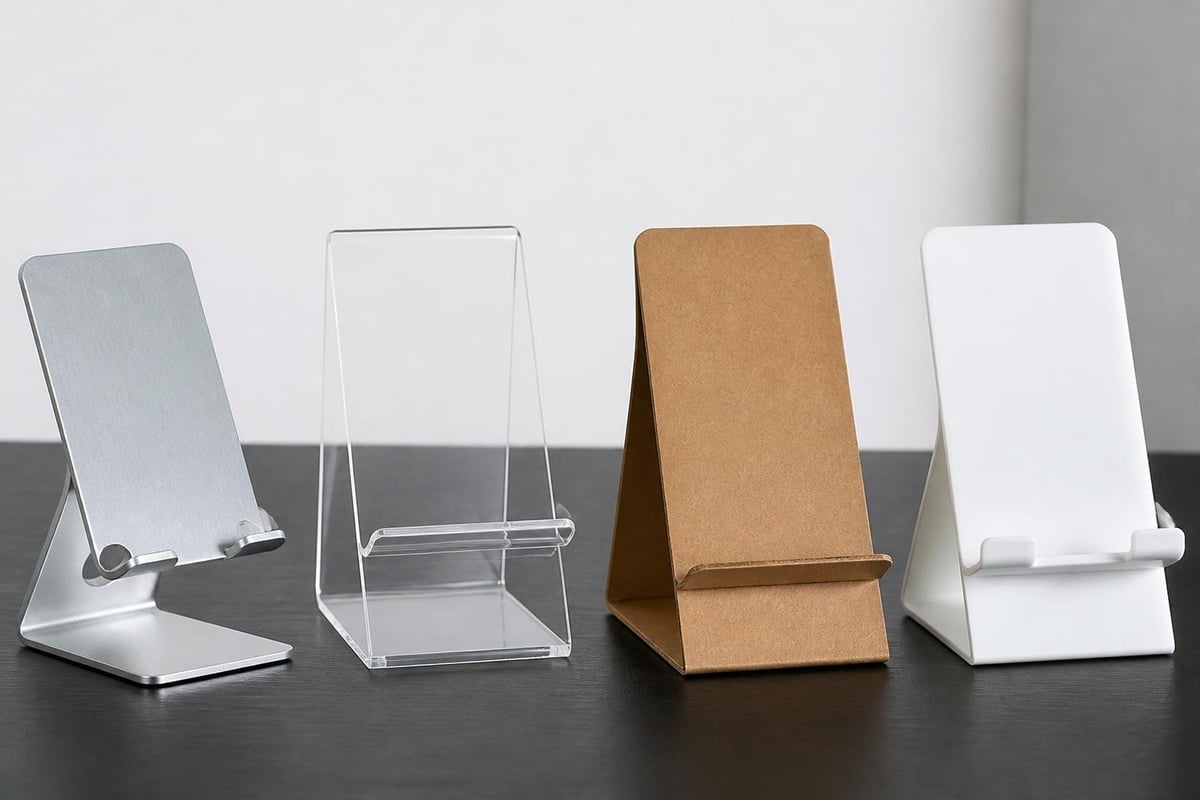
Choosing appropriate materials for display stands requires balancing aesthetic appeal, structural integrity, and budget constraints. Common materials include aluminium, acrylic, corrugated cardboard, and fabricated plastics, each offering distinct advantages.
| Material | Durability | Weight | Cost | Best Use Case |
|---|---|---|---|---|
| Aluminium | Excellent | Lightweight | Medium-High | Permanent installations, repeated events |
| Acrylic | Good | Light-Medium | Medium | Indoor displays, premium presentations |
| Corrugated Board | Fair | Very Light | Low | Short-term promotions, temporary events |
| Fabricated Plastic | Very Good | Light | Low-Medium | Outdoor displays, high-volume applications |
Aluminium frameworks dominate the professional display market due to their exceptional strength-to-weight ratio and resistance to environmental degradation. For businesses requiring portable solutions that withstand frequent assembly and transport, aluminium-based display stands offer the optimal combination of longevity and practicality.
Display Stand Categories and Applications
The display stand market encompasses numerous specialized formats, each engineered for specific marketing contexts and spatial requirements. Understanding these categories enables more strategic selection aligned with campaign objectives.
Retractable and Pull-Up Banners
Retractable banner stands represent the workhorse of portable marketing displays. Their spring-loaded mechanisms allow graphics to retract into protective bases, simplifying transport and storage. These units typically measure between 800mm and 1200mm in width, with heights extending to 2000mm or more.
Premium retractable systems incorporate:
- Telescopic poles for adjustable height positioning
- Swivel feet enabling stability on uneven surfaces
- Quick-change cartridge systems for rapid graphic updates
- Integrated carrying cases with shoulder straps
Event organisers frequently specify dimensional and placement requirements for exhibition stands, as outlined in trade show display regulations, which govern height restrictions, aisle clearances, and structural safety standards.
Floor-Standing Promotional Displays
Floor stand banners provide excellent visibility in high-traffic environments such as shopping centres, airports, and corporate lobbies. Unlike retractable units, these displays typically feature rigid frames that showcase larger graphics with greater visual impact.
The versatility of floor stand banners makes them particularly effective for directional signage, product launches, and sustained brand presence in retail environments. Their weighted bases ensure stability without wall mounting, offering placement flexibility that adapts to changing spatial requirements.
Tabletop and Counter Displays
Compact display stands designed for table and counter placement excel in point-of-sale environments where space constraints limit larger installations. These units typically measure between 200mm and 600mm in height, presenting information at close reading distances.
Common tabletop formats include:
- X-banner stands with tensioned fabric graphics
- A-frame mini displays with double-sided visibility
- Acrylic literature holders combining branding with functional document dispensing
- LED-illuminated units for premium product highlighting
Desktop and table x-banners provide cost-effective brand reinforcement during presentations, meetings, and small-scale exhibitions where full-sized displays would overwhelm the space.
Design Principles for Maximum Engagement
Effective display stand design transcends aesthetic considerations to incorporate human factors, legibility standards, and environmental context. The NIST signage design guidelines provide evidence-based recommendations for typography, contrast ratios, and viewing distances that directly apply to display stand graphics.
Typography and Reading Distance
Font selection and sizing must account for the anticipated viewing distance and lighting conditions. As a general principle, character height should equal viewing distance divided by 300. For a display viewed from 3 metres, this formula prescribes minimum character heights of 10mm.
Bold, sans-serif typefaces consistently outperform decorative fonts in legibility tests, particularly under challenging lighting or when viewers are in motion. Headline text should achieve a minimum 70% contrast ratio against backgrounds to ensure readability across varying visual abilities.
Colour psychology plays an equally critical role:
- Red signals urgency and attracts immediate attention but can induce visual fatigue
- Blue conveys trust and professionalism, ideal for corporate environments
- Yellow maximizes visibility but requires careful pairing to avoid overwhelming designs
- Green suggests growth and sustainability, resonating with environmentally conscious audiences
Structural Stability and Safety Compliance
Display stands in commercial environments must meet relevant safety standards, particularly when installed in public spaces. Freestanding units require sufficient base weight or footprint to resist tipping, with most professional specifications requiring stability against 45-degree lateral forces.
For illuminated displays, lighting control requirements under energy codes mandate specific control systems that balance visibility with efficiency. These regulations increasingly influence the design of backlit display stands and lightbox installations.
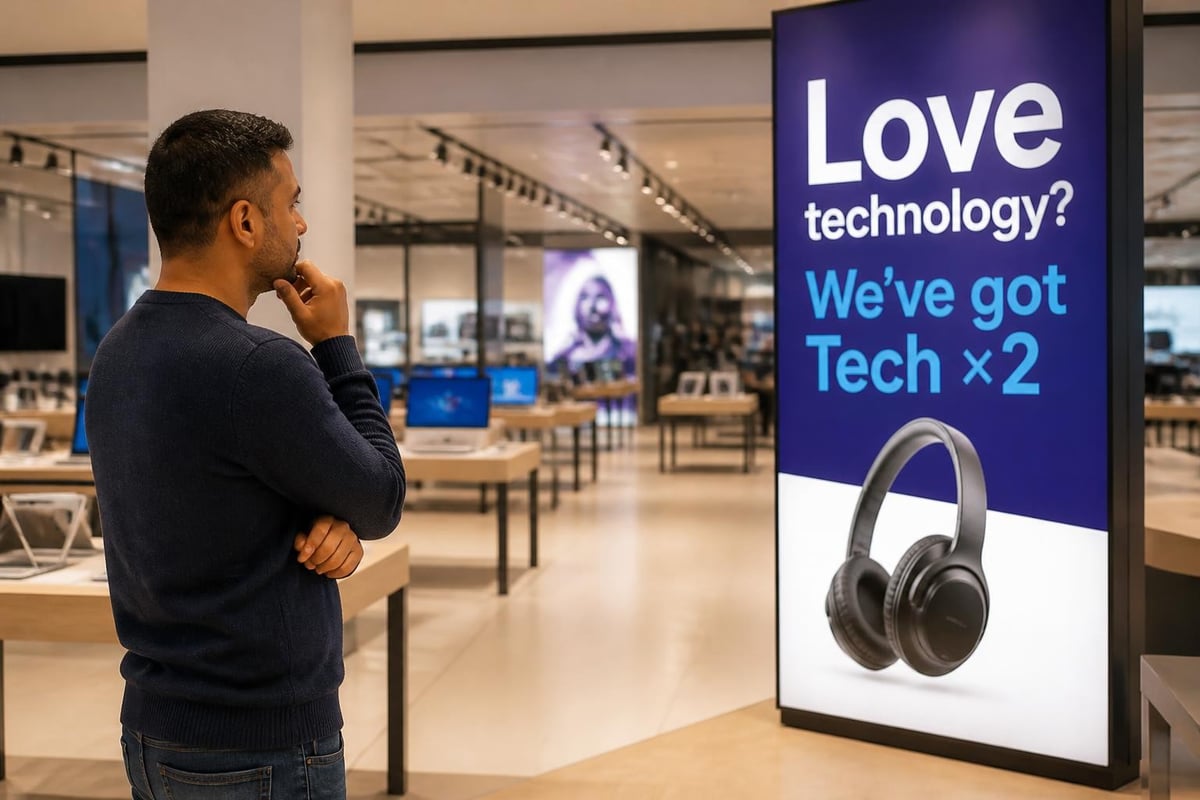
Lightbox signage combines structural display frameworks with integrated illumination, creating high-impact presentations that remain visible in low-light conditions. Modern LED technology has revolutionised lightbox displays by reducing energy consumption whilst delivering superior brightness and colour accuracy compared to traditional fluorescent systems.
Strategic Placement and Spatial Planning
The positioning of display stands within a space fundamentally determines their effectiveness. Traffic flow analysis, decision-point mapping, and sightline evaluation should precede any permanent or semi-permanent installation.
High-Traffic Zone Optimization
Primary circulation paths represent premium real estate for display placement. Research into consumer behaviour patterns reveals that right-hand biases influence engagement, with displays positioned on the right side of traffic flow receiving 15-20% more interaction than left-positioned equivalents.
Key placement zones include:
- Entry transition areas where visitors adjust to new environments and become receptive to messaging
- Queue lines where captive audiences have time to absorb detailed information
- Decision points such as aisle intersections or elevator banks where directional choices occur
- Destination approaches positioned 2-3 metres before key locations to prime expectations
Outdoor displays face additional challenges from weather exposure and variable lighting. Teardrop banners and similar outdoor-rated display stands incorporate wind-venting designs and UV-resistant materials to withstand environmental stresses whilst maintaining graphic integrity.
Environmental Control for Sensitive Applications
Certain display applications, particularly those showcasing valuable or fragile items, require controlled environments. The technical specifications for display case airtightness provide measurable standards for protective enclosures, relevant when display stands must safeguard artifacts, electronics, or moisture-sensitive materials.
Climate-controlled display cases incorporate silica gel canisters, activated charcoal filters, and precision sealing gaskets to maintain stable humidity and temperature conditions. These specialized systems prove essential for museums, galleries, and high-value retail environments where product degradation would undermine marketing objectives.
Modular Systems and Reconfiguration Flexibility
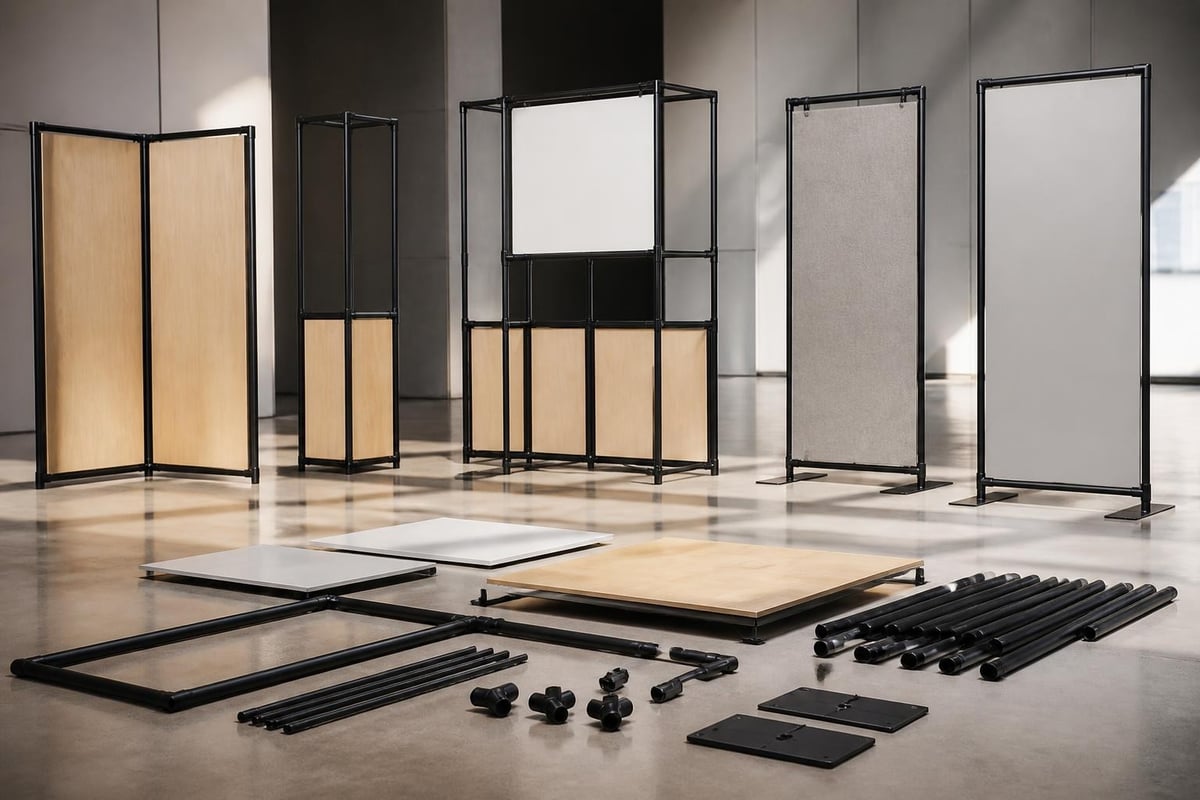
Modern display stand systems increasingly embrace modularity, allowing businesses to reconfigure displays across different venues and campaigns without purchasing entirely new infrastructure. Modular frameworks typically employ standardized connection points and component dimensions that enable infinite arrangement possibilities.
Benefits of modular display architecture include:
- Reduced storage footprint through component consolidation
- Lower total cost of ownership via component reuse across campaigns
- Rapid deployment using pre-assembled modules
- Scalability to accommodate varying space allocations
Professional exhibition contractors favour modular systems for their ability to adapt to varying booth configurations whilst maintaining consistent brand presentation. A single modular investment can serve trade shows, retail activations, and corporate events without visual compromise.
Digital Integration and Interactive Displays
The convergence of physical display stands with digital technology has created hybrid solutions that combine structural presence with dynamic content. Tablet mounts, integrated displays, and QR code placements transform static displays into interactive experiences.
Digital signage integration enables:
- Real-time content updates without physical graphic replacement
- Scheduled messaging tailored to time-of-day audience demographics
- Interactive product catalogues and virtual demonstrations
- Data capture through touchscreen engagement
- Social media integration encouraging user-generated content
Businesses increasingly specify display stands with integrated power management and cable routing to support tablets, LED screens, and charging stations. These provisions future-proof installations whilst maintaining clean aesthetic presentation.
Maintenance and Lifecycle Management
Professional display stands represent capital investments requiring systematic maintenance to preserve appearance and functionality. Regular inspection schedules should address:
- Frame integrity checking for stress cracks, loose connections, or deformation
- Graphic condition monitoring for UV fading, delamination, or physical damage
- Mechanical components lubricating moving parts and testing spring mechanisms
- Stability hardware ensuring feet, weights, and anchoring systems remain secure
Cleaning protocols vary by material composition. Aluminium frames tolerate mild detergents and water, whilst acrylic components require non-abrasive cleaners to prevent surface scratching. Fabric graphics benefit from compressed air dusting between campaigns, with periodic professional cleaning extending their serviceable life.
Sustainable Practices and Material Recycling
Environmental consciousness increasingly influences display stand procurement decisions. Businesses committed to sustainability prioritize systems manufactured from recycled materials and designed for end-of-life recyclability.
Aluminium display stands offer particular environmental advantages, as the material maintains properties through infinite recycling cycles without quality degradation. Responsible manufacturers accept returned frameworks for recycling, recovering valuable materials whilst diverting waste from landfills.
Return on Investment Calculations
Quantifying the return on display stand investments requires tracking both direct sales attribution and broader brand awareness metrics. Sophisticated businesses employ multiple measurement approaches:
| Metric Category | Measurement Method | Relevance |
|---|---|---|
| Direct Conversion | Point-of-sale tracking codes, unique URLs | High for promotional displays |
| Traffic Influence | Footfall counting, dwell time analysis | Medium for directional stands |
| Brand Recall | Post-event surveys, aided awareness testing | High for brand-building campaigns |
| Cost Efficiency | Cost-per-impression versus alternative media | High for budget justification |
Trade show exhibitors commonly calculate ROI by dividing qualified leads generated by total exhibition costs, including stand rental or purchase. Industry benchmarks suggest well-designed displays in appropriately selected venues generate lead costs 40-60% below digital advertising equivalents.
Permanent retail displays amortize costs across extended deployment periods, with quality systems delivering 5-7 years of service before requiring replacement. This longevity transforms upfront capital expenses into modest monthly costs when calculated across the ownership period.
Emerging Trends and Future Developments
The display stand industry continues evolving in response to technological advancement and changing consumer expectations. Several trends are reshaping the landscape for 2026 and beyond.
Sustainable materials dominate product development roadmaps, with manufacturers experimenting with bamboo composites, recycled ocean plastics, and bio-based polymers that reduce environmental impact without compromising structural performance.
Augmented reality integration enables physical displays to trigger digital overlays when viewed through smartphones, creating layered information experiences that transcend static graphics. Early adopters report engagement increases of 30-50% when AR features complement traditional displays.
Antimicrobial surfaces have gained prominence following heightened hygiene awareness, with copper-infused coatings and photocatalytic materials offering self-sanitizing properties particularly valued in healthcare and food service environments.
The convergence of reception signs, neon signs, and traditional display stands reflects the blurring boundaries between functional wayfinding, brand expression, and decorative design. Modern installations increasingly combine multiple signage types to create cohesive environmental graphics programs.
Implementation Best Practices
Successful display stand deployment demands attention to planning, execution, and ongoing optimization. Organizations that formalize their approach through documented procedures consistently achieve superior results.
Pre-Installation Planning Checklist
Before committing to display purchases or placements, thorough site assessment prevents costly mistakes:
- Measure available floor space, accounting for pedestrian clearances and accessibility requirements
- Evaluate ceiling heights and potential overhead obstructions
- Identify power outlet locations for illuminated displays
- Assess ambient lighting conditions and potential glare sources
- Document surface conditions (carpet, tile, uneven flooring) affecting stability
- Verify compliance with venue regulations and fire safety codes
Detailed planning phases may seem time-consuming, but they eliminate the frustration of discovering incompatible specifications after purchase. Professional signage providers can conduct site surveys that inform optimal display selection and positioning.
Installation and Positioning Techniques
Even the highest-quality display stands underperform when incorrectly installed. Assembly procedures must follow manufacturer specifications exactly, with particular attention to:
- Level verification using spirit levels on both horizontal and vertical planes
- Secure anchoring employing all provided stability hardware
- Graphic tensioning ensuring even pull across fabric or vinyl materials
- Electrical safety routing cables to prevent trip hazards
- Final inspection checking all connections before opening to public access
Portable displays benefit from documented assembly guides with photographs at each step, enabling consistent setup across multiple team members and venues. This documentation proves invaluable when training new staff or briefing external contractors.
Customization and Brand Differentiation
Off-the-shelf display stands provide functional foundations, but customization elevates them into distinctive brand assets. Custom fabrication options range from simple colour matching to complete bespoke engineering.
Powder coating allows aluminium frameworks to match precise brand colours, creating cohesive visual programmes across entire fleets of display equipment. This process bonds pigmented polymer finishes to metal surfaces, delivering durability superior to paint whilst maintaining recyclability.
Custom fabrication enables displays engineered to unique dimensional requirements, unusual shapes, or specialized functions. Businesses with distinctive brand identities often commission purpose-built stands that competitors cannot replicate, strengthening visual differentiation in crowded markets.
Graphic customization extends beyond logos and slogans to encompass environmental storytelling. Sequential displays can guide audiences through product narratives, company histories, or educational content using visual progression techniques borrowed from museum exhibition design.
Strategic display stand selection and deployment represents a sophisticated discipline blending marketing insight, design principles, and practical logistics. Whether you're equipping a trade show booth, refreshing retail fixtures, or establishing permanent brand presence, the right display infrastructure amplifies messaging whilst delivering measurable returns. Signshoponline provides comprehensive display solutions tailored to South African businesses, from portable banner stands to custom fabricated installations. Our team combines technical expertise with creative insight to specify, manufacture, and install display systems that elevate your brand presence across any environment.


