


Mandatory signs represent a critical component of workplace health and safety infrastructure, serving as visual instructions that employees and visitors must follow. Unlike advisory or warning signage, these indicators carry legal weight and communicate essential actions required by law or organisational policy. Understanding their purpose, proper implementation, and regulatory requirements ensures businesses maintain compliance whilst protecting personnel from preventable hazards. As workplaces evolve in 2026, the strategic deployment of mandatory signs remains fundamental to creating safe, efficient operational environments.
Understanding the Legal Framework for Mandatory Signage
The regulatory landscape governing mandatory signs in the United Kingdom stems primarily from the Health and Safety (Safety Signs and Signals) Regulations 1996, which implement European Directive 92/58/EEC. This framework establishes clear parameters for when employers must use safety signs and which visual standards apply across different scenarios.

When Mandatory Signs Become Legal Requirements
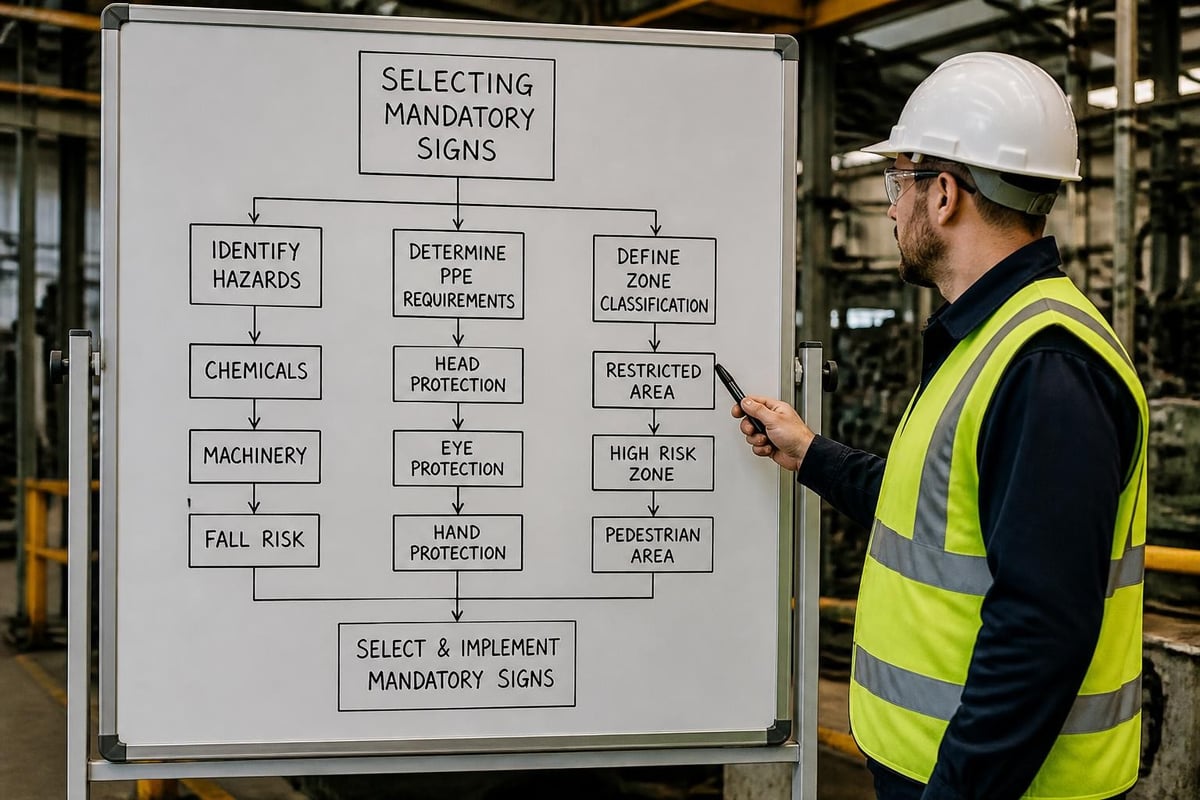
Employers must install mandatory signs when risk assessments identify significant hazards that cannot be eliminated through engineering controls or procedural changes alone. The HSE guidance on safety signs clarifies that signage serves as a supplementary measure, never replacing proper risk control hierarchies. Key trigger points include:
- Presence of hazardous substances requiring personal protective equipment
- Areas where specific safety protocols prevent injury
- Zones demanding particular behaviours to maintain sterile or controlled environments
- Locations where emergency procedures necessitate immediate compliance
Risk assessments must document why signage represents an appropriate control measure. Simply installing signs without addressing underlying hazards fails to satisfy legal obligations and may create false assurance amongst workers.
Colour Coding and Visual Standards
Mandatory signs universally employ a blue circular background with white pictograms and text. This consistent colour scheme enables instant recognition across industries and international boundaries. The standardisation reflects decades of human factors research demonstrating that consistent visual language reduces cognitive load and improves compliance rates.
| Sign Element | Specification | Purpose |
|---|---|---|
| Shape | Circular | Indicates mandatory action required |
| Background Colour | Pantone 293C (Blue) | Universal recognition of obligation |
| Symbol/Text Colour | White | Maximum contrast for visibility |
| Border | Optional white ring | Enhanced definition in complex environments |
The British Standards Institution provides detailed specifications through BS EN ISO 7010, which UK organisations increasingly adopt for consistency with European safety sign standards. This harmonisation facilitates multinational operations and workforce mobility whilst maintaining safety integrity.
Categories and Applications of Mandatory Signs
Different workplace environments demand specific types of mandatory signs tailored to their unique hazard profiles. Understanding these categories helps organisations select appropriate signage that addresses actual risks rather than implementing generic solutions.
Personal Protective Equipment (PPE) Requirements
PPE-related mandatory signs constitute the most prevalent category across industrial, construction, and commercial settings. These indicators specify which protective equipment personnel must wear before entering designated zones.
Common PPE mandatory signs include:
- Safety helmets must be worn: Construction sites, warehouses, manufacturing floors
- Eye protection must be worn: Laboratories, metalworking facilities, chemical handling areas
- Hearing protection must be worn: Areas exceeding 85 decibels sustained noise levels
- Safety footwear must be worn: Warehouses, loading bays, heavy machinery zones
- High-visibility clothing must be worn: Roadwork sites, vehicle movement areas, low-light environments
Research published in peer-reviewed journals examining the relative frequency of exposure to safety signs suggests that workers develop stronger compliance habits when mandatory signs appear selectively rather than proliferating unnecessarily. Oversaturation diminishes impact and breeds complacency.
Hygiene and Contamination Control
Food production facilities, pharmaceutical manufacturers, and healthcare environments deploy mandatory signs to maintain hygiene standards and prevent contamination. These signs often combine pictograms with concise text to communicate critical behaviours.
Effective hygiene mandatory signs address:
- Handwashing protocols before entering production areas
- Removal of jewellery in clean rooms
- Use of hairnets and beard covers in food handling zones
- Prohibition of personal items in sterile environments
- Mandatory use of sanitising stations at entry points
The specificity of these signs proves crucial. Generic "wash hands" signage lacks the authority and clarity of properly formatted mandatory signs featuring the characteristic blue circular design.
Procedural Compliance in Specialised Environments
Certain workplaces require specific behaviours beyond PPE usage. These procedural mandatory signs govern actions essential for operational safety or product integrity.
Examples include signs mandating:
- Isolation of electrical systems before maintenance
- Two-person operation requirements for specific machinery
- Use of designated walkways in vehicle movement areas
- Reporting procedures before entering confined spaces
- Security protocols for controlled access zones
For businesses seeking professional signage solutions that meet regulatory requirements, investing in properly manufactured safety signs ensures durability and compliance. Lightbox Signage offers illuminated options particularly effective in low-light industrial environments where 24-hour operations demand constant visibility of mandatory instructions.
Design Principles for Maximum Effectiveness
Creating effective mandatory signs extends beyond regulatory compliance to encompass human factors engineering and behavioural psychology. Well-designed signs achieve higher compliance rates and contribute meaningfully to safety culture.
Legibility and Visual Hierarchy
The FHWA research on sign legibility provides evidence-based guidance applicable beyond highway contexts. Key findings relevant to mandatory signs include:
Font Selection: Sans-serif typefaces with stroke-width ratios between 1:5 and 1:6 maximise readability across distances. Helvetica, Arial, and specially designed signage fonts prove most effective.
Letter Height Calculations: Minimum letter height should equal viewing distance in metres divided by 250. For example, a sign viewed from 10 metres requires 40mm minimum letter height.
Contrast Ratios: The blue-and-white colour scheme inherently provides excellent contrast, but surface finish matters. Matte or low-gloss finishes prevent specular reflection that obscures messages under bright lighting.
| Viewing Distance | Minimum Letter Height | Symbol Size |
|---|---|---|
| 3 metres | 12mm | 80mm diameter |
| 5 metres | 20mm | 120mm diameter |
| 10 metres | 40mm | 200mm diameter |
| 20 metres | 80mm | 350mm diameter |
Pictogram Clarity and Cultural Considerations
Effective pictograms transcend language barriers, making them essential in diverse workplaces. ISO 7010 standardises pictograms tested for international comprehension, reducing ambiguity that text-heavy signs may introduce.
When implementing mandatory signs, organisations should:
- Prioritise pictogram-dominant designs with minimal supporting text
- Conduct brief comprehension tests with representative worker populations
- Consider cultural variations in symbol interpretation for international facilities
- Avoid overly abstract symbols requiring extensive training to understand
The supplementary use of text labels beneath pictograms aids comprehension without cluttering visual hierarchy. Text should use active voice imperatives: "Wear Safety Helmet" rather than passive constructions.
Placement and Environmental Integration
Strategic positioning determines whether mandatory signs achieve their protective purpose. The detailed HSE guidance document L64 emphasises that signs must be positioned where they're unavoidably noticed before individuals encounter the relevant hazard.
Optimal placement considerations include:
- Eye-level mounting: Position signs at 1.5-1.8 metres for standing viewers
- Illumination requirements: Ensure adequate lighting or use photoluminescent/illuminated signs in low-light areas
- Obstruction avoidance: Clear sight lines from all approach routes
- Weather protection: Exterior signs require UV-resistant materials and weather-sealed construction
- Duplication for large areas: Multiple signs maintain visibility throughout expansive zones
Accessibility Requirements for Inclusive Compliance
Modern mandatory signs must accommodate individuals with various disabilities to ensure universal comprehension and equal access to safety information. The ADA Standards for Accessible Design provide comprehensive guidance applicable beyond US contexts.
Tactile and Braille Elements
Whilst mandatory signs primarily function as visual indicators, facilities serving public access should consider tactile enhancements:
- Raised pictograms enabling touch-based recognition
- Grade 2 Braille translations positioned below visual elements
- Tactile borders distinguishing mandatory signs from informational signage
- Mounting heights accessible to wheelchair users (1.2-1.5 metres)
These adaptations prove particularly relevant in healthcare facilities, educational institutions, and public buildings where diverse populations interact with safety infrastructure.
Colour Blindness Considerations
Approximately 8% of males and 0.5% of females experience colour vision deficiencies. Whilst the blue-white combination used in mandatory signs generally remains distinguishable to most colour-blind individuals, additional design elements enhance accessibility:
- Shape reinforcement: The circular format itself communicates mandatory nature independent of colour
- Border emphasis: White borders provide shape definition
- Symbol clarity: Well-designed pictograms remain comprehensible without colour information
- Redundant coding: Combining colour, shape, and symbols creates multiple recognition pathways
Maintenance and Compliance Verification
Installing mandatory signs represents only the initial step in an ongoing compliance programme. Regular maintenance ensures signs remain effective throughout their service life.
Inspection Protocols and Documentation
Systematic inspection schedules should cover:
Monthly quick checks: Visual assessment confirming signs remain visible, undamaged, and properly positioned
Quarterly detailed inspections: Close examination of sign condition, mounting security, illumination functionality (for illuminated signs), and continued relevance to current risk assessments
Annual compliance audits: Comprehensive reviews verifying sign inventory matches documented hazards, regulatory changes haven't rendered existing signs obsolete, and worker feedback indicates signs effectively communicate required actions
Documentation should record:
- Inspection dates and findings
- Maintenance actions taken
- Sign replacements with reasons and dates
- Modifications to sign locations based on operational changes
| Maintenance Activity | Frequency | Responsible Party |
|---|---|---|
| Visual condition check | Monthly | Floor supervisors |
| Cleaning and minor repairs | Quarterly | Facilities team |
| Regulatory compliance review | Annually | Health and safety officer |
| Sign replacement cycle | 5-7 years | Procurement department |
Common Degradation Patterns and Remediation
Even high-quality mandatory signs eventually deteriorate under environmental stresses. Recognising degradation patterns enables proactive replacement:
- Fading: UV exposure degrades pigments, particularly affecting blue backgrounds
- Delamination: Moisture infiltration separates layered materials in exterior signs
- Physical damage: Impact, vandalism, or wear compromises sign integrity
- Adhesive failure: Mounting systems weaken, creating safety hazards from falling signs
- Dirt accumulation: Industrial environments deposit contaminants obscuring messages
Replacement thresholds should prioritise legibility over cosmetic perfection. A sign with minor scratching but clear messaging outperforms a deteriorated sign maintaining aesthetic appeal whilst failing its communicative function.
Integration with Comprehensive Safety Programmes
Mandatory signs achieve maximum effectiveness when integrated within broader health and safety initiatives rather than existing as isolated interventions.
Induction and Ongoing Training
New employee orientations should explicitly cover:
- The meaning of different safety sign categories (mandatory, warning, prohibition, emergency)
- Specific mandatory signs present in their work areas
- Consequences of non-compliance with mandatory instructions
- Reporting procedures for missing, damaged, or confusing signage
Refresher training maintains awareness and addresses complacency developing from familiarity. Interactive methods including workplace walks, photo-based assessments, and scenario discussions prove more engaging than passive presentations.
Behaviour-Based Safety Observations
Systematic observation programmes tracking compliance with mandatory signs provide valuable data on effectiveness. Low compliance rates may indicate:
- Poor sign visibility or placement
- Inadequate training or understanding
- Practical barriers making compliance difficult
- Cultural issues requiring leadership intervention
- PPE availability problems
Rather than solely enforcing compliance through disciplinary measures, investigation should identify and address root causes. Workers ignoring "Safety Footwear Must Be Worn" signs may lack access to properly fitting boots or face discomfort from inappropriate footwear specifications.
Incident Investigation and Continuous Improvement
When incidents occur in areas governed by mandatory signs, investigations should examine:
- Whether appropriate mandatory signs were present and visible
- If the injured party received adequate training on sign meanings
- Whether environmental factors obscured or contradicted sign messages
- If organisational culture supported or undermined compliance expectations
These insights drive continuous improvement, informing decisions about sign placement, design modifications, training enhancements, and supplementary control measures.
Emerging Trends and Future Developments
The field of mandatory signs continues evolving alongside technological advances and deeper understanding of human factors in safety.
Digital and Dynamic Signage Solutions
Traditional static mandatory signs increasingly share space with digital alternatives offering several advantages:
- Context-responsive messaging: Displays adapt mandatory requirements based on current operations
- Multilingual capabilities: Rotating messages accommodate diverse workforces
- Integration with access control: Signs activate only when relevant personnel approach
- Data collection: Systems track when and where signs display, informing effectiveness studies
However, digital solutions introduce dependencies on electrical systems and require backup protocols ensuring critical mandatory instructions remain visible during power failures.
Augmented Reality and Wearable Technologies
Emerging technologies may supplement or eventually partially replace traditional mandatory signs:
- Smart glasses: Overlay mandatory instructions contextually as workers move through facilities
- Mobile applications: Provide just-in-time reminders of zone-specific requirements
- RFID integration: Trigger alerts when individuals approach areas requiring specific PPE they're not wearing
These innovations complement rather than replace traditional signage, as regulatory frameworks continue requiring permanent, visible, non-powered mandatory signs as baseline safety measures.
Behavioural Economics Applications
Recent research applies behavioural economics principles to improve mandatory sign effectiveness:
- Loss framing: Emphasising consequences of non-compliance alongside required actions
- Social proof: Incorporating messages about high compliance rates to leverage conformity
- Default bias exploitation: Positioning sign-governed behaviours as normal baseline expectations
- Commitment devices: Combining signs with pledge systems increasing psychological investment in compliance
These approaches recognise that human decision-making deviates from purely rational models, requiring design strategies addressing actual cognitive patterns.
Mandatory signs form an indispensable element of modern workplace safety, translating regulatory requirements into clear visual instructions that protect personnel and ensure compliance. Proper selection, design, placement, and maintenance of these critical safety tools requires understanding both legal frameworks and human factors principles that determine real-world effectiveness. Whether you need compliant mandatory signage for industrial facilities, commercial premises, or specialised environments, Signshoponline delivers professional solutions combining regulatory knowledge with manufacturing excellence to safeguard your workforce and meet your safety obligations.


