


Shop front signage is the collection of signs fixed to the outside of a retail or hospitality premises: the main fascia board, projecting blade signs, window graphics, lightboxes and illuminated letters. The right choice depends on your trading hours, the building itself, the rules of your local authority and how far away customers need to read your name. A good sign identifies the business, draws footfall and signals quality before anyone steps through the door.
This guide sets out the main sign types, the materials behind them, the approvals you may need and the factors that move the price, so you can brief a manufacturer with confidence.
What Is Shopfront Signage?
Shopfront signage is every graphic, lettered or illuminated element on the outside of a business that identifies it and attracts customers. It usually works as a system rather than a single board.
The sign running along the top of the entrance is called the fascia. In everyday trade you will also hear it called the shop sign, the name board or the facia board. Around it sit supporting elements:
- Projecting (blade) signs that stick out at right angles so pedestrians can see them along the street
- Window vinyls and frosting for opening hours, services and branding at eye level
- Pavement or A-board signs for daily offers
- Awnings and canopies that combine shelter with branding
- Pylons and totems for premises set back from the road or in shared car parks
Treating these as one coordinated scheme keeps the frontage looking deliberate. A business with a strong fascia, a matching blade sign and clean window graphics reads as established, whereas mismatched fonts and colours dilute the brand.
Types of Shop Front Signage to Consider
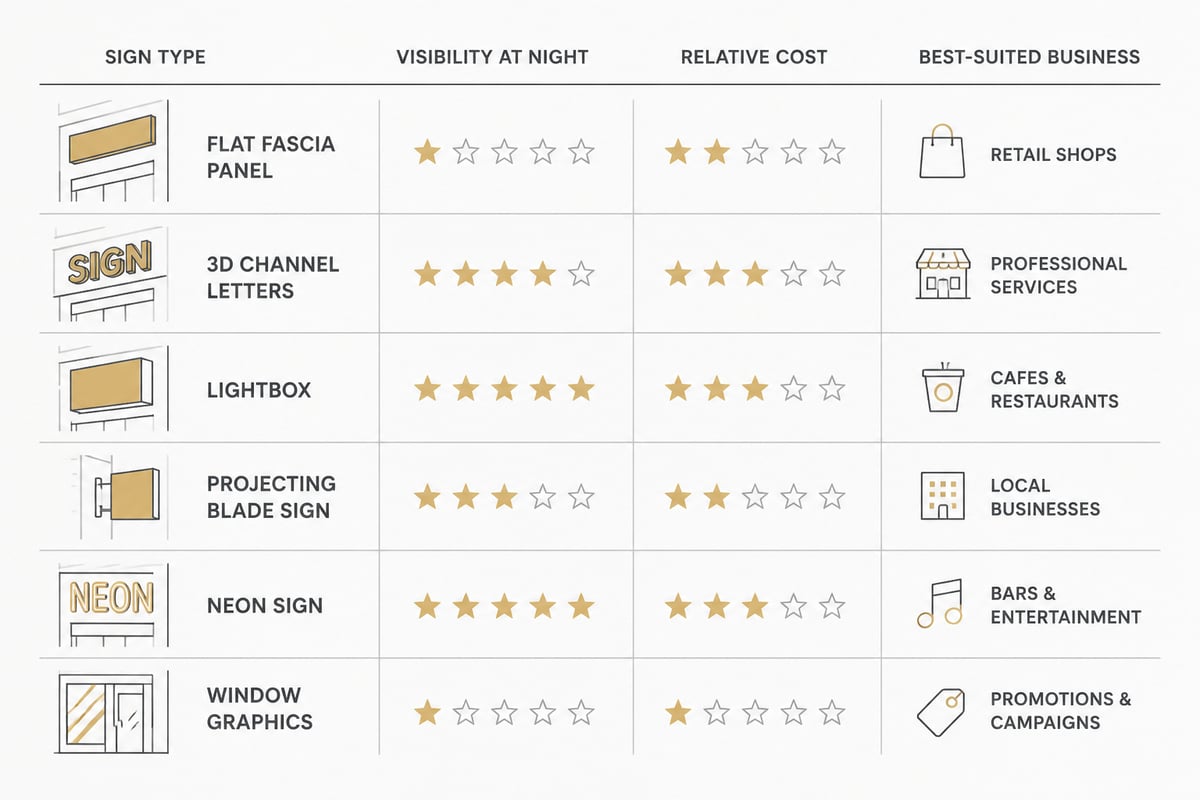
The main options are flat fascia panels, built-up 3D letters, lightboxes and flex-face signs, projecting signs, neon, and window graphics, each suited to a different budget and visual effect.
| Sign type | Typical look | Best suited to |
|---|---|---|
| Flat fascia panel | Printed or painted board, clean and simple | Tight budgets, temporary tenancies |
| 3D channel letters | Raised individual letters, lit or unlit | Premium retail, restaurants, salons |
| Lightbox / flex-face | Backlit stretched print face | Chains, large facades, night trade |
| Projecting blade sign | Double-sided panel at right angles to the wall | Busy pedestrian streets |
| Neon or LED neon | Glowing script or logo | Bars, restaurants, lifestyle brands |
| Window graphics | Vinyl, frosting, cut lettering | Supporting information, privacy |
Fascia signs
A fascia is the workhorse of any frontage. Aluminium composite panels, Chromadek sheet and sign trays are common substrates in South Africa because they resist heat, rain and UV. For a closer look at roofing-grade sheet used in sign work, see Signshoponline's Chromadek signage page.
Projecting signs
Blade signs catch the eye of people walking along the pavement rather than those facing the shop. They suit streets where parked cars or a narrow pavement make a flat fascia hard to read from a distance. Be aware that some municipalities limit the count: Blackpool Council's shop front guidance, for example, permits only one projecting sign per shop-front elevation. Local rules in your own area will differ, so check before ordering.
Window graphics and inlay signs
Vinyl lettering, frosting and decals are inexpensive ways to add opening hours, payment options or service lists. Where you want a flush, built-in appearance, inlay signage sets lettering or graphics neatly into the surface.
Illuminated Shop Signs: Is Lighting Worth It?
Illuminated signs are worth the extra cost for any business that trades after dark, because an unlit fascia effectively disappears once the sun sets. This applies strongly to restaurants, bars, pharmacies, convenience stores and anywhere with evening foot or vehicle traffic.
There are three common ways to light a shop sign:
- Backlit faces (lightboxes and flex faces): an LED-lit translucent panel gives an even glow and suits large logos.
- Halo-lit or front-lit 3D letters: each letter carries its own LED module, creating a more refined, premium effect.
- Neon and LED neon: flexible light tubing shaped into script or symbols, popular for hospitality and decor-led spaces.
LED has largely replaced older fluorescent and traditional neon for outdoor use because it draws less power and lasts far longer. If load shedding affects your trading area, discuss backup power or timer controls with your supplier, since a sign that goes dark mid-evening defeats its purpose. Signshoponline's guide to LED signage explains the technology in more detail, and its illuminated signage range covers the main formats.
For venues wanting something with personality, a custom neon sign works as both branding and atmosphere. Lead times for neon signs vary, so confirm the turnaround on your quote before fixing an opening date.
Fabricated 3D Letters for a Premium Frontage
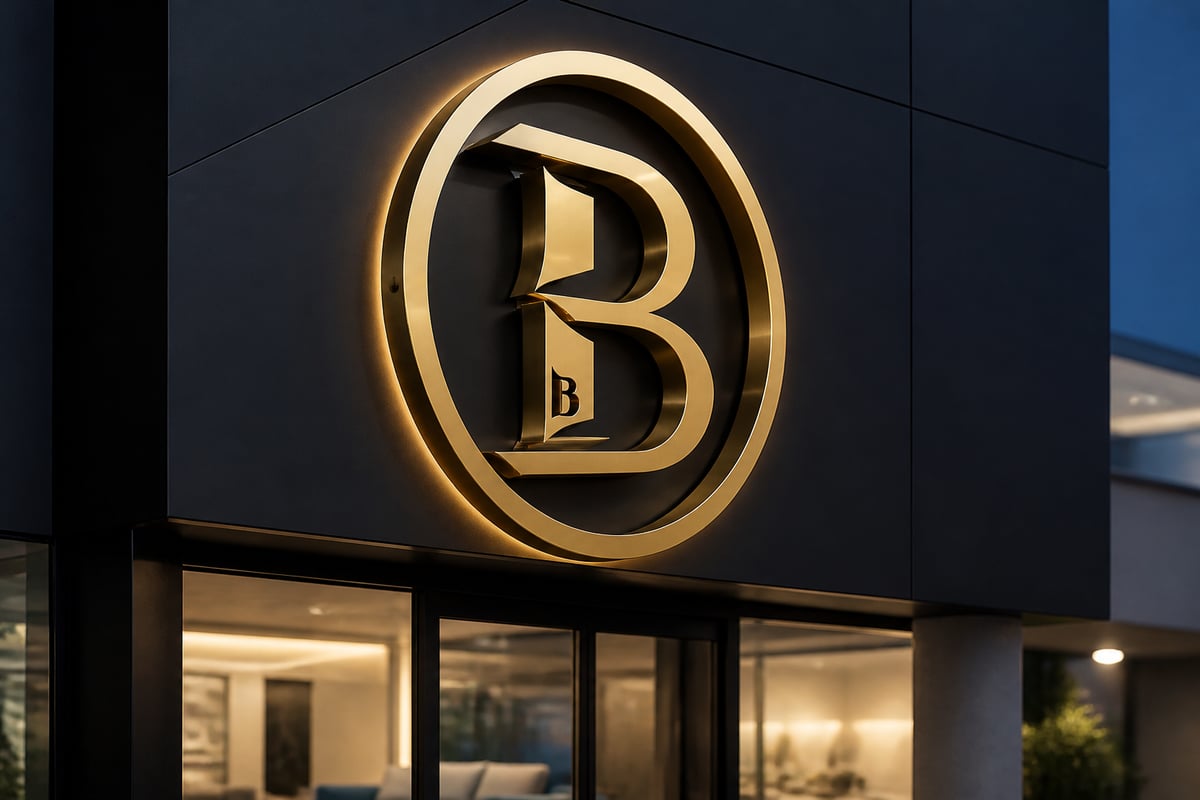
Fabricated 3D letters give a shopfront depth, shadow and a sense of quality that a flat printed board cannot match. Each letter is cut and built individually, usually from stainless steel, aluminium or acrylic, then mounted proud of the wall or fascia.
They work particularly well for:
- Salons, boutiques and jewellers where presentation signals price point
- Restaurants and cafés that want a distinct night-time silhouette
- Offices and showrooms with a clean, architectural facade
Lit versions add a halo or face glow, while unlit letters rely on daytime shadow lines and finish. Signshoponline manufactures fabricated 3D signage, including illuminated and non-illuminated channel letters, and as a full-service signage company offering manufacturing, installation and design, it can advise on the best material and production method for the number of signs you need.
Do You Need Planning Permission for Shop Signage?
You often do need permission for shop signage, although the rule depends on your municipality and the building. The principle is the same almost everywhere: signs that are large, illuminated, projecting or on a heritage building are the ones most likely to need approval.
As a reference point, Blackpool Council's guidance states that external shop-front alterations require planning permission, that new, additional or replacement signage requires advertisement consent, and that listed buildings may also require listed-building consent. That is a UK example, and South African councils run their own by-laws, but it illustrates the typical layers: consent for the sign itself, and a separate check if the building is protected.
In South Africa, outdoor advertising is generally governed by municipal by-laws covering size, illumination, position and traffic safety. Before you commission anything:
- Contact your local municipality's outdoor advertising or building control department
- Check your lease, because landlords and shopping-centre managers often impose design criteria
- Confirm whether the building or street sits in a heritage or conservation area
- Ask whether illuminated or projecting signs have separate approval requirements
A reputable signage supplier will tell you what documentation they need from you. Signshoponline's signage services page is the place to start a conversation about what your premises requires.
Choosing Materials That Last in South African Conditions
The best material is the one that survives your local climate and fits your budget, since UV, coastal salt air and heavy summer rain age signs quickly.
- Aluminium and aluminium composite: light, rust-free and the standard choice for fascias and trays.
- Stainless steel: durable and polished, ideal for 3D letters, though it costs more.
- Acrylic: versatile and easy to light, but it needs UV-stable grades outdoors.
- Chromadek or painted sheet metal: economical and weather-tough for large flat panels.
- Corflute (Correx): suitable only for short-term promotions, as covered in Signshoponline's Correx signs service page.
- Vinyl films: check the rated outdoor life, as cheaper films fade and peel in direct sun.
Coastal premises in Durban and Cape Town should prioritise corrosion-resistant fixings and finishes, because salt-laden air attacks cheap fasteners long before the sign face fails. Inland, in Gauteng, high UV and sudden storms make fade-resistant inks and secure mounting the priority.

How Much Does Shop Front Signage Cost?
Costs vary widely, so no single figure is reliable. A simple vinyl-lettered window costs a fraction of a fabricated, illuminated 3D fascia, and the final quote depends on the specific design rather than the category alone.
The main drivers are:
- Size: larger signs use more material, more labour and often need engineering for wind loading.
- Material and finish: stainless steel and brushed metals cost more than painted aluminium or printed vinyl.
- Illumination: LED modules, power supplies and wiring add both cost and installation time.
- Complexity: intricate logos, multiple layers and custom shapes increase fabrication hours.
- Installation: access equipment such as cherry pickers or scaffolding, plus electrical work, can be a significant line item.
- Approvals and quantity: municipal fees apply in some areas, while ordering several signs at once can reduce the cost of each.
To compare quotes fairly, ask every supplier to price the same specification: dimensions, material, lighting type, installation and guarantee. Signshoponline advises on the best materials and production methods whether you need one sign or several hundred, and it offers a guarantee on its work. For exact pricing on your project, use its contact and quote channels rather than relying on generic estimates.
Matching Signage to Your Business Type
Your sector should shape the sign, because a bar and a pharmacy are read by different people at different times.
Restaurants and bars benefit from warm, atmospheric lighting and signage that hints at the interior. Neon and halo-lit letters help a venue stand out on a busy evening strip, and Signshoponline's piece on what restaurant signage says about you covers the message a frontage sends.
Retail shops need a legible name, clear category cue and strong window presence. For businesses with promotions that change often, pairing a permanent fascia with a digital screen in the window lets you update offers without reprinting. Display content and hardware planning can involve specialist audio-visual input, and companies such as SKYE HD in Cape Town work on commercial audio-visual installations.
Salons, clinics and service providers often favour understated, high-finish 3D lettering that signals professionalism. If you operate a tattoo or piercing studio, the sign is only part of the customer journey, and tools such as InkWaiver can handle digital consent forms once clients are inside.
Multi-tenant or roadside sites may need a pylon or totem so passing drivers can see the business from a distance, with the shopfront sign handling the final approach.
How to Brief a Signmaker Properly
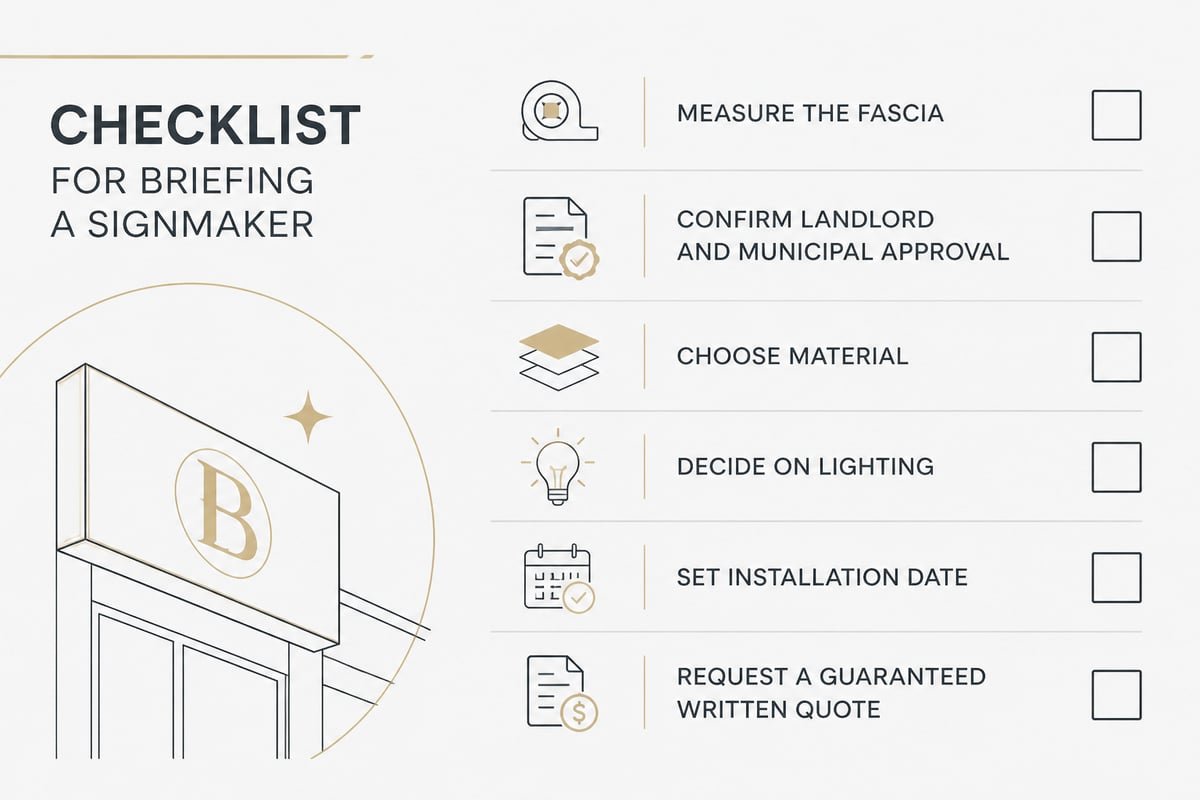
A clear brief shortens the quote process and prevents costly revisions. Gather the following before you make contact:
- Photographs of the existing frontage, taken straight on and from the pavement at both ends
- Measurements of the fascia or mounting area, including any obstructions
- Your logo in vector format, plus brand colours and fonts
- Trading hours, so the lighting decision reflects when the sign is actually seen
- Your lease conditions and any landlord design requirements
- A realistic budget range and target installation date
Walk the street at the time of day your customers arrive. A sign that looks right on a screen can be hidden by a tree, a streetlight or a neighbour's awning. If you manage several branches, a brand audit helps keep every frontage consistent.
Maintenance and Lifespan
Most shopfront signs last years with basic care, but neglect shortens that quickly. Wash faces and letters with mild soapy water to remove dust and bird droppings, and check fixings after strong winds. For illuminated signs, replace failed LED modules promptly, because a partially lit sign looks worse than an unlit one.
Review the sign every few years against your branding. Fading, peeling vinyl or a half-working light signals to customers that standards are slipping, whereas a well-kept sign supports trust.
FAQ
What is the sign on the front of a shop called?
The main sign above a shop entrance is called a fascia, sometimes written as facia, and it is also known as the shop sign or name board. Smaller signs that project from the wall are called blade or projecting signs.
Can I use temporary shop signage while waiting for a permanent sign?
Yes, banners, vinyl lettering or Correx boards are commonly used while a permanent fascia is being approved and manufactured. Check municipal and landlord rules first, since temporary signs can still require consent in some areas. Signshoponline also offers rent signage options worth asking about.
How long does a shop front sign take to make?
Lead time depends on the sign type, size and workload. Lead times vary by sign type and size, so confirm the timeline on your quote before fixing an opening date.
Start by photographing your frontage and measuring the fascia, then decide whether your trading hours justify lighting. From there, Signshoponline can advise on materials, 3D letters and illumination, backed by guaranteed work and more than 20 years in manufacturing, installation and design. If 3D lettering suits your premises, look at its fabricated 3D signage range, and then get a quote through Signshoponline so you can compare options for your shop front.


