

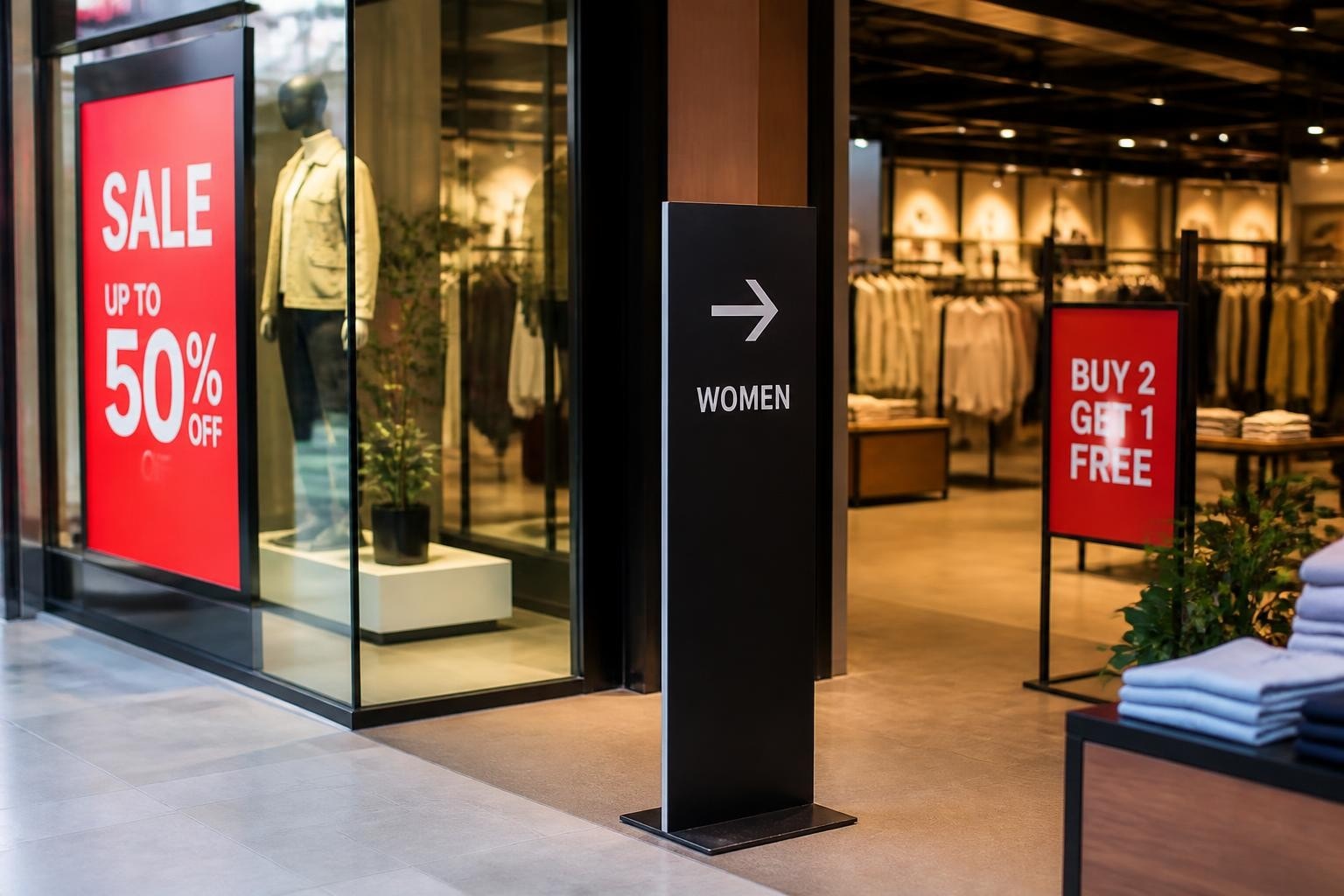
Effective signage for retail stores represents far more than simple directional markers or branding elements. In today's competitive retail landscape, thoughtfully designed and strategically positioned signage serves as a silent salesperson, guiding customers through their journey from initial attraction to final purchase. Whether you operate a boutique clothing shop, a sprawling department store, or a specialized electronics outlet, your signage portfolio directly influences customer behaviour, dwell time, and ultimately, your bottom line. Understanding the multifaceted role of retail signage and implementing best practices can transform a casual browser into a loyal customer.
The Strategic Value of Retail Signage
Retail signage functions as the primary communication bridge between your brand and your customers. Every sign you deploy carries multiple responsibilities simultaneously: attracting attention from passersby, communicating your brand identity, directing foot traffic, highlighting promotions, and reinforcing purchasing decisions.
The commercial impact of well-executed signage for retail stores manifests across several measurable dimensions:
- Increased footfall from street-level visibility and window displays
- Higher conversion rates through strategic product highlighting
- Reduced staff enquiries via clear wayfinding and information provision
- Enhanced brand recall through consistent visual messaging
- Improved customer satisfaction from effortless navigation
Research consistently demonstrates that first-time visitors rely heavily on signage to orient themselves within unfamiliar retail environments. When customers can quickly locate departments, understand product categories, and identify promotional offers without assistance, their confidence and comfort levels increase substantially.
The psychological dimension proves equally important. Professional, cohesive signage establishes credibility and communicates attention to detail. Conversely, poorly maintained, inconsistent, or confusing signage erodes trust and suggests operational carelessness.
Creating a Comprehensive Signage Hierarchy
Successful retail environments employ a tiered approach to signage, with each level serving distinct functional purposes. Primary signage captures attention from distance and establishes initial brand contact. Secondary signage guides customers through the space and organizes information. Tertiary signage provides detailed product information and purchasing support.
| Signage Level | Primary Function | Typical Examples | Visibility Range |
|---|---|---|---|
| Primary | Attraction & identification | Fascia signs, window graphics, pylon signs | 50+ metres |
| Secondary | Navigation & organization | Department markers, directional arrows, category headers | 10-30 metres |
| Tertiary | Information & persuasion | Product labels, pricing, promotional tags, POS displays | 1-5 metres |
This hierarchical approach ensures customers receive appropriate information at each decision point throughout their shopping journey. The most effective retail environments orchestrate these levels seamlessly, creating an intuitive flow that feels natural rather than prescribed.
Exterior Signage: Your First Impression
Your exterior signage portfolio represents the critical first contact point with potential customers. Fascia signs, window graphics, A-boards, and projecting signs collectively determine whether passersby convert into visitors.
Fascia signage demands careful consideration of scale, illumination, and visual hierarchy. Your business name should dominate, supported by concise descriptor text that immediately communicates your retail category. Illumination extends your visibility window beyond daylight hours and creates dramatic visual impact during evening peak traffic periods.
Window graphics serve dual purposes: they attract attention whilst providing privacy and solar control. Strategic use of perforated vinyl allows outward visibility from inside whilst presenting bold graphics to the street. Seasonal campaigns and promotional messaging find natural homes in window space, offering flexibility without permanent commitment.
Pavement and Directional Elements
A-boards and pavement signs capture passing foot traffic with timely messages. These tactical tools excel at communicating daily specials, flash promotions, or simply reminding passersby of your presence. Positioning proves crucial; placement too far from your entrance creates disconnection, whilst excessive proximity reduces sight lines and creates obstruction.
For retail locations within larger complexes or off primary thoroughfares, directional signage becomes essential. Clear, consistent wayfinding that follows ADA Standards for Accessible Design ensures all potential customers can locate your entrance confidently.
Interior Wayfinding and Department Signage
Once customers cross your threshold, interior signage for retail stores assumes responsibility for shaping their experience. Effective wayfinding reduces customer frustration, minimizes staff interruptions, and maximizes productive browsing time.
Essential interior signage categories include:
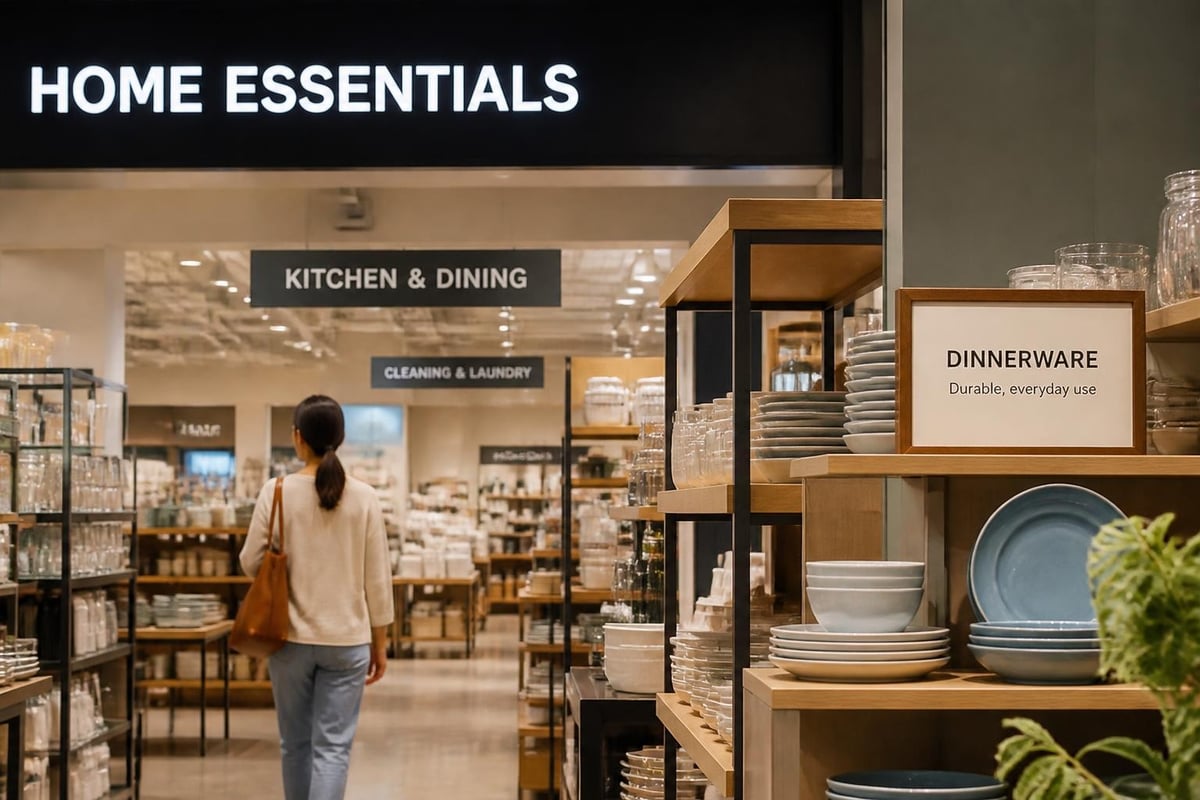
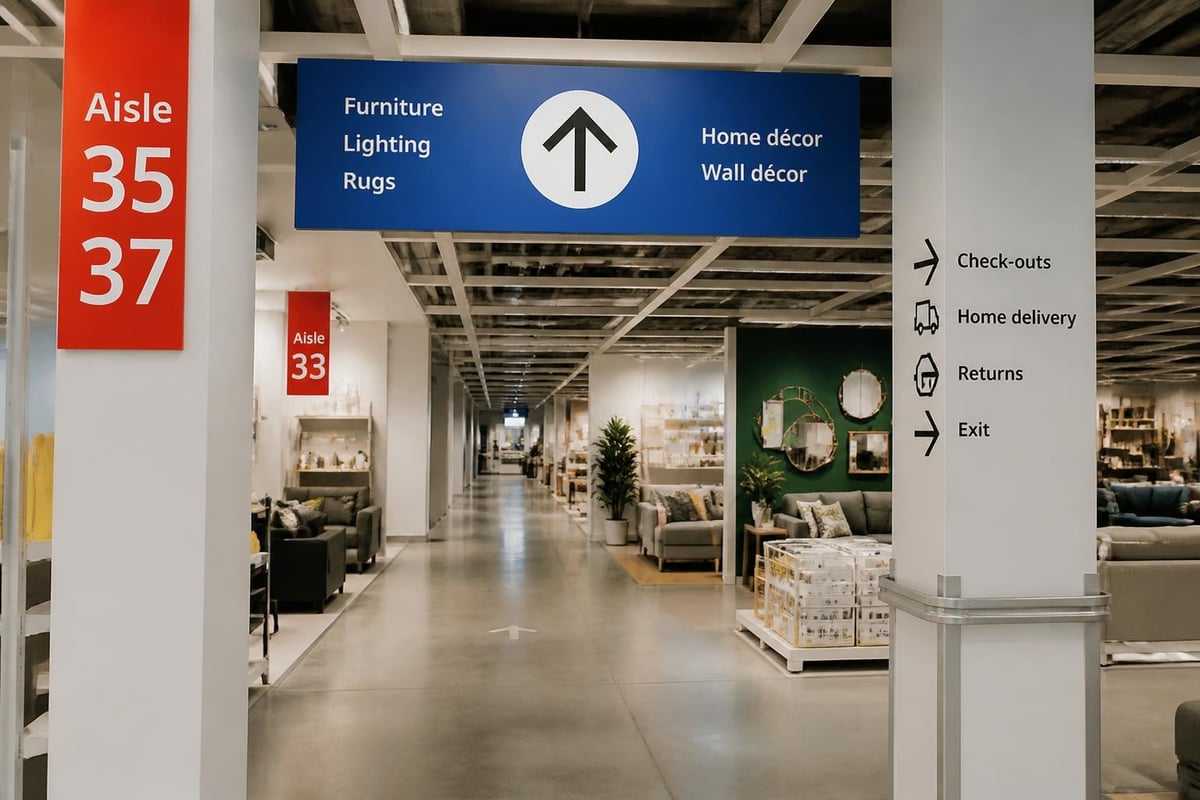
- Department identifiers: Suspended or wall-mounted signs marking major product categories
- Aisle markers: Numerical or categorical labels enabling quick location
- Directional arrows: Guiding customers to facilities, exits, and featured areas
- Service point indicators: Highlighting checkouts, customer service, fitting rooms, and amenities
- Regulatory signage: Safety exits, capacity limits, and accessibility information
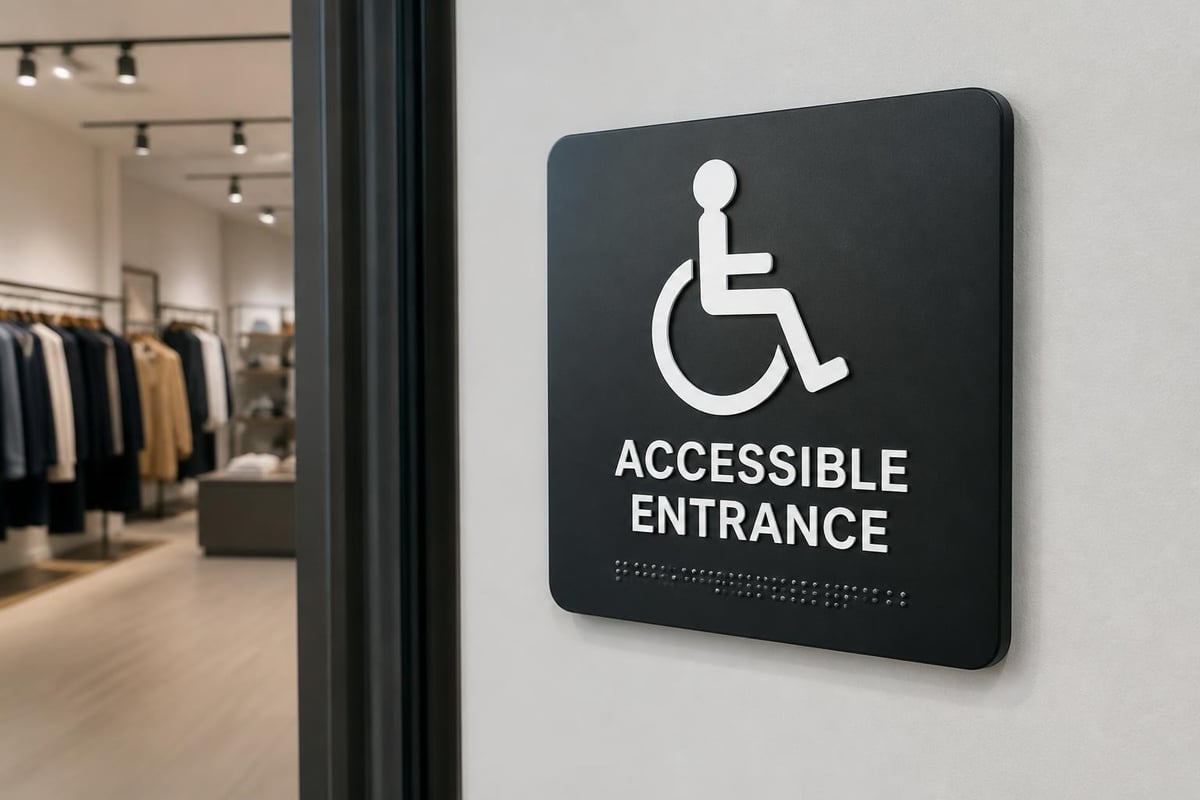
The U.S. Access Board guidelines on signs provide comprehensive technical specifications for tactile characters, Braille, contrast requirements, and mounting heights that ensure your wayfinding system serves all customers effectively, regardless of visual or mobility challenges.
Consistency in typography, colour coding, and positioning creates intuitive navigation patterns. When customers learn your system in one area, they should confidently predict signage locations and formats throughout your entire retail space.
Material Selection for Interior Environments
Interior signage materials balance aesthetic appeal with practical durability. Acrylic offers versatility, accepting printed graphics or vinyl application whilst maintaining clean, professional appearance. Aluminium composite panels deliver lightweight rigidity suitable for larger suspended elements. For premium environments, brushed metal, natural timber, or even stone create tactile richness that reinforces brand positioning.
Illuminated options, particularly Lightbox Signage, transform department markers and feature displays into focal points that draw attention across open retail floors. Lightboxes with acrylic returns offer sleek, modern aesthetics whilst Mae-West profiles provide traditional depth and shadow lines suited to heritage or classic retail concepts.

Promotional and Point-of-Sale Signage
Beyond permanent wayfinding infrastructure, tactical promotional signage drives immediate commercial action. These flexible elements highlight current offers, introduce new products, communicate urgency, and influence purchasing decisions at critical conversion moments.
Shelf talkers and product flags interrupt horizontal sight lines, drawing attention to featured items within crowded displays. Their compact format delivers concentrated messaging precisely where purchasing decisions occur.
Floor graphics capitalize on underutilized real estate, creating visual pathways toward featured areas or communicating promotional messages in high-traffic zones. Durable laminates withstand foot traffic whilst maintaining vibrant appearance throughout campaign durations.
Hanging banners and suspended displays exploit vertical space in high-ceiling environments, capturing attention from distance and creating visual interest above eye level. These elements prove particularly valuable during seasonal campaigns when comprehensive environmental transformation reinforces thematic messaging.
| Promotional Signage Type | Typical Lifespan | Primary Advantage | Best Application |
|---|---|---|---|
| Window clings | 3-6 months | Easy installation/removal | Seasonal campaigns |
| Floor graphics | 6-12 months | Unexpected positioning | Traffic direction |
| Shelf talkers | 1-3 months | Point-of-decision placement | New product launches |
| Hanging banners | 6-18 months | High visibility | Store-wide themes |
| Counter displays | 3-6 months | Impulse purchase support | Checkout zones |
The most successful promotional campaigns coordinate messaging across multiple touchpoints, creating reinforcement through repetition whilst avoiding monotonous redundancy.
Digital Signage Integration
Digital displays revolutionize retail communication by enabling dynamic content, scheduled messaging, and real-time updates without physical replacement costs. Modern retail environments increasingly blend static and digital elements to balance permanence with flexibility.
Digital screens excel at communicating time-sensitive information: current queue times, flash sale countdowns, stock availability, and social media feeds that create urgency and FOMO (fear of missing out). Product demonstration videos, customer testimonials, and brand storytelling find natural homes on screens positioned near relevant merchandise.
Content management systems allow centralized control across multiple locations, ensuring consistent messaging whilst enabling local customization. A/B testing different creative approaches becomes practical, with performance data informing continuous optimization.
Sustainable Digital Deployment
Environmental considerations increasingly influence signage decisions as retailers recognize both ethical imperatives and customer preferences for sustainable practices. The SEGD resources on sustainability provide actionable frameworks for evaluating material choices, energy consumption, and lifecycle impacts.
LED technology dramatically reduces energy consumption compared to legacy fluorescent illumination, whilst improving colour rendering and extending operational lifespans. Solar-powered options suit exterior applications in suitable climates, eliminating ongoing energy costs entirely.
The Green Signage handbook addresses sustainable practices specifically for digital deployments, including power management protocols, recycling programmes, and responsible disposal procedures that minimize environmental impact throughout the signage lifecycle.
Compliance and Accessibility Considerations
Regulatory requirements significantly influence signage for retail stores, particularly concerning accessibility, safety, and information provision. Understanding these obligations prevents costly retrofits and potential legal exposure whilst ensuring inclusive customer experiences.
Key compliance domains include:
- Accessibility standards: Tactile characters, Braille, mounting heights, colour contrast
- Fire safety: Emergency exit marking, evacuation routes, assembly points
- Trading standards: Pricing display, promotional terms, product information
- Building regulations: Directional signage, facility identification, capacity notices
Permanent room identification signs (toilets, changing rooms, exits) require specific tactile and visual characteristics detailed in accessibility guidelines. These aren't merely bureaucratic hurdles; they represent genuine inclusivity measures that expand your addressable customer base.
Maintenance and Lifecycle Management
Even the most brilliantly designed signage portfolio degrades without proper maintenance. Faded graphics, broken illumination, peeling vinyl, and damaged substrates communicate neglect that undermines brand equity and erodes customer confidence.
Establishing routine inspection schedules identifies issues before they become conspicuous. Monthly walkthroughs documenting condition, quarterly deep cleaning, and annual professional assessment create manageable maintenance cadences that preserve investment value.
Proactive maintenance checklist:
- Clean all surfaces to remove dust, fingerprints, and environmental soiling
- Test illuminated elements for lamp failures or uneven brightness
- Inspect mounting hardware for security and stability
- Check vinyl graphics for lifting edges or bubble formation
- Assess overall visual impact from customer sight lines
- Document any damage requiring repair or replacement
Digital signage demands additional attention to software updates, content refresh, and screen calibration. Stale content proves worse than no content; viewers quickly learn to ignore screens displaying outdated or irrelevant information.
Planning replacement cycles prevents emergency reactive spending. Most exterior graphics perform optimally for 3-5 years depending on UV exposure and weather conditions. Interior elements typically extend to 5-7 years before appearing dated. Budgeting for systematic refresh maintains contemporary appearance whilst distributing capital expenditure predictably.
Strategic Design Principles
Beyond functional requirements, aesthetic excellence distinguishes memorable retail environments from forgettable ones. Your signage should reinforce brand personality whilst respecting architectural context and customer expectations.
Typography selection profoundly influences readability and brand perception. Sans-serif fonts generally offer superior legibility at distance and in challenging lighting conditions. However, serif treatments may better suit premium positioning or heritage brands where sophistication trumps pure functionality.
Colour psychology influences emotional response and attention capture. High-contrast combinations (dark text on light backgrounds or vice versa) maximize legibility. Brand colours should dominate to reinforce identity, supported by accent colours that create visual hierarchy and guide attention.
Scale and Proportion
Appropriate sizing ensures readability from intended viewing distances whilst respecting architectural proportion. The relationship between letter height and viewing distance follows established formulas: one inch of letter height per 10 feet of viewing distance provides baseline legibility for static viewing. Moving traffic requires larger scale to accommodate reduced dwell time.
Negative space proves as important as active elements. Overcrowded signage creates visual confusion and reduces message retention. Generous margins, appropriate line spacing, and restrained information density allow key messages to breathe and register effectively.
Measuring Signage Performance
Data-driven evaluation transforms signage from aesthetic investment to accountable marketing tool. While measuring direct attribution proves challenging, several metrics provide meaningful performance insight.
Quantitative assessment approaches:
- Footfall analysis comparing before/after signage installation or refresh
- Customer journey mapping identifying navigation pain points
- Staff enquiry tracking measuring wayfinding effectiveness
- Promotional redemption rates linked to specific signage campaigns
- Heat mapping and dwell time analysis near featured displays
Qualitative feedback through customer surveys and staff interviews reveals experiential dimensions that numbers alone cannot capture. Questions targeting ease of navigation, information sufficiency, and overall environmental impression expose improvement opportunities.
A/B testing different messaging, positioning, or design treatments generates comparative data supporting evidence-based optimization. Even simple changes like message hierarchy or colour emphasis can yield measurable performance differences worth systematic evaluation.
Effective signage for retail stores combines strategic thinking, creative design, and practical execution to create environments where customers feel welcomed, oriented, and inspired to engage with your merchandise. From exterior attraction through interior wayfinding to point-of-sale persuasion, every sign contributes to commercial success and brand building. Whether you're launching a new retail concept or refreshing an established presence, Signshoponline delivers comprehensive signage solutions including custom fascias, illuminated displays, digital screens, and promotional materials tailored to your specific retail environment and commercial objectives.


