


LED screen technology has fundamentally transformed how businesses communicate with their audiences, evolving from simple message boards into sophisticated digital platforms capable of delivering dynamic, high-resolution content. These displays leverage light-emitting diode technology to create vivid, energy-efficient visuals that outperform traditional signage in nearly every measurable category. Whether deployed in retail environments, corporate lobbies, outdoor advertising spaces, or entertainment venues, an led screen offers unmatched versatility and impact. Understanding the technical specifications, installation requirements, and strategic applications of this technology enables businesses to make informed decisions that maximise return on investment whilst delivering compelling visual experiences.
Understanding LED Screen Technology Fundamentals
The core of led screen technology lies in thousands or millions of individual light-emitting diodes arranged in a precise matrix. Each diode emits coloured light when electrical current passes through it, with red, green, and blue LEDs combining to create the full spectrum of visible colours through additive colour mixing. This fundamental principle enables these displays to reproduce images with exceptional colour accuracy and brightness levels far exceeding conventional LCD panels.
Pixel Pitch and Resolution Considerations
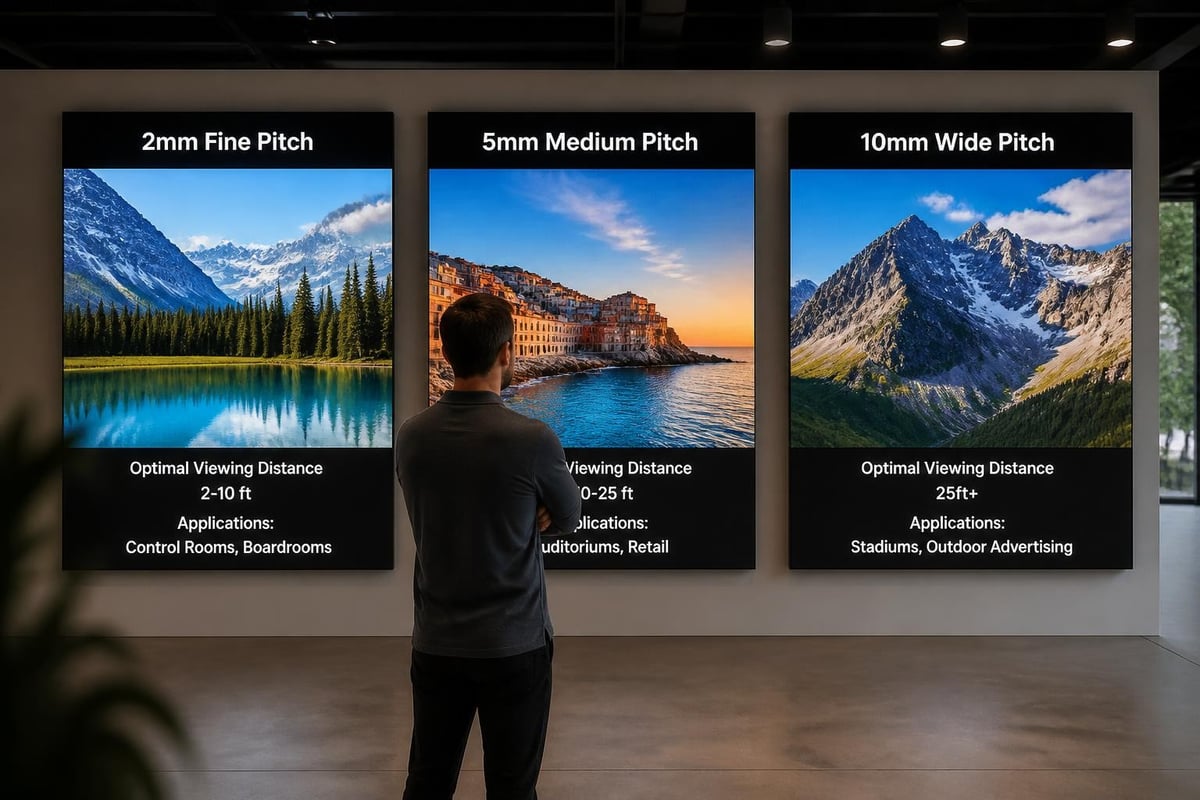
Pixel pitch, measured in millimetres, represents the distance between the centres of adjacent pixels on an led screen. This specification directly impacts viewing distance and image clarity.
- Fine pixel pitch (1.2mm to 2.5mm): Ideal for close viewing distances, corporate lobbies, control rooms
- Medium pixel pitch (2.5mm to 6mm): Suitable for retail environments, indoor advertising, conference spaces
- Wide pixel pitch (6mm to 16mm+): Optimal for outdoor billboards, stadium displays, long-distance viewing
The relationship between pixel pitch and optimal viewing distance follows a simple formula: multiply the pixel pitch by approximately 1,000 to determine the minimum viewing distance in millimetres. A 4mm pixel pitch led screen, for instance, delivers optimal clarity from 4 metres onwards. International standards bodies including SMPTE provide detailed guidance on display resolution and viewing distance calculations for professional applications.
Brightness and Environmental Suitability
Measured in nits (candelas per square metre), brightness determines an led screen's visibility under varying ambient light conditions. Indoor displays typically range from 600 to 1,500 nits, whilst outdoor installations require 5,000 to 10,000 nits to remain visible in direct sunlight.
| Environment | Brightness Range | Typical Applications |
|---|---|---|
| Indoor (controlled light) | 600-1,000 nits | Retail displays, meeting rooms |
| Indoor (high ambient) | 1,000-2,000 nits | Atriums, showrooms, airports |
| Semi-outdoor | 2,500-4,000 nits | Covered entrances, transit shelters |
| Outdoor (full sun) | 5,000-10,000 nits | Billboards, stadium perimeters |
The IEC 62341 standards family provides comprehensive measurement protocols for assessing led screen brightness, ensuring consistency across manufacturers and installations.
LED Screen Applications Across Business Sectors
Modern led screen deployments extend far beyond simple advertising, serving critical functions in communication, wayfinding, brand building, and customer engagement.
Retail environments leverage these displays to create immersive shopping experiences, showcasing products through dynamic content that traditional static signage cannot match. Fashion retailers rotate seasonal collections, electronics stores demonstrate product features, and supermarkets highlight promotional offers-all on a single versatile platform that updates instantly without printing costs or installation delays.
Corporate and Institutional Deployments
- Reception area displays welcoming visitors with brand messaging and wayfinding information
- Conference room installations facilitating presentations and video conferencing
- Digital menu boards in staff cafeterias updating meal options and nutritional information
- Emergency communication systems broadcasting critical alerts during incidents
Corporate campuses increasingly deploy networked led screen arrays managed through centralised content management systems, enabling consistent messaging across multiple locations whilst allowing localised content where appropriate.
Transportation hubs utilise high-brightness outdoor led screen installations to provide real-time departure information, advertising, and emergency notifications. The robust construction and weather resistance of modern displays ensure reliability in challenging environmental conditions, whilst remote monitoring systems alert maintenance teams to potential issues before they impact operations.
Installation Planning and Technical Requirements
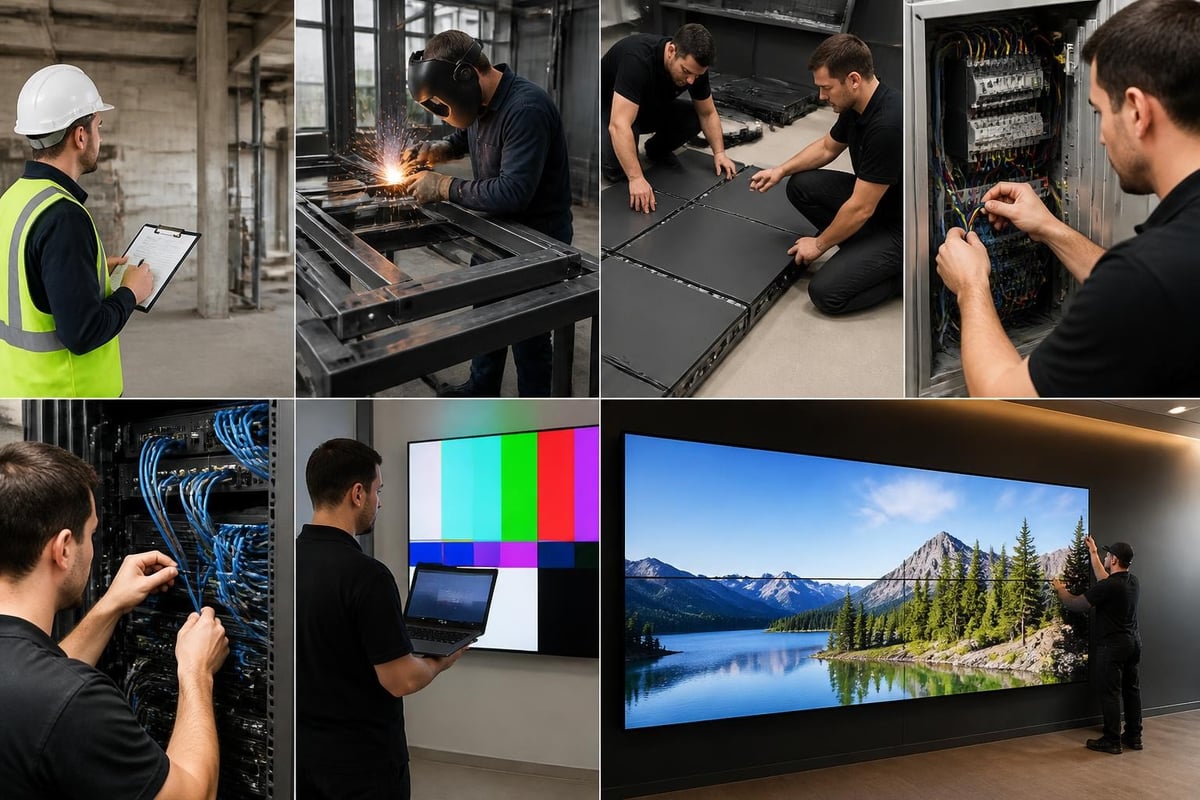
Successful led screen deployment requires careful attention to structural support, electrical infrastructure, network connectivity, and environmental factors. AVIXA provides comprehensive installation guidance covering mounting systems, signal distribution, and calibration procedures that ensure optimal performance.
Structural Considerations
The weight of an led screen varies considerably based on technology and size, with outdoor-rated installations incorporating weatherproof enclosures that add substantial mass. A typical outdoor display measuring 4 metres by 3 metres might weigh 500-800 kilograms, requiring engineered mounting solutions anchored to suitable structural elements.
Indoor installations offer greater flexibility, with slim-profile screens mounting directly to walls using standard brackets or suspended from ceiling structures using cable systems. The relatively low weight of modern indoor displays, often under 30 kilograms per square metre, simplifies integration into existing spaces without major structural modifications.
Power and Data Infrastructure
- Electrical capacity assessment: Calculate total power consumption including screen, media player, and cooling systems
- Circuit design: Implement dedicated circuits with appropriate overcurrent protection
- Backup power consideration: Evaluate uninterruptible power supply requirements for critical applications
- Network connectivity: Establish reliable Ethernet or fibre connections for content delivery
- Remote monitoring: Configure management systems enabling performance tracking and diagnostics
Modern led screen technology delivers impressive energy efficiency, with typical power consumption ranging from 100 to 300 watts per square metre at average brightness levels. This represents a significant improvement over older display technologies whilst delivering superior brightness and colour performance.
Content Strategy and Management
The technical capabilities of an led screen mean little without compelling content that engages audiences and drives desired actions. Successful deployments integrate hardware selection with comprehensive content strategies addressing message frequency, visual hierarchy, and audience demographics.
Content management systems enable businesses to schedule programming, update messaging remotely, and measure engagement through analytics integration. Advanced platforms support dynamic content triggered by external data sources-weather conditions, traffic patterns, social media feeds, or inventory levels-creating contextually relevant displays that adapt to changing circumstances.
Design Principles for LED Screen Content
Readability considerations govern text sizing and font selection, with recommendations suggesting character heights representing at least 1/200th of the viewing distance. A display viewed from 20 metres requires minimum character heights of 100 millimetres to ensure legibility. Sans-serif typefaces with generous spacing perform best, avoiding intricate details that blur at distance.
Motion and animation capture attention effectively but require restraint to avoid visual fatigue. Content designers balance static information providing sustained readability with animated elements drawing initial attention. Transition effects should complement rather than distract from core messaging.
Businesses creating content in-house or partnering with creative agencies benefit from understanding aspect ratios, resolution requirements, and file formats optimised for led screen playback. Professional digital marketing agencies such as BCK Limited offer specialised expertise in creating video content and visual strategies tailored for large-format digital displays, ensuring maximum impact across various platforms.
Selecting the Right LED Screen Specification
Matching display specifications to application requirements demands systematic evaluation of technical parameters, budget constraints, and long-term objectives. Procurement decisions should consider total cost of ownership including installation, content creation, energy consumption, and maintenance rather than initial purchase price alone.
| Decision Factor | Key Considerations | Impact on Selection |
|---|---|---|
| Viewing distance | Determines minimum pixel pitch | Closer viewing requires finer pitch |
| Ambient lighting | Dictates necessary brightness level | Bright environments need higher nits |
| Content complexity | Influences resolution requirements | Detailed imagery needs smaller pixels |
| Installation location | Affects weatherproofing and durability | Outdoor demands higher IP ratings |
| Update frequency | Determines connectivity requirements | Real-time content needs robust networks |
Indoor Versus Outdoor Specifications
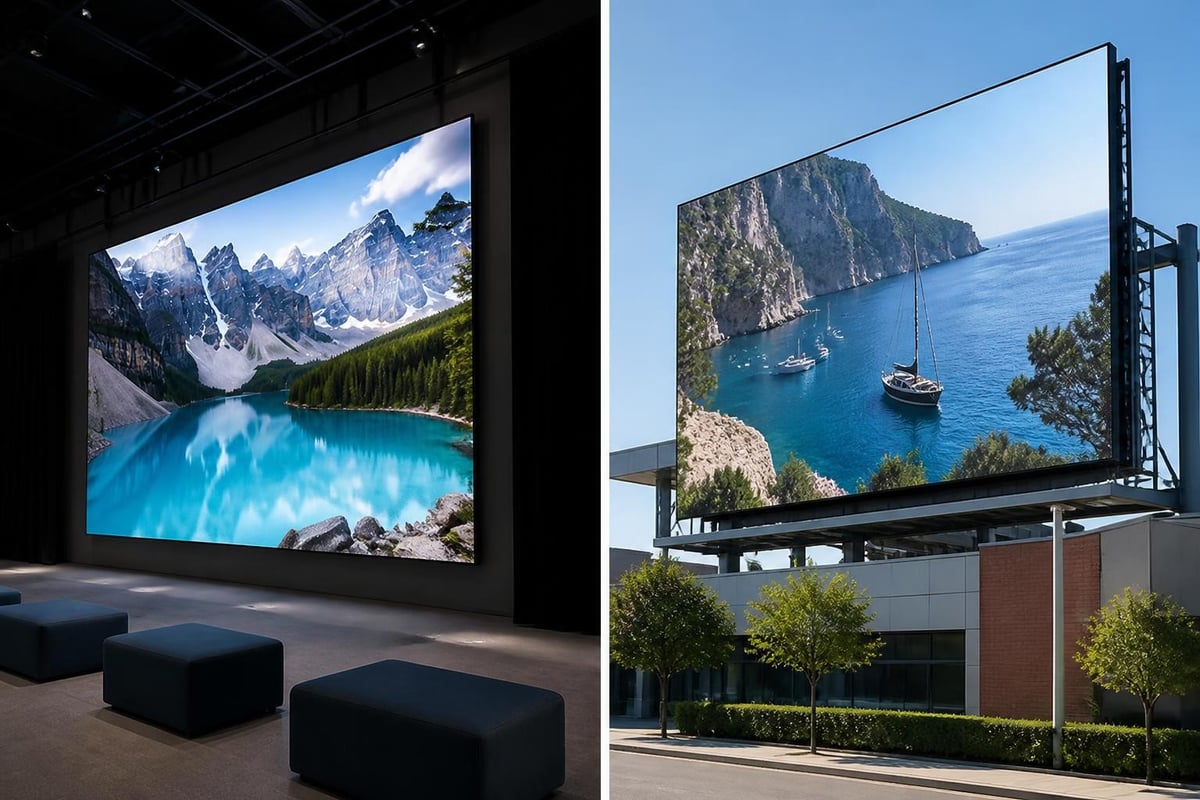
Indoor led screen installations prioritise fine pixel pitch and colour accuracy, operating in controlled environments where weatherproofing is unnecessary. These displays typically feature front-service maintenance for wall-mounted applications where rear access proves impractical.
Outdoor displays incorporate weatherproof enclosures rated to IP65 or higher, protecting internal components from moisture, dust, and temperature extremes. Specialised coatings on LED modules prevent degradation from ultraviolet exposure, whilst robust cooling systems manage heat dissipation in high-brightness operation. Many businesses seeking outdoor digital signage solutions also explore traditional lightbox signage as complementary or alternative options depending on content update frequency and budget parameters.
Health, Safety, and Regulatory Compliance
Responsible led screen deployment addresses potential health impacts, particularly concerning blue light exposure and flicker sensitivity. Recent research including systematic reviews on blue light and digital screens examines effects on vision, circadian rhythms, and cognitive function, informing best practices for commercial installations.
The ICNIRP guidance on short-wavelength light exposure from artificial sources provides authoritative recommendations relevant to led screen emissions. Whilst commercial displays operating at standard brightness levels pose minimal risk to casual viewers, installations in environments with prolonged exposure-such as control rooms or offices-benefit from brightness management, flicker reduction, and blue light filtering.
Electrical and Fire Safety Standards
Led screen installations must comply with local electrical codes, building regulations, and fire safety requirements. Proper earthing, circuit protection, and emergency shutdown systems form essential components of safe deployments. Outdoor installations require lightning protection systems integrated with structural earthing to prevent damage during electrical storms.
Regular maintenance inspections verify continued compliance with safety standards, identifying potential issues before they compromise performance or safety. Professional service agreements typically include quarterly inspections, annual calibration, and prompt response to technical faults.
Integration with Broader Signage Solutions
Whilst led screen technology excels at dynamic content delivery, comprehensive signage strategies often combine multiple formats serving complementary purposes. Static directional signs, informational displays, and promotional materials work alongside digital platforms to create cohesive communication environments.
Many businesses integrate led screen installations with traditional signage elements including directional signs for wayfinding, neon signs for brand identity, and vehicle graphics for mobile advertising. This hybrid approach maximises impact whilst managing costs effectively, deploying digital technology where dynamic content delivers clear advantages whilst using cost-effective static solutions elsewhere.
Market Trends and Future Developments
The professional display market continues evolving rapidly, with industry research from Futuresource Consulting tracking adoption trends, pricing dynamics, and technology transitions. Fine-pitch led screen adoption accelerates as manufacturing improvements reduce costs, making sub-2mm pixel pitches increasingly accessible for medium-sized installations.
Emerging technologies including MicroLED and transparent led screen panels expand application possibilities. Transparent displays enable window installations maintaining visibility whilst showcasing content, appealing to retail environments prioritising natural light. MicroLED technology promises further improvements in brightness, colour accuracy, and lifespan, though current costs limit adoption to premium applications.
Advanced measurement approaches, including recent research on human-aligned luminance measurement for large-format displays, improve calibration accuracy and viewer comfort. These developments ensure led screen technology continues delivering superior visual experiences whilst addressing human perceptual factors.
Maintenance and Lifecycle Management
Proactive maintenance extends led screen lifespan and ensures consistent performance throughout years of operation. Modern displays typically offer 50,000 to 100,000 hours of operation before brightness degrades to 50% of original levels-equivalent to 5.7 to 11.4 years of continuous 24/7 use.
Scheduled maintenance activities include:
- Visual inspection identifying physical damage or pixel failures
- Brightness calibration maintaining colour consistency across panels
- Cooling system cleaning preventing thermal issues
- Connection verification ensuring reliable power and data delivery
- Software updates addressing security vulnerabilities and adding features
Panel-level serviceability enables targeted repairs replacing only affected modules rather than entire screens, minimising downtime and repair costs. Front-service designs prove particularly valuable for wall-mounted installations where rear access presents challenges.
Environmental factors significantly impact maintenance requirements. Outdoor led screen installations in coastal regions face accelerated corrosion from salt exposure, whilst urban locations contend with pollution deposits requiring more frequent cleaning. Site-specific maintenance schedules account for these variables, adjusting service frequency accordingly.
ROI Calculation and Business Justification
Quantifying led screen return on investment requires assessing both tangible revenue impacts and intangible brand benefits. Retail deployments track conversion rate changes, average transaction values, and promotional campaign effectiveness. Corporate installations measure reduced printing costs, improved internal communication efficiency, and enhanced visitor experiences.
Energy efficiency comparisons demonstrate operational cost advantages over traditional lighting solutions. An led screen consuming 200 watts per square metre operating 12 hours daily incurs annual electricity costs of approximately £175 at commercial rates-a fraction of the illuminated signage it replaces whilst delivering vastly superior flexibility.
Content versatility eliminates recurring production costs associated with printed materials. A single led screen accommodates unlimited message variations, seasonal campaigns, and real-time updates without additional manufacturing expenses. This flexibility proves particularly valuable for businesses with frequent promotional cycles or time-sensitive information requirements.
Businesses exploring comprehensive signage solutions, from traditional formats like teardrop banners to advanced moving led signs, benefit from evaluating each technology's strengths within overall communication strategies. Digital and static elements often work synergistically, with led screen installations drawing attention whilst permanent signage provides consistent wayfinding and brand reinforcement.
Led screen technology represents a transformative investment for businesses seeking dynamic, flexible visual communication platforms that adapt to changing needs whilst delivering exceptional visual impact. Understanding technical specifications, installation requirements, content strategies, and maintenance considerations ensures successful deployments that maximise return on investment. Whether you're planning an outdoor advertising installation, corporate reception display, or retail environment enhancement, Signshoponline provides comprehensive digital signage solutions alongside traditional formats including custom signs, banners, and promotional displays-delivering the expertise and product range needed to bring your vision to life.


