

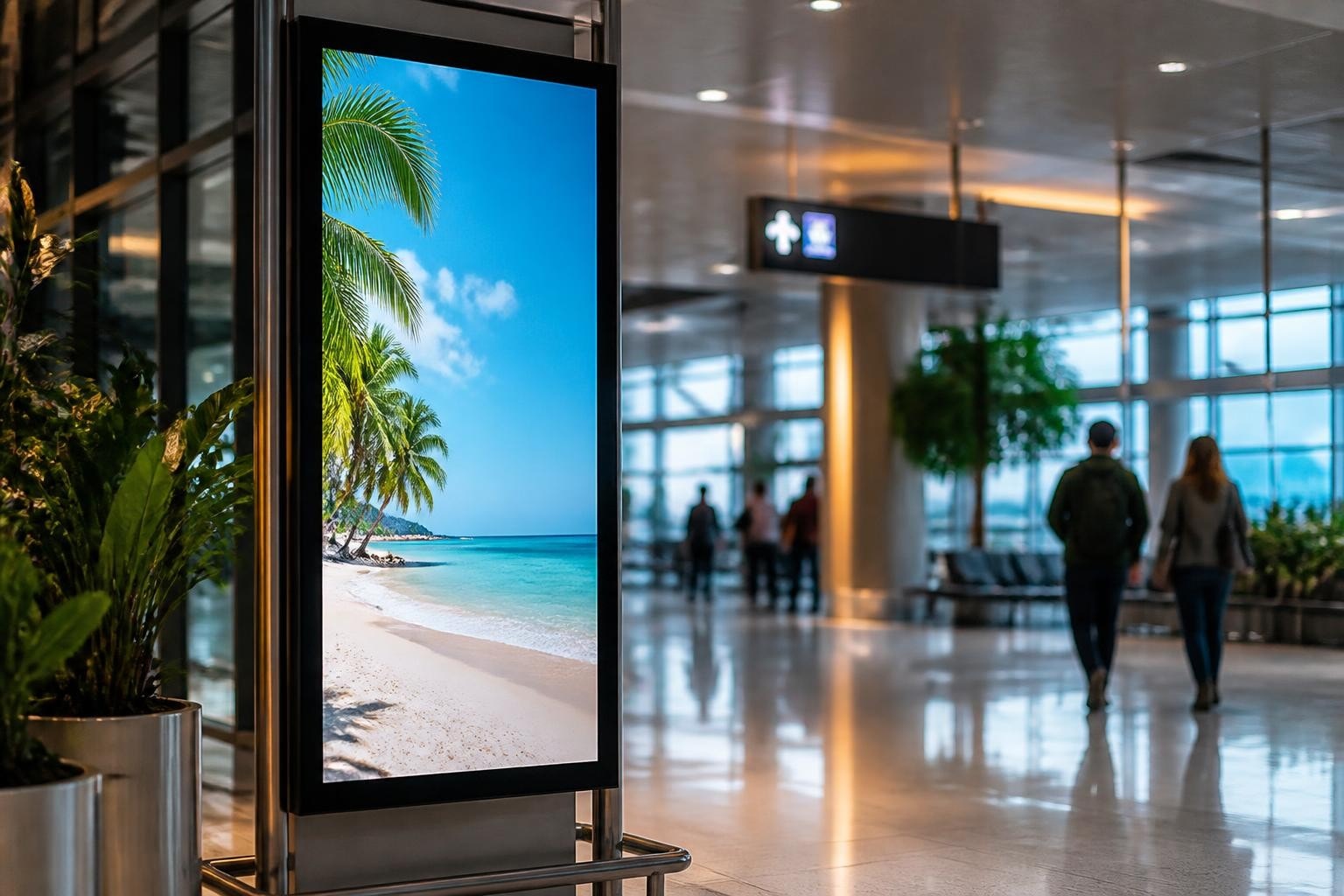
Modern businesses face constant pressure to capture attention in increasingly crowded environments. Digital signage display monitors have emerged as powerful tools that transform static messaging into dynamic, engaging communication channels. These specialized displays deliver content that can be updated instantly, scheduled automatically, and tailored to specific audiences throughout the day. From retail environments to corporate campuses, restaurants to transportation hubs, digital signage display monitors are reshaping how organizations communicate with customers, employees, and visitors. Understanding the technology, applications, and best practices surrounding these displays enables businesses to make informed investment decisions that deliver measurable returns.
Understanding Digital Signage Display Monitors
Digital signage display monitors represent a significant evolution from traditional static signage. These purpose-built screens differ fundamentally from consumer televisions, designed specifically for extended operation in commercial environments.
Commercial-Grade Specifications
Professional digital signage display monitors incorporate features that distinguish them from residential screens. Brightness levels typically range from 350 to 2,500 nits (cd/m²), far exceeding standard televisions. This enhanced luminosity ensures visibility in high-ambient-light environments such as shop windows, airport terminals, and outdoor installations.
Operating hours represent another critical differentiator. Consumer displays are rated for approximately 8-10 hours daily, whilst commercial digital signage display monitors are engineered for 16-24 hour continuous operation. Many models feature enhanced cooling systems, industrial-grade components, and robust power supplies that withstand constant use without degradation.
Key commercial specifications include:
- Temperature tolerance: Operation in ranges from -30°C to 60°C depending on the model
- Panel lifespan: 50,000-100,000 hours before reaching half-brightness
- Built-in scheduling: Integrated media players and content management capabilities
- Protective features: Anti-glare coatings, tempered glass, and weatherproof enclosures
- Connectivity options: Multiple HDMI, DisplayPort, USB, and network inputs
Display Technologies and Panel Types
Three primary panel technologies dominate the digital signage display monitors market, each offering distinct advantages.
| Panel Type | Viewing Angle | Colour Accuracy | Refresh Rate | Best Application |
|---|---|---|---|---|
| LCD (LED backlit) | 178° | Good | 60-120 Hz | General indoor signage |
| OLED | 178° | Excellent | 120+ Hz | Premium retail, museums |
| MicroLED | 178° | Excellent | Variable | Large-format video walls |
LCD panels with LED backlighting remain the most common choice, offering excellent value and proven reliability. OLED technology delivers superior contrast ratios and true blacks but carries higher costs and potential burn-in concerns with static content. MicroLED represents the emerging frontier, combining OLED's visual excellence with enhanced longevity, though current pricing limits adoption to high-end installations.

Applications Across Industries
The versatility of digital signage display monitors enables deployment across virtually every commercial sector, each leveraging the technology to address specific communication challenges.
Retail and Hospitality
Retailers deploy digital signage display monitors to create immersive shopping experiences that drive purchasing decisions. Dynamic pricing displays allow instant price adjustments based on inventory levels, time of day, or competitive factors. Fashion retailers use video walls to showcase seasonal collections, whilst grocery stores employ digital menu boards that highlight promotions and nutritional information.
According to recent industry research, retail environments represent the largest segment for digital signage deployments, driven by proven ROI through increased sales and enhanced customer engagement.
Quick-service restaurants have transformed operations with digital menu boards that adapt throughout the day. Breakfast offerings transition seamlessly to lunch menus, whilst promotional content rotates based on inventory availability and marketing campaigns. These systems integrate with point-of-sale platforms, creating synchronized experiences that improve order accuracy and reduce perceived wait times.
Corporate and Educational Environments
Modern corporate campuses utilize digital signage display monitors for internal communications, wayfinding, and brand reinforcement. Reception areas feature welcome screens that greet visitors whilst displaying company achievements and real-time information. Meeting room booking systems eliminate scheduling conflicts, showing availability at a glance and integrating with calendar platforms.
Educational institutions deploy these displays for:
- Campus announcements and emergency alerts
- Event schedules and room directories
- Donor recognition walls
- Interactive campus maps
- Cafeteria menus and nutritional information
The flexibility to update content centrally proves invaluable in fast-paced environments where information changes constantly. A single administrator can manage hundreds of displays across multiple buildings, ensuring consistent messaging whilst tailoring content to specific locations.
Transportation and Healthcare
Transportation hubs depend on digital signage display monitors for critical passenger information systems. Airports display flight status, gate assignments, and wayfinding content across hundreds of screens. The ability to update information instantly prevents bottlenecks and improves passenger flow during disruptions.
Healthcare facilities face unique communication challenges that digital signage addresses effectively. Patient queuing systems reduce perceived wait times by displaying accurate queue positions and estimated service times. Wayfinding displays help visitors navigate complex medical campuses, whilst waiting room screens provide health education content and facility information.
Technical Considerations and Selection Criteria
Selecting appropriate digital signage display monitors requires careful evaluation of multiple technical and operational factors aligned with specific deployment requirements.
Resolution and Aspect Ratios
4K Ultra HD (3840 × 2160) has become the standard for digital signage display monitors above 43 inches, delivering exceptional clarity for detailed content and text-heavy displays. Smaller screens may utilize Full HD (1920 × 1080) without noticeable quality degradation at typical viewing distances.
Aspect ratio selection depends on content type and installation orientation:
- 16:9 (widescreen): Standard for video content and landscape orientations
- 9:16 (portrait): Increasingly popular for retail and wayfinding applications
- 21:9 (ultrawide): Specialized applications requiring extended horizontal displays
- 1:1 (square): Niche applications including artistic installations
Content creation workflows must align with chosen aspect ratios to avoid letterboxing, pillarboxing, or distorted imagery. Digital signage content strategy planning should occur concurrent with hardware selection to ensure cohesive implementation.
Brightness and Visibility Requirements
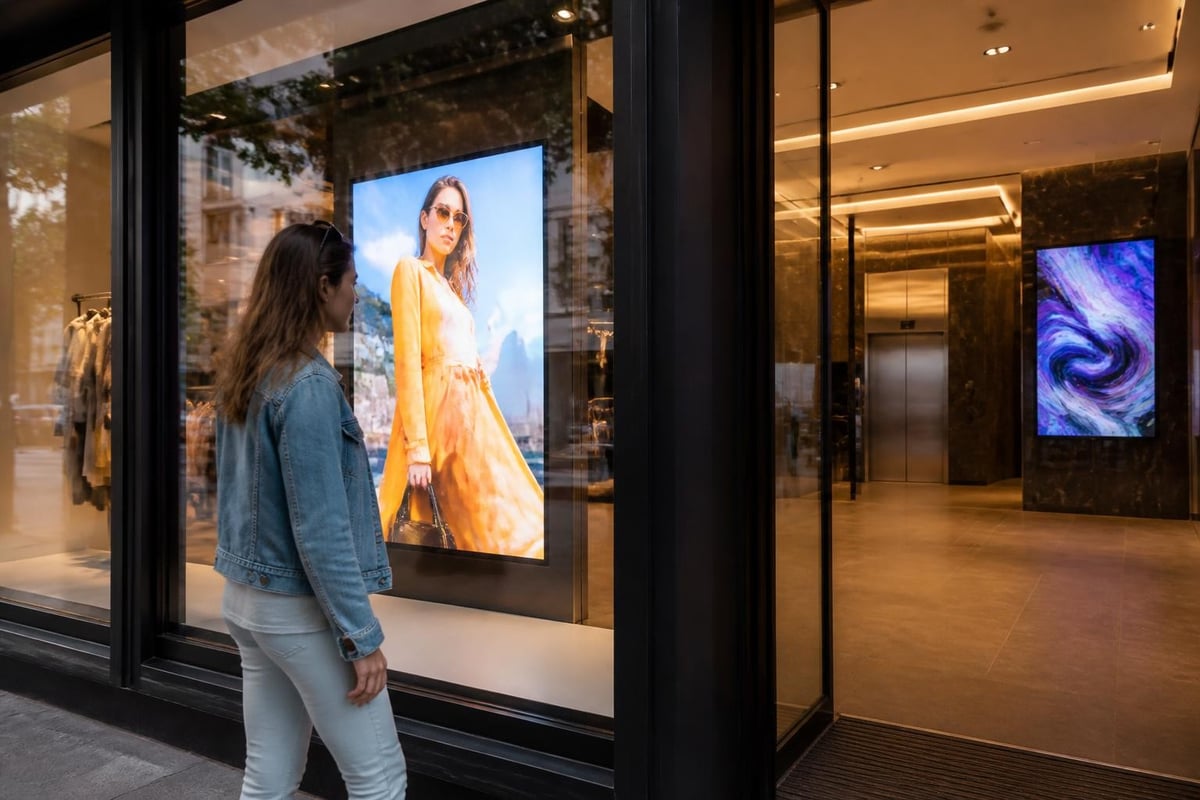
Ambient light conditions dictate necessary brightness levels for effective visibility. Indoor environments with controlled lighting typically require 350-700 nits, whilst window-facing installations demand 1,500-2,500 nits to compete with daylight.
High-brightness displays consume significantly more power and generate additional heat, necessitating enhanced cooling systems. Organizations must balance visibility requirements against operating costs and environmental impact. ENERGY STAR certified displays offer verified efficiency standards, helping reduce total cost of ownership whilst supporting sustainability initiatives.
Connectivity and Content Management
Modern digital signage display monitors offer diverse connectivity options supporting various content delivery methods. System-on-chip (SoC) displays incorporate built-in media players, eliminating external hardware requirements for basic deployments. These integrated solutions run Android or proprietary operating systems, supporting content management platforms directly.
External media player configurations provide greater flexibility for complex networks requiring:
- Real-time data integration (social media feeds, weather, news)
- Interactive touchscreen functionality
- Advanced scheduling and dayparting
- Multi-zone content layouts
- Proof-of-play reporting and analytics
Network connectivity standards include wired Ethernet, Wi-Fi 6, and emerging 5G cellular options for locations without reliable network infrastructure. Content management systems should support both cloud-based and on-premise deployment models, offering redundancy and offline playback capabilities.
Operational Best Practices
Successful digital signage deployments extend beyond hardware selection, requiring thoughtful planning around content, maintenance, and ongoing optimization.
Content Strategy and Design
Effective digital signage content balances information delivery with visual appeal whilst respecting viewer attention spans. Research indicates average viewing times of 3-7 seconds for ambient displays, demanding concise messaging and bold visuals.
Content rotation strategies prevent viewer fatigue and maintain engagement. Recommended practices include:
- Limiting individual message duration to 10-15 seconds
- Creating playlists with 8-12 unique content pieces
- Updating promotional content weekly
- Refreshing design templates monthly
- Conducting A/B testing to measure message effectiveness
Accessibility considerations ensure content reaches all audiences effectively. The Web Content Accessibility Guidelines provide valuable frameworks for digital signage, addressing text contrast ratios, motion sensitivity, and readability standards. ADA signage requirements extend to electronic displays, particularly for wayfinding and safety-critical information.
Maintenance and Lifecycle Management
Digital signage display monitors require proactive maintenance to ensure reliability and longevity. Industry experts emphasize that digital signage is not a 'set-it-and-forget-it' business, demanding ongoing attention to hardware, software, and content quality.
| Maintenance Task | Frequency | Responsibility |
|---|---|---|
| Display cleaning | Weekly | Facilities staff |
| Pixel verification | Monthly | IT or AV team |
| Software updates | Quarterly | IT department |
| Content audits | Monthly | Marketing team |
| Hardware inspection | Semi-annually | Service provider |
Preventive maintenance schedules reduce unexpected failures and extend equipment lifespan. Dust accumulation in ventilation systems represents a primary cause of premature failure, whilst neglected software updates create security vulnerabilities and compatibility issues.
Integration with Existing Systems
Modern digital signage ecosystems integrate with numerous enterprise platforms, enhancing functionality and streamlining operations. Point-of-sale integration enables real-time inventory-based promotions, whilst building management systems can trigger emergency messaging during evacuations or security events.
Data visualization represents a growing application for digital signage display monitors in corporate environments. Manufacturing facilities display production metrics, quality scores, and safety statistics on shop floors. Sales teams monitor pipeline dashboards and performance leaderboards, creating transparency and healthy competition.
Energy Efficiency and Sustainability
Environmental considerations increasingly influence technology purchasing decisions, with digital signage display monitors representing significant energy consumers in large-scale deployments.
Power Consumption and Operating Costs
Display power consumption varies dramatically based on size, brightness, and panel technology. A typical 55-inch commercial display operating 16 hours daily consumes approximately 200-300 kWh monthly. Across a network of 50 displays, annual electricity costs can reach £15,000-£20,000 at current commercial rates.
Energy-saving features substantially reduce operating expenses:
- Automatic brightness adjustment based on ambient light sensors
- Scheduled power-off during closed hours
- Occupancy sensors that dim or disable displays when areas are unoccupied
- Optimized refresh rates for static content
The ENERGY STAR programme requirements establish efficiency thresholds for signage displays, with certified models consuming 30-40% less energy than conventional alternatives. Organizations pursuing sustainability certifications should prioritize ENERGY STAR qualified equipment.
For businesses looking to combine traditional and digital solutions, lightbox signage offers an energy-efficient alternative that maintains illuminated visibility whilst consuming significantly less power than digital alternatives. These fabricated solutions work particularly well for static branding messages that require 24-hour visibility without content updates.

Sustainable Deployment Practices
Beyond hardware efficiency, sustainable digital signage practices encompass content optimization and lifecycle planning. Content scheduling reduces unnecessary operation, whilst thoughtful placement maximizes visibility without requiring excessive brightness levels.
End-of-life planning addresses environmental responsibility. Many digital signage display monitors contain recyclable materials including aluminium frames, glass panels, and circuit boards. Partnering with certified electronics recyclers ensures proper disposal whilst recovering valuable materials and preventing hazardous substances from entering waste streams.
Future Trends and Emerging Technologies
The digital signage display monitors landscape continues evolving rapidly, with several emerging technologies poised to reshape the industry over the coming years.
Artificial Intelligence and Interactivity
AI-powered digital signage systems analyse viewer demographics and engagement in real-time, adapting content dynamically. Facial recognition determines approximate age and gender, triggering targeted messaging whilst respecting privacy regulations. Gesture recognition enables contactless interaction, particularly valuable in post-pandemic environments prioritizing hygiene.
Computer vision analytics measure:
- Viewer dwell time and attention duration
- Peak viewing periods and traffic patterns
- Content effectiveness across demographics
- Queue lengths and wait time estimation
- Conversion rates linking displays to transactions
These insights enable continuous optimization, ensuring digital signage investments deliver measurable returns. Retail technology research highlights how integrated analytics transform signage from passive displays into active contributors to customer experience and revenue generation.
MicroLED and Advanced Display Technologies
MicroLED technology promises to revolutionize large-format digital signage display monitors. Unlike traditional LED video walls composed of discrete modules, MicroLED creates seamless displays without visible bezels or colour variations. Individual microscopic LEDs emit light directly, eliminating backlighting requirements and achieving exceptional contrast ratios.
Current challenges include manufacturing costs and pixel-pitch limitations, but industry forecasts project significant price reductions by 2028-2030. Early adopters deploy MicroLED in flagship retail stores, luxury hospitality venues, and corporate showrooms where visual impact justifies premium investment.
Transparent and Flexible Displays
Transparent OLED displays create futuristic retail experiences, overlaying digital content onto physical merchandise. Window installations transform storefronts into interactive showcases after hours, whilst maintaining daytime transparency for natural light and product visibility.
Flexible display technology enables curved and unconventional form factors previously impossible with rigid panels. Architectural integration becomes seamless, with displays wrapping columns, conforming to rounded surfaces, and creating immersive cylindrical installations. These innovations blur boundaries between signage and architecture, opening creative possibilities for designers and brand experiences.
Integration Strategies for Multi-Location Deployments
Organizations operating across multiple locations face unique challenges managing distributed digital signage networks effectively.
Centralized Content Management
Cloud-based content management platforms enable single-dashboard control over hundreds or thousands of digital signage display monitors. Role-based permissions allow corporate marketing teams to control brand-critical content whilst empowering local managers to customize promotional messages within approved templates.
Effective multi-location strategies include:
- Establishing content approval workflows preventing unauthorized messaging
- Creating template libraries ensuring brand consistency
- Implementing emergency override capabilities for urgent communications
- Monitoring display health remotely with automated alerts
- Scheduling content based on time zones and local business hours
Network Architecture Considerations
Bandwidth requirements vary significantly based on content types and update frequencies. Static image playlists consume minimal bandwidth, whilst 4K video streaming demands robust network infrastructure. Local caching reduces bandwidth consumption by storing frequently played content on display media players, refreshing only when updates occur.
Security protocols protect digital signage networks from unauthorized access and cyber threats. Isolated VLANs separate signage traffic from critical business networks, whilst encrypted connections prevent content interception. Regular security audits and firmware updates address emerging vulnerabilities.
Measuring Return on Investment
Justifying digital signage display monitors investments requires demonstrating tangible business value through quantifiable metrics.
Performance Metrics and Analytics
Comprehensive analytics platforms track multiple performance indicators:
- Engagement metrics: Viewer counts, attention duration, interaction rates
- Content performance: Message recall, dwell time by content type
- Operational efficiency: Queue reduction, wayfinding success rates
- Revenue impact: Sales lift, promotional redemption rates
- Cost savings: Reduced printing, faster information distribution
A/B testing methodologies compare content variations scientifically. Identical locations test different messaging, isolating signage impact from external variables. Retail environments measure basket size, conversion rates, and category sales before and after implementation.
Total Cost of Ownership Analysis
Beyond initial hardware costs, comprehensive TCO calculations include:
| Cost Category | Annual Estimate (per display) |
|---|---|
| Hardware amortization | £300-£600 |
| Content creation | £500-£2,000 |
| Software licensing | £100-£300 |
| Electricity | £150-£400 |
| Maintenance/support | £200-£500 |
| Total annual TCO | £1,250-£3,800 |
Organizations achieving positive ROI typically identify specific use cases where digital signage addresses measurable pain points. Queue management systems reducing perceived wait times improve customer satisfaction scores. Menu boards increasing average order values deliver quantifiable revenue gains. Internal communications improving employee engagement support broader organizational objectives.
Complementing digital installations with traditional signage elements creates balanced communication strategies. Reception signs and channel letters provide permanent branding whilst digital displays handle variable content, optimizing both impact and budget allocation.
Digital signage display monitors have matured into essential business communication tools, offering dynamic content delivery that static signage cannot match. Success depends on thoughtful hardware selection aligned with specific operational requirements, robust content strategies that engage viewers effectively, and ongoing optimization based on performance data. Whether you're exploring digital solutions for the first time or expanding an existing network, Signshoponline provides expert guidance and comprehensive signage solutions tailored to your unique business needs.


