


The hospitality industry has undergone a profound transformation in recent years, with technology reshaping every aspect of the guest journey. Digital displays have evolved from simple information boards into sophisticated communication platforms that enhance guest experiences, streamline operations, and create new revenue opportunities. Modern hotels are increasingly investing in these dynamic visual systems to meet rising guest expectations whilst reducing operational costs and improving brand consistency across their properties.
The Strategic Value of Digital Displays in Modern Hotels
Hotel digital signage delivers measurable benefits across multiple operational areas. Properties that implement comprehensive digital display networks report improved guest satisfaction scores, reduced perceived wait times at reception, and increased ancillary revenue through targeted promotions.
Key advantages include:
- Instant content updates across all screens without physical labour
- Reduced printing costs for event schedules, menus, and promotional materials
- Enhanced brand consistency across multiple properties
- Real-time integration with property management systems
- Improved accessibility for guests with hearing or visual impairments
The Sign Research Foundation has published extensive research demonstrating that digital signage significantly improves wayfinding effectiveness and reduces guest frustration in complex environments like hotels.
Primary Applications Across Hotel Environments
Different hotel zones require tailored digital display solutions. Lobby areas typically feature large-format screens showcasing welcome messages, local attractions, and promotional content. Conference facilities need integrated systems that display event schedules, room assignments, and sponsor branding.
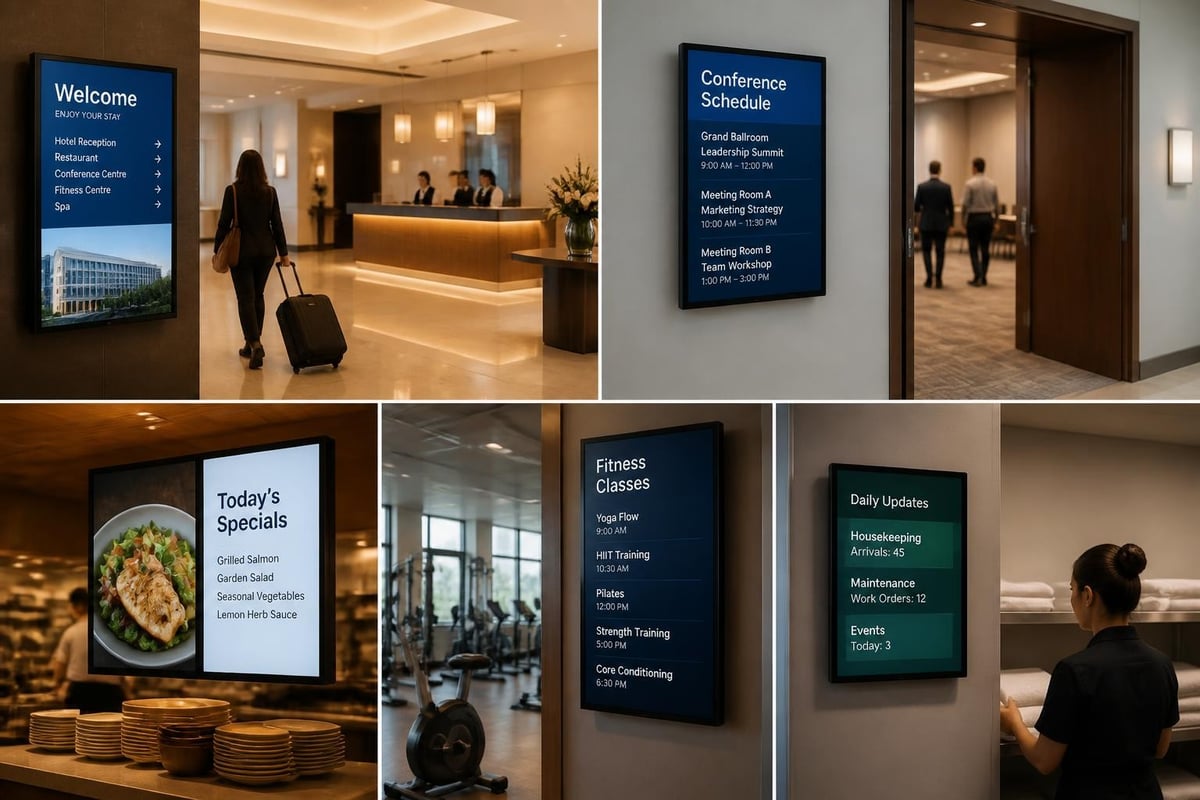
Restaurant and bar environments benefit from digital menu boards that can adjust pricing during happy hours or highlight daily specials without reprinting costs. Fitness centres use screens to display class schedules, wellness tips, and personal training promotions.
Content Strategy for Maximum Guest Engagement
Successful hotel digital signage requires thoughtful content planning beyond simply digitising existing printed materials. The most effective implementations balance informational content with promotional messaging whilst maintaining visual appeal.
Content Categories and Rotation Patterns
| Content Type | Recommended Frequency | Primary Purpose |
|---|---|---|
| Welcome messages | Continuous display | Brand reinforcement |
| Weather and time | Every 15-20 seconds | Practical information |
| Event schedules | Every 30-45 seconds | Wayfinding support |
| Promotional offers | Every 45-60 seconds | Revenue generation |
| Local attractions | Every 60 seconds | Guest experience enhancement |
| Safety information | Hourly or emergency-triggered | Compliance and safety |
Content should be designed specifically for digital screens rather than adapted from print materials. Text must be readable from appropriate viewing distances, with high contrast and limited information density per screen.
Dynamic Content Integration
Modern hotel digital signage systems integrate with multiple data sources to display real-time information. Property management systems can feed guest names to lobby screens for personalised welcome messages. Event management software automatically updates meeting room displays as bookings change throughout the day.
Weather APIs provide local forecasts, particularly valuable for resort properties where guests plan outdoor activities. Social media feeds can showcase guest-generated content (with appropriate permissions), creating social proof and encouraging engagement.
The Adelaide Marriott Hotel case study demonstrates how large-scale digital signage implementations integrate multiple content sources to create cohesive guest experiences whilst reducing staff workload.
Technical Considerations for Hotel Deployments
Selecting appropriate hardware and software requires careful evaluation of property-specific requirements. Screen placement, viewing angles, ambient lighting, and network infrastructure all influence system performance.
Critical technical specifications:
- Screen brightness (measured in nits) must overcome ambient lighting
- Commercial-grade displays rated for 16-18 hour daily operation
- Content management systems with multi-property support
- Secure network architecture preventing guest network interference
- Redundancy systems ensuring continuous operation
Hardware Selection Criteria
Hotel digital signage hardware must withstand continuous operation in varying environmental conditions. Lobby displays may require higher brightness levels to combat sunlight from entrance areas, whilst corridor screens can use standard brightness specifications.
Touch-enabled screens in public areas need vandal-resistant enclosures and regular cleaning protocols. Outdoor displays for entrance areas or poolside locations require weatherproof housings and temperature management systems.
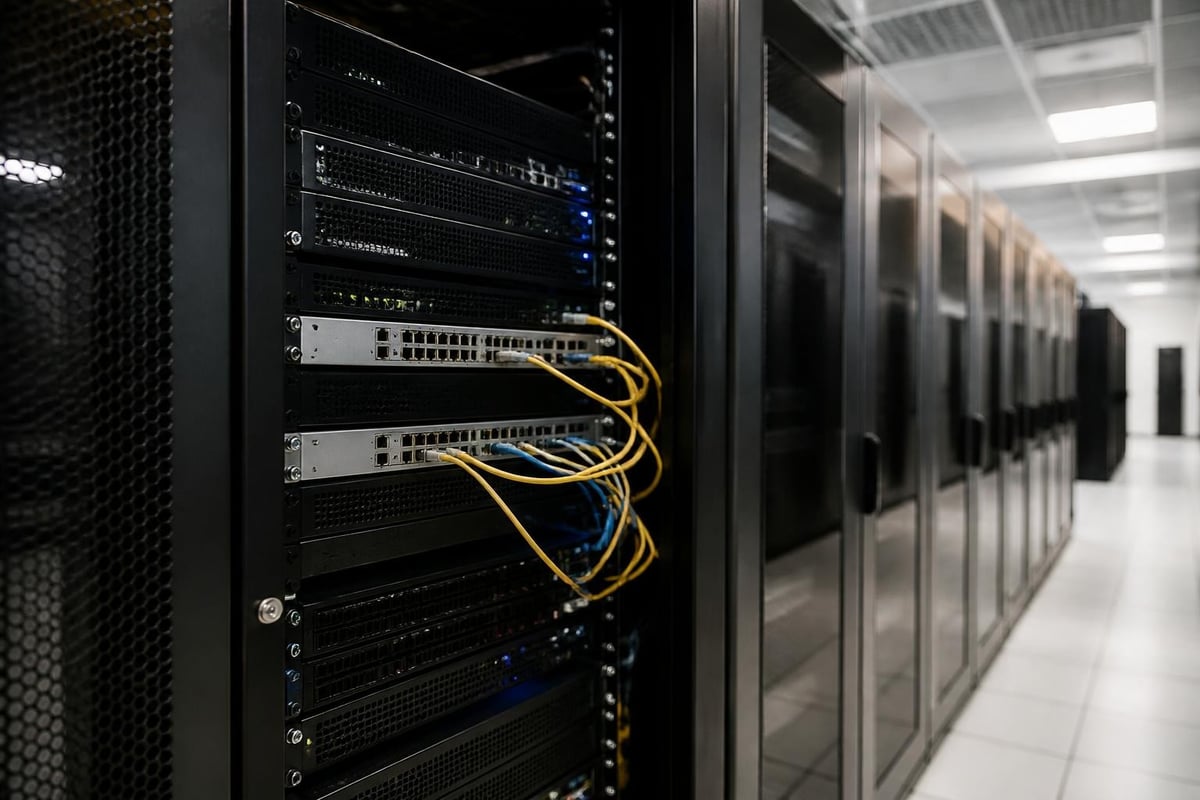
Portrait orientation suits corridor wayfinding applications, whilst landscape formats work better for lobby welcome screens and restaurant menus. Consideration of reception signage placement ensures visibility without obstructing staff-guest interactions.
Accessibility and Regulatory Compliance
Hotels must ensure digital signage systems meet accessibility requirements for guests with disabilities. The ADA guidance for places of lodging provides detailed specifications for visual contrast, text sizing, and alternative format availability.
Meeting Diverse Guest Needs
Digital displays should incorporate features that serve guests with varying abilities:
- High contrast colour schemes for visual clarity
- Adjustable text sizing on interactive displays
- Audio output options for wayfinding information
- Integration with hearing loop systems in conference areas
- Multilingual content supporting international guests
The ADA business brief for hotels specifically addresses communication requirements, noting that digital signage can supplement but not replace human assistance for guests who are deaf or hard of hearing.
Emergency notification systems must be particularly robust, with visual alerts complementing audio alarm systems. Clear, simple graphics communicate emergency procedures without requiring language proficiency.
Revenue Generation Through Strategic Placement
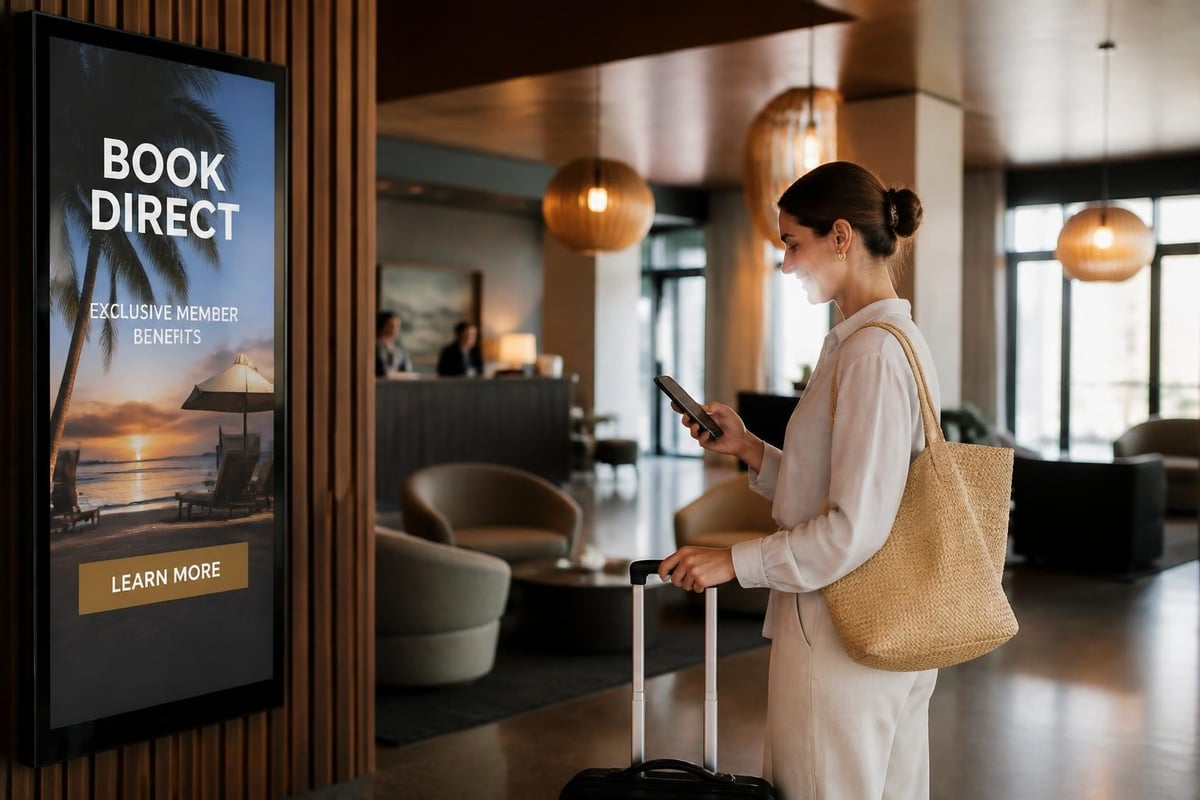
Hotel digital signage creates multiple revenue opportunities beyond operational efficiency. Strategic screen placement in high-traffic areas allows properties to promote on-site amenities, partner businesses, and third-party advertisers.
| Revenue Stream | Implementation Method | Typical ROI Timeline |
|---|---|---|
| Spa promotions | Targeted lobby displays | 3-6 months |
| Restaurant upsells | In-room and corridor screens | 2-4 months |
| Local business advertising | Lobby and lift displays | 6-12 months |
| Event space promotion | Conference area screens | 4-8 months |
| Retail partnerships | High-traffic public areas | 6-12 months |
Lift displays provide captive audiences during short journeys, ideal for promoting spa treatments, restaurant reservations, or upcoming events. Gym and pool areas work well for wellness product promotions or personal training services.
Data-Driven Content Optimisation
Advanced hotel digital signage systems track content performance through anonymous viewer analytics. Cameras or sensors measure dwell time, engagement rates, and peak viewing periods without collecting personal data.
This information helps properties optimise content rotation patterns, adjust promotion timing, and measure campaign effectiveness. Properties can A/B test different creative approaches and refine messaging based on measurable results.
Integration with Broader Marketing Strategies
Hotel digital signage should align with overall brand positioning and marketing campaigns. As demonstrated in Skift's coverage of The Peninsula Hotels' brand campaign, leading hospitality brands increasingly use digital channels to tell authentic stories rather than generic luxury messaging.
Digital displays extend campaigns beyond online channels into physical spaces where guests spend significant time. Launch announcements, seasonal promotions, and brand storytelling gain additional touchpoints throughout the property.
Cross-channel consistency requires coordination between marketing teams, property operations, and digital signage content creators. Style guides should specify colour palettes, typography, logo usage, and tone of voice for on-screen content matching website and social media standards.
Seasonal and Event-Specific Campaigns
Hotel digital signage excels at promoting time-sensitive offers and seasonal packages. Holiday period content can be scheduled weeks in advance, automatically appearing at designated times without staff intervention.
Properties hosting conferences or events use digital signage to create branded environments for corporate clients. Sponsor logos, event hashtags, and session information transform generic hotel spaces into customised venues.
Staff Communication and Operational Efficiency
Beyond guest-facing applications, hotel digital signage improves back-of-house operations. Staff areas use displays for shift schedules, training reminders, performance metrics, and recognition programmes.
Staff-focused digital signage benefits:
- Reduced paper waste from printed schedules and notices
- Instant communication of operational updates
- Visual performance dashboards motivating teams
- Training content accessible during quiet periods
- Safety reminders and compliance information
Kitchen displays can show food safety protocols, preparation standards, and quality checklists. Housekeeping areas benefit from cleaning procedure reminders and supply inventory updates.
Content Management and Maintenance Protocols
Successful hotel digital signage requires dedicated ownership and clear content governance. Properties should designate specific team members responsible for content creation, approval workflows, and system maintenance.
Establishing Content Workflows
- Content creation: Marketing or communications teams develop visual assets
- Approval process: Management reviews content for brand compliance and accuracy
- Scheduling: Approved content receives designated display times and locations
- Monitoring: Regular checks ensure screens display correctly
- Performance review: Monthly analysis of content effectiveness and engagement
Cloud-based content management systems allow corporate marketing teams to push branded content to multiple properties whilst individual locations maintain control over local information and promotions. This balance ensures brand consistency whilst permitting necessary customisation.
Regular maintenance schedules should include screen cleaning, software updates, and hardware inspections. Displays in high-touch areas like interactive wayfinding kiosks require more frequent attention than overhead corridor screens.
Future Trends Shaping Hotel Digital Signage
The hotel digital signage landscape continues evolving with emerging technologies. Artificial intelligence enables more sophisticated content personalisation, whilst improved display technologies offer better image quality at lower power consumption.
Touchless interaction methods, accelerated by health concerns, allow guests to interact with screens through gesture recognition or mobile phone connectivity. QR codes displayed on screens enable guests to access detailed information on personal devices.
Integration with Internet of Things (IoT) sensors creates responsive environments where digital signage adapts to occupancy levels, ambient conditions, or specific guest preferences. Conference rooms might automatically display welcome messages when booked guests arrive, detected through mobile app check-ins.
Environmental sustainability drives demand for energy-efficient displays and content management systems that automatically adjust brightness or power down screens during low-occupancy periods. Properties highlight sustainability initiatives through digital signage, building brand reputation with environmentally conscious travellers.
For properties looking to implement or upgrade their visual communication systems, Lightbox Signage solutions offer versatile options for illuminated displays that work effectively in both indoor and outdoor hotel environments, creating visual impact whilst maintaining energy efficiency.
Implementation Planning for Hotel Properties
Successful hotel digital signage deployments follow structured planning processes. Properties should begin with needs assessment, identifying specific communication challenges and opportunity areas across their facilities.
Phased Rollout Approach
| Phase | Focus Areas | Timeline | Investment Level |
|---|---|---|---|
| Phase 1 | Lobby and reception | 1-2 months | Foundation investment |
| Phase 2 | Meeting rooms and events | 2-3 months | Medium expansion |
| Phase 3 | Restaurants and amenities | 2-3 months | Medium expansion |
| Phase 4 | Corridors and guest floors | 3-4 months | Full coverage |
| Phase 5 | Back-of-house and staff areas | 1-2 months | Operational enhancement |
Phased approaches allow properties to demonstrate ROI from initial deployments before expanding systems. Early wins in high-visibility areas build internal support for broader implementation.
Pilot programmes in specific property zones help identify technical challenges, content requirements, and operational workflows before full-scale deployment. Lessons learned during pilots inform hardware selection, content strategies, and staff training programmes.
Budget planning should account for initial hardware costs, installation labour, content management software licences, ongoing content creation resources, and maintenance requirements. Total cost of ownership calculations spanning three to five years provide realistic investment pictures.
Hotel digital signage has evolved from a luxury amenity into an essential operational tool that enhances guest experiences, improves staff communication, and creates new revenue opportunities. Properties that approach digital signage strategically-with careful planning, quality content, and ongoing optimisation-see measurable returns on their investments through improved guest satisfaction and operational efficiency. Whether you're planning a new installation or upgrading existing systems, Signshoponline offers comprehensive digital signage solutions tailored to hospitality environments, helping properties create compelling visual experiences that resonate with modern travellers.


