


Neon signage has captivated audiences for over a century, transforming urban landscapes and establishing itself as an iconic medium for advertising and artistic expression. From the glowing storefronts of the 1920s to today's boutique installations, these luminous displays continue to hold cultural significance despite technological advances that have introduced new alternatives. Understanding the technical foundations, historical context, and modern applications of neon signage enables businesses to make informed decisions about incorporating these distinctive displays into their branding strategies.
The Historical Development of Neon Signage
The story of neon signage begins in the early twentieth century when French engineer Georges Claude pioneered the commercial application of neon gas in sealed glass tubes. Research from the National Institute of Standards and Technology documents how Claude first demonstrated his invention at the Paris Motor Show in 1910, marking the beginning of a revolution in illuminated advertising. By 1912, Claude had sold his first commercial neon sign to a Parisian barber, establishing a precedent that would spread globally throughout the following decades.
The technology reached North America in 1923, when a Los Angeles car dealership installed two neon signs advertising Packard automobiles. This installation sparked immediate interest across the United States, and within years, neon signage had become synonymous with American commercial culture. The Great Depression paradoxically accelerated adoption, as businesses sought eye-catching displays to attract customers in competitive markets.
Peak Era and Cultural Integration
The period between 1930 and 1960 represented the golden age of neon signage, particularly in entertainment districts and commercial corridors. Cities such as Las Vegas, New York, and Los Angeles developed distinctive neon landscapes that became integral to their identities. The Neon Museum's collection preserves hundreds of these historic signs, documenting an era when skilled craftspeople hand-bent each glass tube to create intricate designs and typography.
During this period, neon signage served multiple functions simultaneously:
- Brand differentiation in crowded marketplaces
- Architectural enhancement through integrated design
- Cultural landmarks that defined neighborhoods
- Artistic expression beyond purely commercial purposes
The technical expertise required to create neon signage developed into a specialized trade, with master craftspeople passing knowledge through apprenticeships. Each installation demanded careful planning, from gas selection (neon produces red-orange light, whilst argon with mercury creates blue) to phosphor coating choices that expanded the available colour palette.
Technical Characteristics and Manufacturing Process
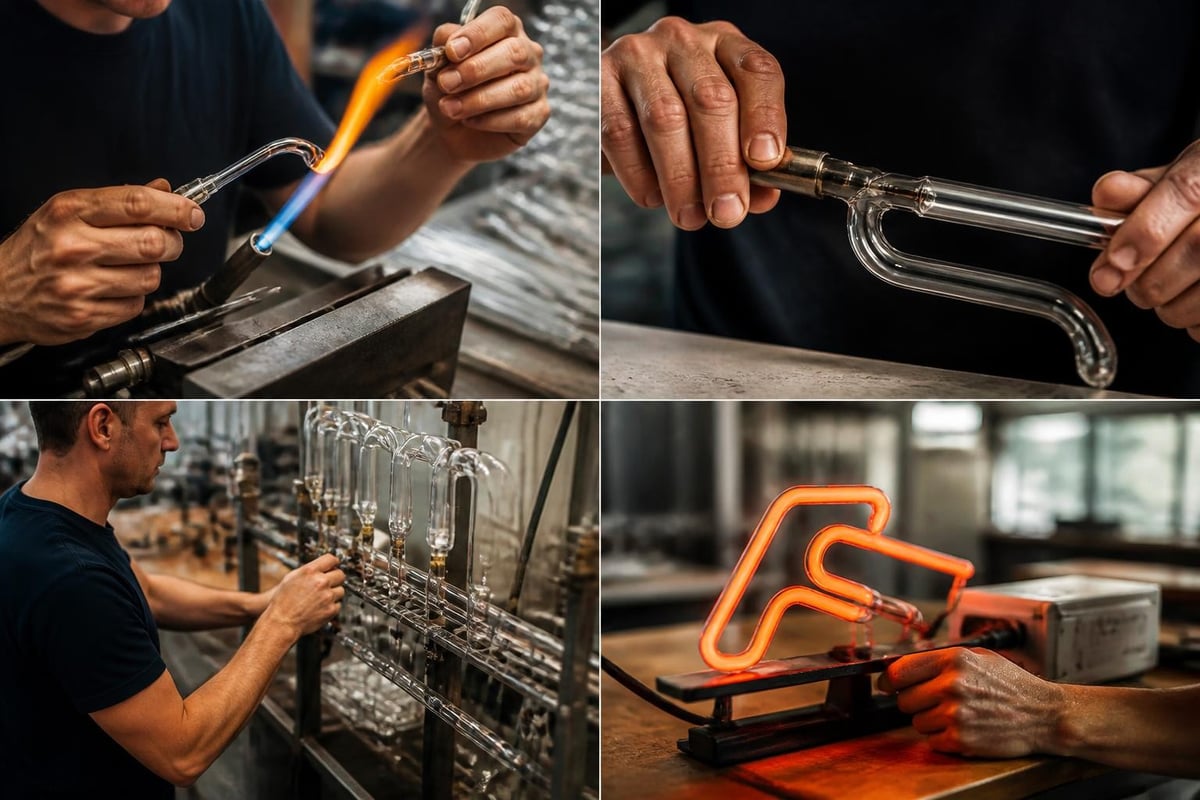
Creating traditional neon signage involves several precision steps that distinguish it from other illuminated sign technologies. The process begins with design specifications that account for both aesthetic requirements and technical constraints. Manufacturers source glass tubing in standard diameters, typically ranging from 8mm to 25mm, selecting sizes based on visibility requirements and design complexity.
Glass Bending and Shaping
Skilled technicians heat glass tubes over specialised burners, carefully bending them to match design templates. This process requires years of experience to master, as the glass must be heated to precise temperatures whilst maintaining uniform wall thickness. Complex letterforms and decorative elements often require multiple connected sections, each sealed at junction points to maintain gas integrity.
The table below compares key technical specifications across common neon signage applications:
| Application Type | Typical Tube Diameter | Operating Voltage | Average Lifespan | Maintenance Frequency |
|---|---|---|---|---|
| Storefront lettering | 12-15mm | 3,000-15,000V | 8-15 years | Annual inspection |
| Large-scale installations | 18-25mm | 6,000-18,000V | 10-20 years | Bi-annual service |
| Artistic displays | 8-12mm | 2,000-9,000V | 8-12 years | Annual service |
| Architectural accents | 15-18mm | 4,000-12,000V | 10-15 years | Annual inspection |
After bending, technicians attach electrodes to tube ends and evacuate air using vacuum pumps. The tubes are then "bombarded" – heated whilst electrical current flows through them – to remove impurities and activate phosphor coatings. Finally, craftspeople introduce the appropriate noble gas mixture and seal the tubes permanently.
Energy Consumption and Environmental Considerations
Traditional neon signage operates through high-voltage electrical discharge, with transformers converting standard mains voltage to the thousands of volts required to ionize the gas. This process has raised questions about energy efficiency, particularly as businesses and municipalities prioritize sustainability. Analysis from the California Energy Technology Center provides detailed comparisons between neon and LED alternatives, revealing important considerations for decision-makers.
A typical neon sign consumes approximately 3.5 to 4 watts per linear foot of tubing, operating continuously. For a medium-sized storefront sign measuring 20 feet in total tube length, this translates to roughly 80 watts – comparable to a single incandescent bulb. However, many businesses operate these signs 12-18 hours daily, leading to significant cumulative energy use over time.
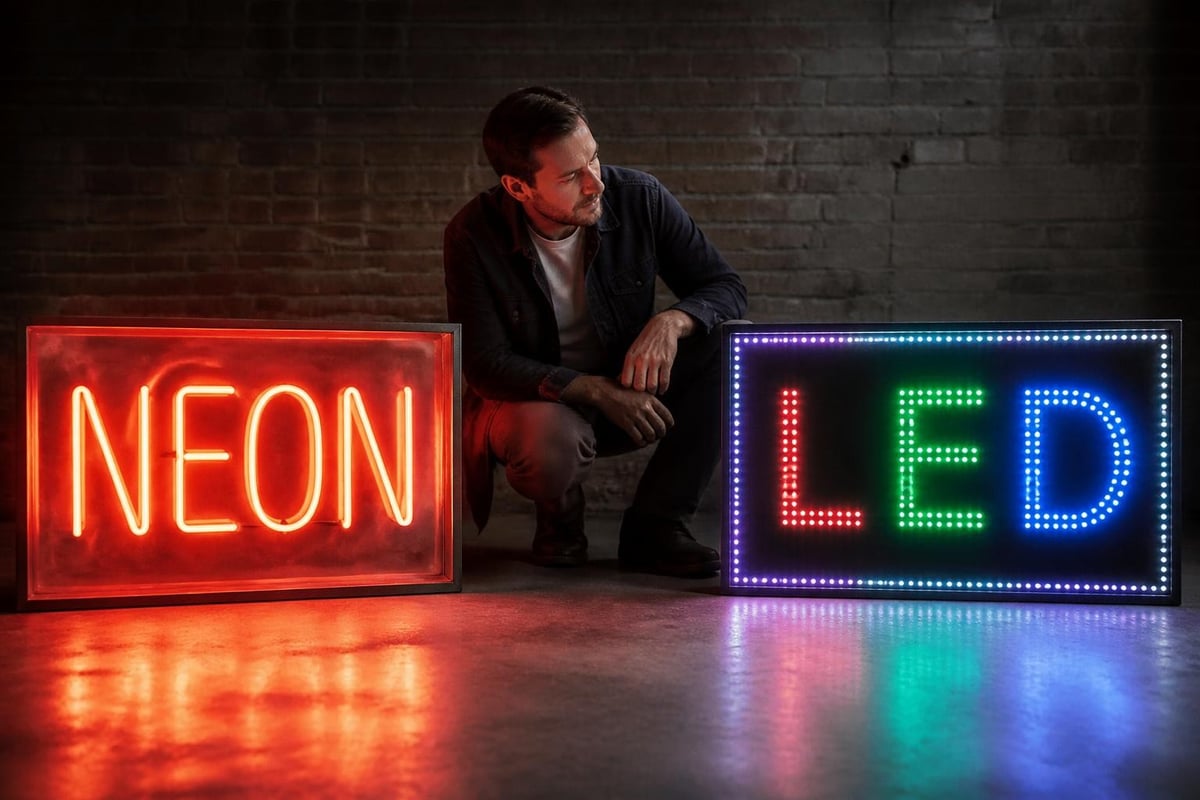
Modern LED alternatives typically reduce energy consumption by 75-90% compared to traditional neon, whilst Department of Energy research indicates that LED technology has captured substantial market share since 2010. Nevertheless, true neon signage retains specific advantages that justify its continued use in certain applications.
Contemporary Applications in Modern Branding
Despite technological competition, neon signage maintains relevance through its unique visual qualities and cultural associations. The warm, continuous glow produced by ionized gas creates an aesthetic that LED technology can approximate but not perfectly replicate. Many contemporary businesses deliberately choose neon signage to convey specific brand attributes such as authenticity, craftsmanship, or nostalgic appeal.
Hospitality and Retail Environments
Restaurants, bars, and boutique retailers frequently incorporate neon signage to establish atmosphere and differentiate their spaces. A craft brewery might commission custom neon artwork depicting hops or brewing equipment, whilst a vintage clothing shop could install retro-inspired neon lettering that reinforces its brand positioning. These applications prioritize aesthetic impact over pure efficiency, recognizing neon's role in creating memorable customer experiences.
Similarly, many businesses find value in channel letters that can be illuminated with either traditional neon or modern LED technology. The choice depends on specific requirements around colour accuracy, maintenance access, and desired visual effect.
Modern applications include:
- Interior accent lighting in hospitality venues
- Statement pieces for retail window displays
- Wayfinding elements in entertainment complexes
- Artistic installations commissioned by property developers
- Event signage for temporary activations
Corporate and Institutional Settings
Forward-thinking corporations occasionally commission neon installations for lobbies, conference centres, or flagship locations. These applications leverage neon's artistic credibility whilst benefiting from the medium's proven durability. A technology company might install an abstract neon sculpture representing connectivity or innovation, transforming functional signage into experiential design.
For businesses requiring large-scale exterior illumination, alternatives such as pylon signs often prove more practical, offering greater flexibility in size, digital integration, and maintenance access.
Preservation Challenges and Best Practices
As historic neon signage installations age, preservation has emerged as both cultural priority and technical challenge. The Getty Conservation Institute's research addresses the unique difficulties of conserving neon artworks and commercial signs, developing protocols that balance historical authenticity with practical functionality. These guidelines inform restoration projects worldwide, ensuring that significant installations receive appropriate care.
Common Deterioration Issues
Neon signage faces several age-related challenges that require specialized intervention:
- Gas depletion reducing brightness over time
- Electrode degradation causing flickering or dead sections
- Transformer failure interrupting power delivery
- Weather damage to outdoor installations
- Vandalism or physical impact breaking glass tubes
Professional restoration programmes demonstrate comprehensive approaches to addressing these issues. Conservators must decide whether to repair original components or fabricate replacements, considering factors such as historical significance, budget constraints, and long-term maintenance requirements.
The decision matrix for restoration typically weighs:
| Consideration | Repair Original | Replace Component | Convert to LED |
|---|---|---|---|
| Historical value | Highest authenticity | Moderate authenticity | Lowest authenticity |
| Cost (initial) | Variable | Moderate | Higher initial investment |
| Longevity | Depends on condition | 10-20 years | 20+ years |
| Maintenance | Specialist required | Specialist preferred | Standard electrician |
| Energy use | Original consumption | Original consumption | 75-90% reduction |
Making Informed Technology Choices
Businesses considering neon signage for new installations face decisions that extend beyond aesthetics to encompass lifecycle costs, maintenance requirements, and strategic branding objectives. A thorough evaluation process examines multiple factors simultaneously, recognizing that the "best" solution varies according to specific circumstances and priorities.
Evaluation Criteria Framework
Location significantly influences technology selection. Exterior installations face weather exposure, temperature extremes, and potential vandalism, whilst interior applications operate in controlled environments with minimal physical stress. A restaurant seeking to create ambiance in a climate-controlled dining room faces different constraints than a retailer requiring visible storefront signage in variable weather conditions.
Budget considerations encompass both initial capital expenditure and ongoing operational costs. Traditional neon signage typically requires higher upfront investment in skilled fabrication but may justify this premium through distinctive visual character. LED alternatives often present lower installation costs with substantially reduced energy consumption, though they may lack the authentic glow that some brands specifically desire.
Whether you're exploring traditional neon or investigating modern alternatives like lightboxes, understanding your specific requirements ensures appropriate technology selection. Many contemporary signage solutions blend multiple technologies, incorporating LED illumination within formats that reference neon aesthetics.
Regulatory and Compliance Factors
Local regulations increasingly influence signage decisions, with municipalities implementing standards around energy consumption, light pollution, and historic district compatibility. Some preservation-focused areas mandate traditional materials for new installations in historic zones, whilst others provide incentives for energy-efficient alternatives. Businesses must research applicable codes early in the planning process to avoid costly redesigns.
Electrical safety standards also govern installation requirements, specifying transformer specifications, mounting methods, and inspection protocols. Working with experienced signage professionals ensures compliance whilst optimizing both visual impact and operational reliability.
The Evolving Role in Digital-Age Marketing
Neon signage occupies an intriguing position in contemporary marketing, where digital technologies dominate communication strategies. Rather than competing directly with digital signage, neon has found renewed appreciation as a counterpoint to screens and pixels. The medium's analogue nature and handcrafted origins appeal to audiences increasingly conscious of authenticity and craftsmanship.
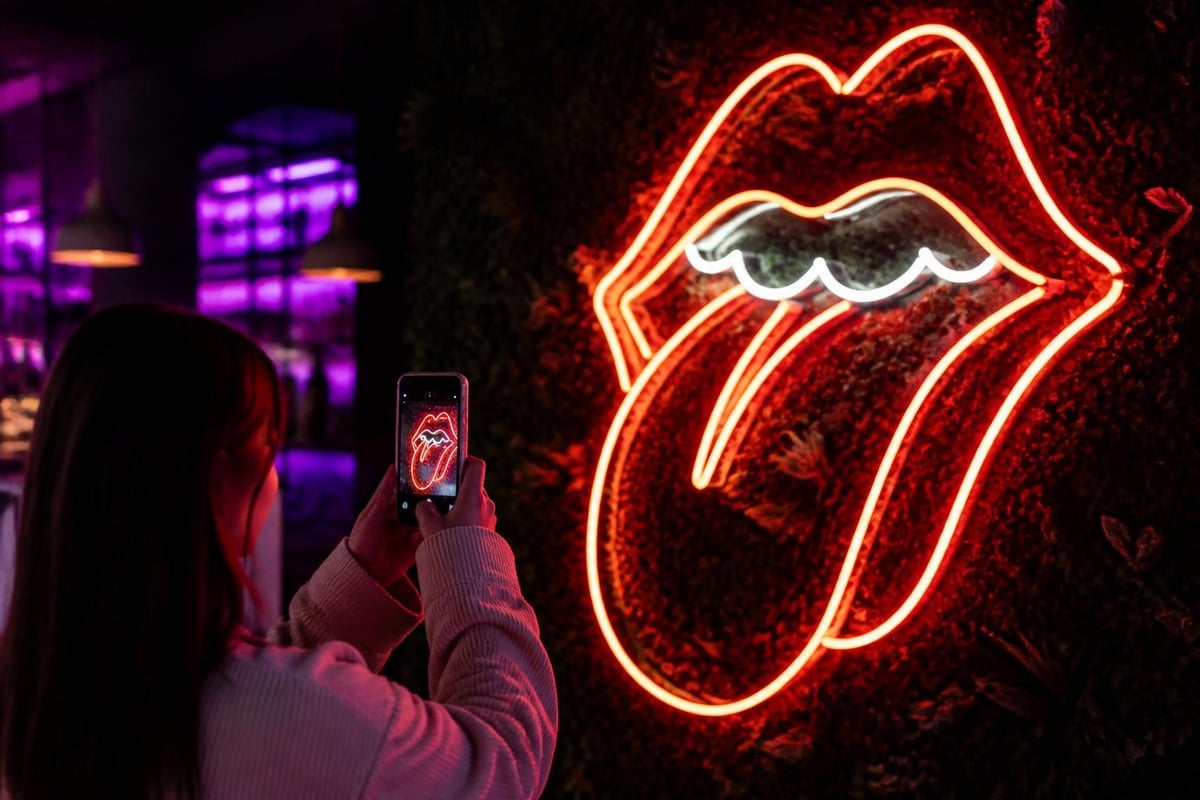
Social media platforms have paradoxically revitalized interest in neon signage, as distinctive installations become photographable backdrops that generate organic content. Businesses recognize that a memorable neon sign can deliver marketing value beyond its immediate visibility, functioning as a shareable design element that extends brand reach through customer photography and social posting.
This phenomenon has encouraged businesses to commission bold, statement-making neon installations specifically designed for social media appeal. A cleverly worded neon message or visually striking custom design becomes content-generating infrastructure, delivering ongoing marketing value through user-generated posts and location tags.
Complementary signage solutions such as vehicle wraps or moving LED signs can extend brand visibility beyond fixed installations, creating integrated campaigns that leverage multiple channels simultaneously.
Future Trajectories and Innovation
The neon signage industry continues evolving through both preservation of traditional techniques and development of hybrid technologies. Some manufacturers now offer "faux neon" systems that replicate the visual characteristics of gas-discharge tubing using LED elements within flexible silicone extrusions. These systems appeal to customers seeking neon aesthetics without the maintenance requirements or fragility of glass tubes.
Meanwhile, a dedicated community of craftspeople maintains traditional neon fabrication skills, often through small studios serving niche markets. These specialists focus on custom artistic commissions, restoration projects, and high-end commercial installations where authentic neon delivers specific brand value. The bifurcation between mass-market LED alternatives and artisanal traditional neon seems likely to persist, with each serving distinct market segments.
Emerging applications include interactive neon installations that respond to sensors or integrate with smart building systems, architectural neon that emphasizes structure rather than typography, and experimental artworks that push the medium's creative boundaries. These innovations suggest that neon signage will continue adapting to contemporary contexts whilst maintaining the essential character that has ensured its endurance for over a century.
Neon signage represents a convergence of technical craftsmanship, commercial function, and cultural significance that few other advertising mediums can match. Whether you're considering traditional neon for its authentic character or exploring modern LED alternatives for operational efficiency, understanding the full context enables strategic decisions aligned with your brand objectives. Signshoponline brings extensive expertise across traditional and contemporary signage technologies, helping businesses select and implement solutions that deliver both immediate visual impact and long-term value through professional consultation, quality manufacturing, and comprehensive support services.


