


Warning signage serves as the first line of defence in protecting employees, visitors, and customers from potential hazards across diverse environments. From construction sites and manufacturing facilities to commercial buildings and public spaces, these visual alerts communicate critical safety information that can prevent accidents, injuries, and even fatalities. As workplace safety regulations become increasingly stringent and liability concerns grow, understanding the proper implementation of warning signage has never been more crucial for organisations of all sizes.
Understanding the Legal Framework for Warning Signage
The regulatory landscape surrounding warning signage varies by jurisdiction, but the underlying principle remains consistent: employers and property managers bear responsibility for adequately warning people of potential dangers. In the United Kingdom, the Health and Safety (Safety Signs and Signals) Regulations 1996 mandates specific requirements for safety signage in workplaces, establishing clear standards for colour coding, symbols, and placement.
These regulations align with European directives, ensuring consistency across member states. Compliance isn't optional-failure to provide appropriate warning signage can result in substantial fines, legal liability, and reputational damage following workplace incidents.
Beyond basic legal compliance, organisations must consider industry-specific standards. Manufacturing facilities might need additional chemical hazard warnings, whilst construction sites require signage addressing temporary hazards that change as projects progress.
International Standards and Harmonisation
Global businesses face the additional challenge of harmonising warning signage across multiple jurisdictions. The International Organization for Standardization (ISO) has developed comprehensive standards, particularly ISO 7010, which establishes internationally recognised safety symbols and colours.
| Standard | Focus Area | Primary Application |
|---|---|---|
| ISO 7010 | Safety symbols | General workplace hazards |
| ISO 3864 | Safety colours and signs | Design principles |
| BS 5499 | Fire safety signs | Emergency evacuation |
| ANSI Z535 | Product safety signs | Equipment and machinery |
Adopting internationally recognised standards simplifies operations for companies with multiple sites whilst ensuring visitors from different regions can immediately understand hazard warnings regardless of language barriers.
Categories of Warning Signage and Their Applications
Warning signage encompasses several distinct categories, each serving specific purposes and requiring different approaches to design and placement. Understanding these categories helps organisations select appropriate signage for their unique risk profiles.
Mandatory warning signs indicate actions that must be taken, typically featuring blue circular backgrounds with white pictograms. These might require personal protective equipment (PPE) use or specific safety procedures before entering certain areas.
Prohibition signs communicate actions that are forbidden, using red circular backgrounds with diagonal lines. Common examples include no smoking, no entry for unauthorised personnel, and prohibitions against mobile phone use in hazardous areas.
Caution and warning signs alert people to potential hazards, traditionally employing yellow triangular backgrounds with black borders and symbols. These address everything from slippery surfaces and low headroom to electrical hazards and chemical dangers.
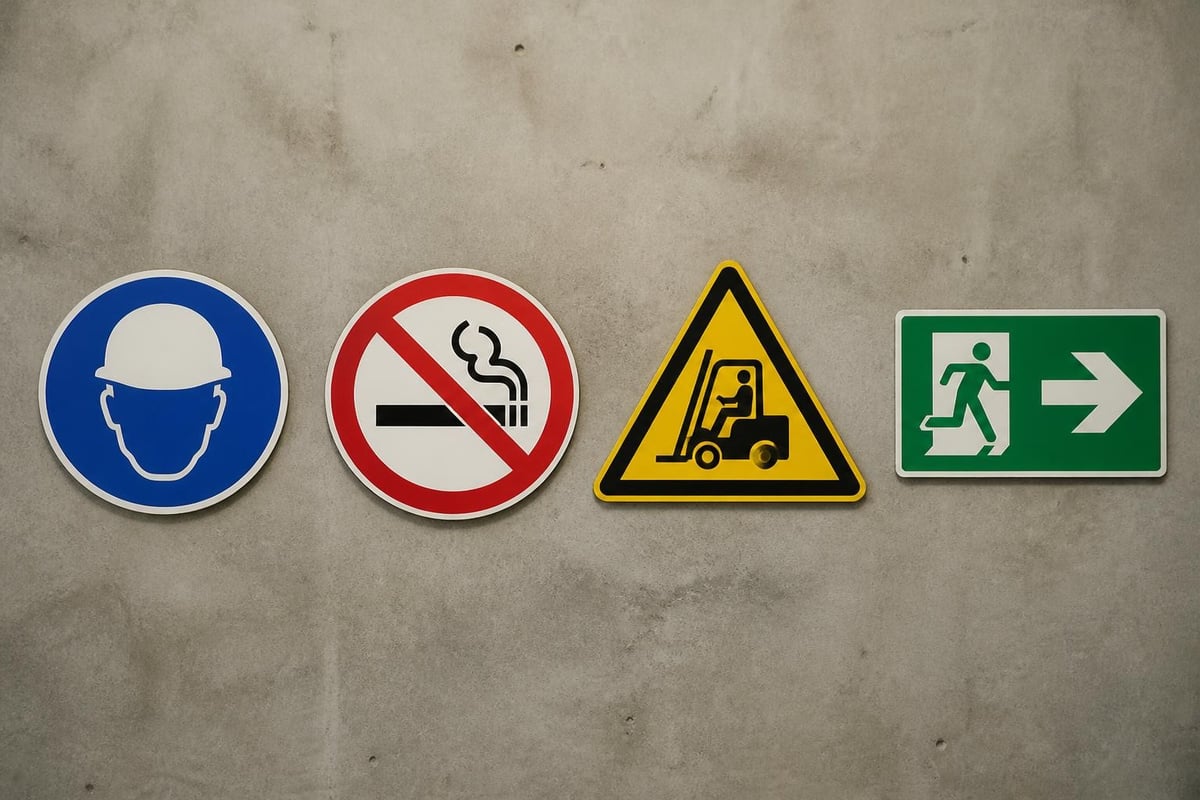
Fire Safety and Emergency Signage
Fire safety represents a critical subset of warning signage, governed by specific regulations and standards. The NFPA 170 Standard for Fire Safety and Emergency Symbols provides authoritative guidance on emergency signage, establishing consistent visual language for fire exits, extinguisher locations, and assembly points.
Emergency exit signs must remain illuminated or photoluminescent, ensuring visibility even during power failures. Modern LED technology has revolutionised emergency signage, offering energy efficiency and longevity whilst meeting stringent safety requirements.
- Fire exit routes clearly marked with directional arrows
- Extinguisher locations highlighted with appropriate symbols
- Emergency equipment cabinets identified with standardised pictograms
- Assembly point designations for evacuation procedures
- Fire alarm call point markers at accessible heights
Design Principles for Effective Warning Signage
Creating effective warning signage requires balancing regulatory compliance with practical visibility and comprehension. The most technically compliant sign fails if workers cannot see it clearly or misunderstand its message.
Colour psychology plays a fundamental role in warning signage effectiveness. Red universally signals danger or prohibition, yellow indicates caution, blue denotes mandatory actions, and green represents safety or emergency escape routes. These colour associations transcend cultural boundaries, making them essential for international standardisation.
Typography choices significantly impact readability. Sans-serif fonts like Arial or Helvetica offer superior legibility, particularly at distance or in poor lighting conditions. Text should be concise-verbose warnings get ignored or misread in urgent situations.
Pictogram Selection and Standardisation
Pictograms communicate hazards instantly, overcoming language barriers and enabling split-second recognition. Standardised symbols from ISO 7010 ensure consistency, allowing workers who transfer between sites or industries to immediately recognise familiar hazards.
Custom pictograms should be avoided unless absolutely necessary, as they require learning periods and may create confusion. When industry-specific hazards genuinely require unique symbols, testing with representative user groups before implementation prevents misinterpretation.
Contrast ratios between pictograms and backgrounds must meet minimum standards. Dark symbols on light backgrounds or light symbols on dark backgrounds ensure visibility across varying lighting conditions and viewing distances.
Strategic Placement and Visibility Considerations
Even perfectly designed warning signage becomes ineffective if poorly positioned. Placement strategy requires understanding traffic patterns, sight lines, and decision points within facilities.
Warning signs should be positioned where people can act on the information-warning of overhead hazards after someone has walked beneath them serves no purpose. Similarly, signs must be visible before decision points where people choose whether to enter hazardous areas.
Mounting heights vary by sign purpose and viewer position. The U.S. Access Board's ADA Guidelines for Signs establish clear requirements for accessible signage placement, ensuring people with disabilities can read critical warnings.
| Sign Type | Recommended Height | Viewing Distance |
|---|---|---|
| Wall-mounted warnings | 1,400-1,700mm | 3-6 metres |
| Overhead hazards | At hazard level | Maximum sight line |
| Floor hazards | 900-1,200mm | 2-4 metres |
| Equipment warnings | On equipment | Arm's length |
Environmental Factors Affecting Visibility
Warning signage must remain legible despite environmental challenges. Industrial settings present dust, moisture, chemical exposure, and temperature extremes that can degrade conventional signs rapidly.
Material selection becomes critical in harsh environments. Aluminium composite panels resist corrosion, whilst high-grade vinyl withstands UV exposure without fading. Reflective materials enhance visibility in low-light conditions, particularly valuable for outdoor applications or facilities with inconsistent lighting.
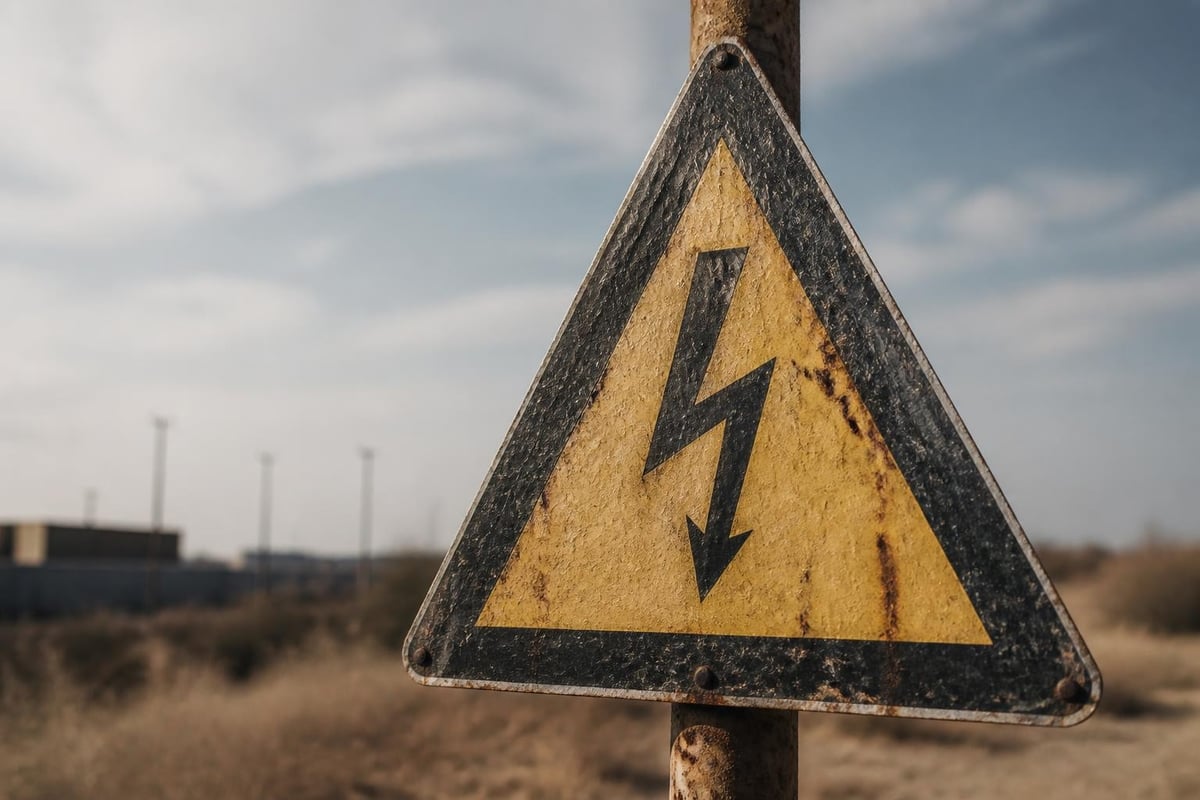
Regular maintenance schedules ensure warning signage remains effective. Quarterly inspections identify faded colours, damaged surfaces, or obscured signs requiring replacement or repositioning.
Specialised Warning Signage Applications
Certain industries and environments demand specialised warning signage beyond standard workplace requirements. Chemical facilities, for instance, require hazard communication aligned with COSHH regulations and globally harmonised system (GHS) labelling.
Construction sites present unique challenges due to constantly changing layouts and hazard profiles. Temporary warning signage must be robust enough to withstand weather whilst remaining easily relocatable as work progresses.
Vehicle traffic areas require specific warning signage addressing both pedestrians and drivers. These signs must be sufficiently large and bright to capture driver attention whilst clearly communicating speed limits, crossing points, and loading zones.
Digital and Illuminated Warning Signage
Technology advancement has expanded warning signage capabilities significantly. Lightbox Signage provides excellent visibility in all lighting conditions, ensuring critical warnings remain prominent regardless of ambient light levels. These illuminated solutions prove particularly valuable for 24-hour operations or outdoor applications where natural light varies dramatically throughout the day.

Digital displays offer dynamic warning capabilities, adapting messages to current conditions or hazards. Manufacturing facilities can update warnings automatically when machinery status changes or when specific hazards become active during certain production processes.
LED technology has transformed emergency exit signage, providing brighter illumination whilst consuming minimal power. Battery backup systems ensure these critical signs remain functional during power outages when they're needed most.
Multi-Sensory Warning Systems
Visual signage represents just one component of comprehensive hazard communication. Integrating warning signage with auditory alerts and physical barriers creates redundant systems that catch attention through multiple channels.
Flashing beacons draw attention to critical warnings, particularly valuable in noisy environments where auditory alerts might go unheard. These visual alerts work synergistically with static signage, ensuring workers notice warnings even when distracted or focused on tasks.
Tactile elements enhance warning signage accessibility for visually impaired individuals. Braille labels, raised lettering, and textured surfaces communicate hazards through touch, ensuring inclusive safety communication that protects all workers regardless of sensory abilities.
Training and Warning Signage Effectiveness
The most comprehensive warning signage programme fails without proper employee training. Workers must understand what different colours, shapes, and symbols mean-assumptions about intuitive understanding lead to dangerous misinterpretations.
- Conduct induction training covering facility-specific warning signage
- Explain the hierarchical warning system from danger through caution
- Test comprehension of pictograms and colour coding
- Review emergency procedure signs and evacuation routes
- Refresh training annually and following signage updates
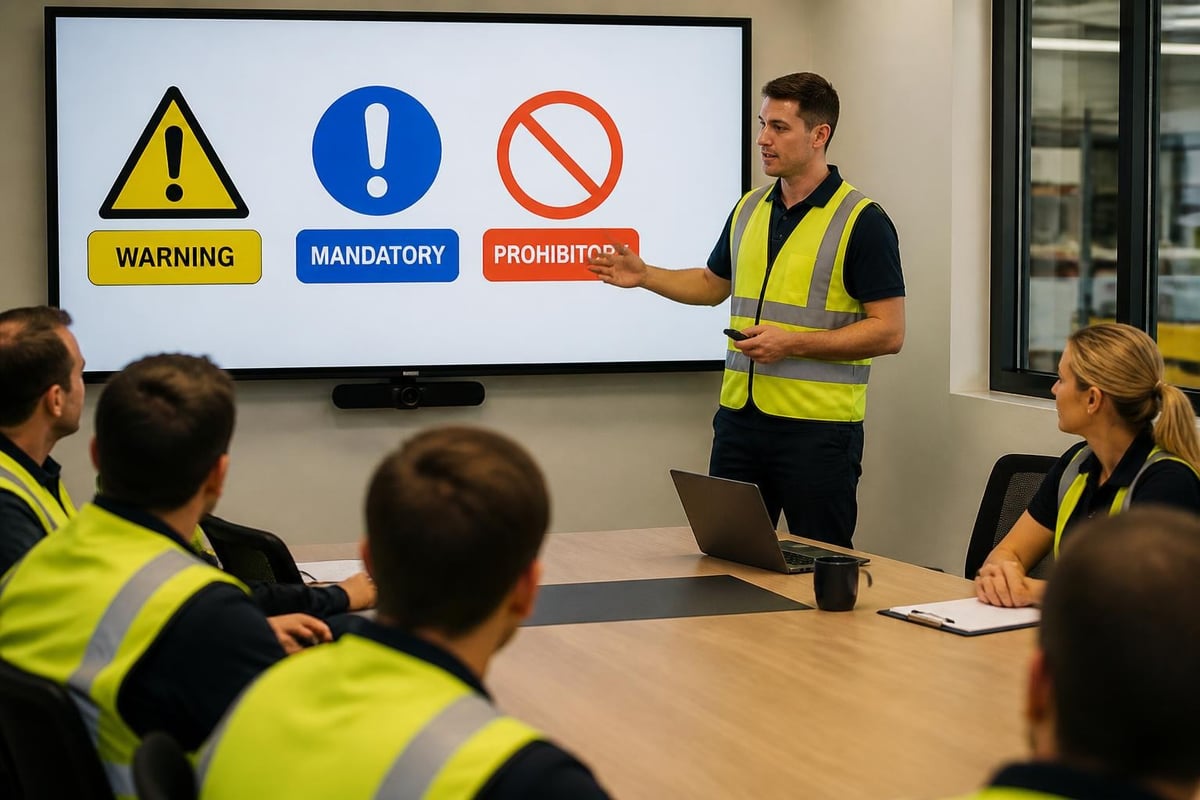
Multilingual workforces present additional challenges. Whilst standardised pictograms overcome language barriers, supplementary text warnings should include languages spoken by significant workforce segments. This redundancy ensures clear communication whilst maintaining visual hierarchy that prioritises pictographic elements.
Auditing and Maintaining Warning Signage Programmes
Establishing warning signage represents the beginning, not the conclusion, of effective hazard communication. Facilities evolve, introducing new hazards whilst eliminating others. Regular audits identify gaps where warnings have become outdated or where new hazards lack appropriate signage.
Documentation requirements extend beyond simply installing signs. Organisations should maintain comprehensive records showing when signs were installed, inspection schedules, and evidence of employee training. These records demonstrate due diligence during regulatory inspections or legal proceedings following incidents.
Replacement schedules prevent deteriorated signage from compromising safety. UV exposure fades colours, physical damage obscures messages, and adhesive failures cause signs to detach or hang askew. Proactive replacement based on age and condition costs less than reactive replacement following incidents.
Emerging Technologies and Future Trends
Smart signage systems represent the evolution of warning communication, integrating with building management systems to provide real-time hazard warnings. These systems can automatically illuminate specific warnings when sensors detect relevant conditions-chemical spills, excessive heat, or dangerous gas concentrations.
Augmented reality applications overlay digital warning information onto physical environments through smartphone cameras or smart glasses. While still emerging, these technologies promise enhanced situational awareness, particularly during infrequent maintenance tasks or emergency responses.
| Technology | Application | Implementation Stage |
|---|---|---|
| IoT-connected signs | Real-time hazard updates | Currently available |
| E-paper displays | Low-power dynamic warnings | Early adoption |
| AR overlays | Task-specific warnings | Pilot programmes |
| Projection mapping | Temporary hazard marking | Emerging trials |
Sustainability considerations increasingly influence warning signage decisions. Solar-powered illuminated signs reduce energy consumption, whilst recyclable materials and extended lifecycles minimise environmental impact without compromising safety effectiveness.
Cultural and Psychological Factors
Warning signage effectiveness depends partly on cultural interpretations of symbols, colours, and urgency. Whilst international standards promote consistency, understanding regional variations ensures communication clarity across diverse workforces.
Warning fatigue presents a genuine challenge in environments with numerous hazards. Excessive signage creates visual clutter where individual warnings become invisible through oversaturation. Strategic sign placement focusing on significant hazards prevents this dilution of attention.
Behavioural psychology research demonstrates that people respond more strongly to specific, concrete warnings than general cautions. "Danger: High Voltage-Risk of Death" prompts more careful behaviour than simply "Danger: Electricity," providing clear consequence information that motivates compliance.
Periodic refreshment of warning signage design prevents habituation-workers become blind to signs they pass daily. Whilst maintaining regulatory compliance and standardised symbols, subtle design variations or repositioning can restore attention to familiar hazards.
Effective warning signage represents a critical investment in workplace safety, legal compliance, and organisational responsibility. By understanding regulatory requirements, design principles, and strategic implementation, businesses create safer environments that protect people whilst demonstrating due diligence. Whether you need standard safety signs, custom hazard warnings, or illuminated emergency signage, Signshoponline provides comprehensive signage solutions tailored to your specific safety communication requirements, ensuring your warning signage programme meets both regulatory standards and practical effectiveness needs.


