

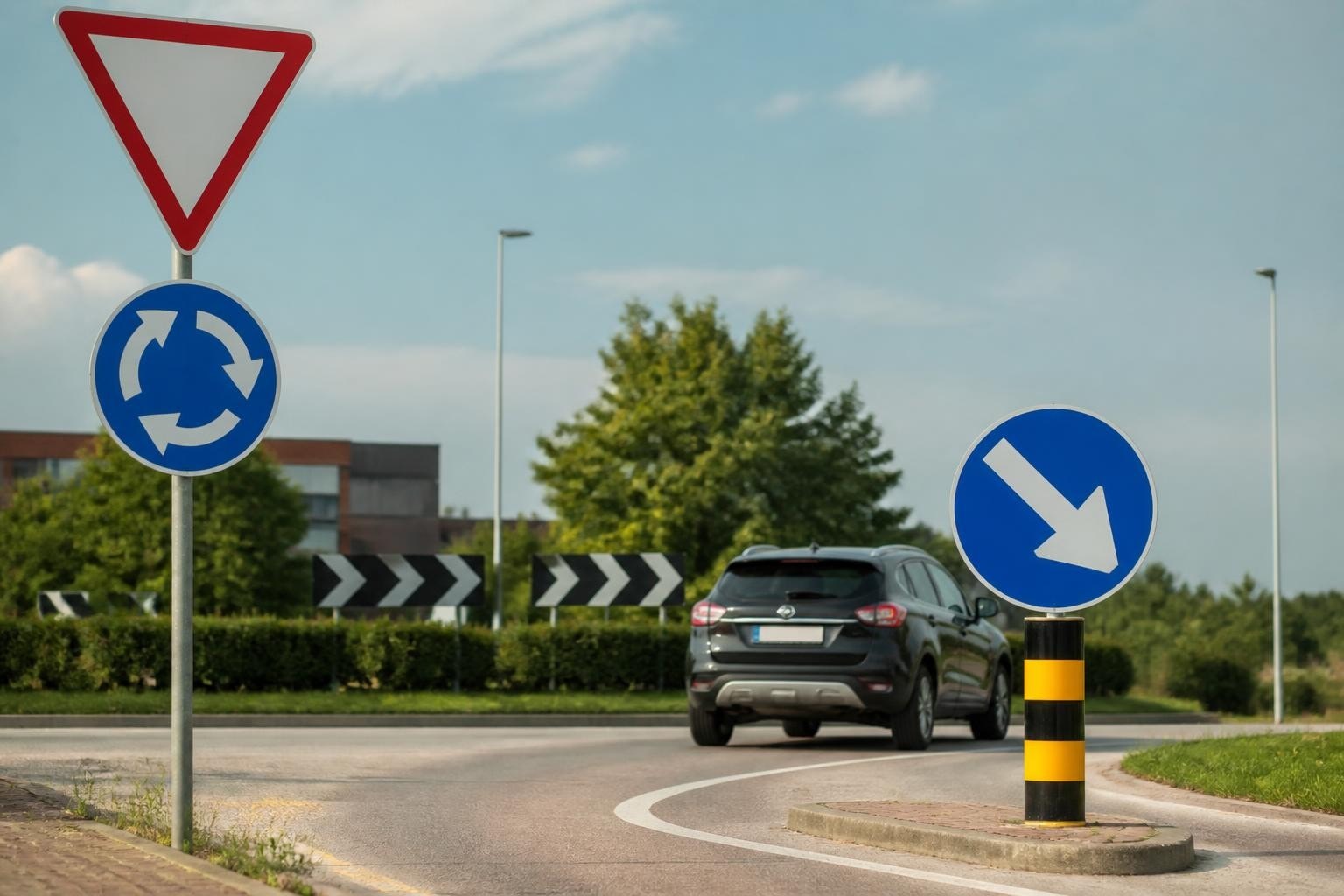
Signage road systems form the backbone of safe, efficient highway and street navigation across the world. These carefully designed and positioned signs communicate critical information to motorists, cyclists, and pedestrians, reducing accidents and improving traffic flow. From motorway junctions to residential streets, effective signage road infrastructure requires thoughtful planning, adherence to recognised standards, and ongoing maintenance to ensure visibility and legibility in all weather conditions. Understanding the principles behind successful road signage helps transport authorities, property developers, and businesses create safer environments whilst meeting regulatory requirements.
The Evolution and Purpose of Signage Road Systems
Modern signage road networks have evolved significantly since the earliest directional markers appeared on Roman roads. Today's sophisticated systems blend regulatory compliance with psychological research into human perception and reaction times.
Traffic signs serve three primary functions: regulation, warning, and guidance. Regulatory signs such as speed limits and stop signs carry the force of law, whilst warning signs alert drivers to hazards ahead. Informational signs provide route guidance and distance markers, helping motorists navigate unfamiliar areas with confidence.
The Manual on Uniform Traffic Control Devices establishes comprehensive standards that ensure consistency across signage road installations. This uniformity allows drivers to recognise and respond to signs instinctively, regardless of location.

Key Categories of Road Signage
Different sign types address specific communication needs on roadways:
- Mandatory signs: Direct compliance with traffic laws (stop, yield, no entry)
- Prohibitory signs: Indicate forbidden actions (no parking, weight restrictions)
- Warning signs: Alert to upcoming hazards (sharp bends, pedestrian crossings)
- Directional signs: Guide route selection and navigation
- Informational signs: Provide services, distances, and general information
Design Principles for Effective Signage Road Infrastructure
Creating impactful signage road systems requires careful attention to visibility, legibility, and comprehension. The design process balances aesthetic considerations with functional requirements that save lives.
Colour Psychology and Recognition
Colour coding enables rapid sign recognition even at high speeds. Red universally signals prohibition or danger, whilst blue typically indicates mandatory actions in many countries. Yellow or amber draws attention to warnings, and green guides motorists along designated routes.
Research from the Institute of Transportation Engineers demonstrates that consistent colour application reduces cognitive load, allowing drivers to process information whilst maintaining attention on the road ahead.
| Sign Category | Primary Colour | Secondary Colour | Typical Message |
|---|---|---|---|
| Regulatory | Red | White/Black | Stop, Yield, Speed Limits |
| Warning | Yellow/Amber | Black | Curves, Intersections, Hazards |
| Directional | Green/Blue | White | Routes, Exits, Services |
| Informational | Blue/Brown | White | Facilities, Tourist Attractions |
Typography and Legibility Standards
Font selection dramatically impacts signage road effectiveness. Purpose-designed typefaces such as Highway Gothic and Clearview ensure maximum readability at distance and speed. Letter height calculations account for viewing distance, with taller letters required for motorway signs compared to urban street signage.
Contrast ratios between text and background must meet minimum thresholds. Dark text on light backgrounds typically performs best in daylight, whilst retroreflective materials enable night-time visibility. The stroke width, spacing, and kerning all influence how quickly drivers decode messages during brief viewing windows.
Retroreflectivity and Night-Time Visibility
One of the most critical aspects of signage road performance involves maintaining visibility during darkness and adverse weather. Retroreflective sheeting bounces light from vehicle headlamps directly back to the driver, making signs visible without external illumination.
Different retroreflective grades suit various applications. Engineering grade materials suffice for low-speed residential streets, whilst high-intensity and diamond-grade sheeting prove essential for motorways and high-traffic areas. The National Cooperative Highway Research Programme provides detailed guidance on retroreflectivity management strategies that extend sign life whilst maintaining safety standards.
Maintenance and Deterioration Management
Signage road infrastructure degrades over time through ultraviolet exposure, weather damage, and physical impacts. Systematic inspection programmes identify signs requiring replacement before visibility drops below acceptable thresholds.
- Visual assessment: Regular driving inspections identify obvious damage or fading
- Retroreflectometer testing: Quantitative measurements of reflective performance
- Expected life methodology: Replacement based on installation date and material specifications
- Blanket replacement: Systematic renewal of all signs within defined areas or time periods
- Control signs: Comparison against pristine reference samples
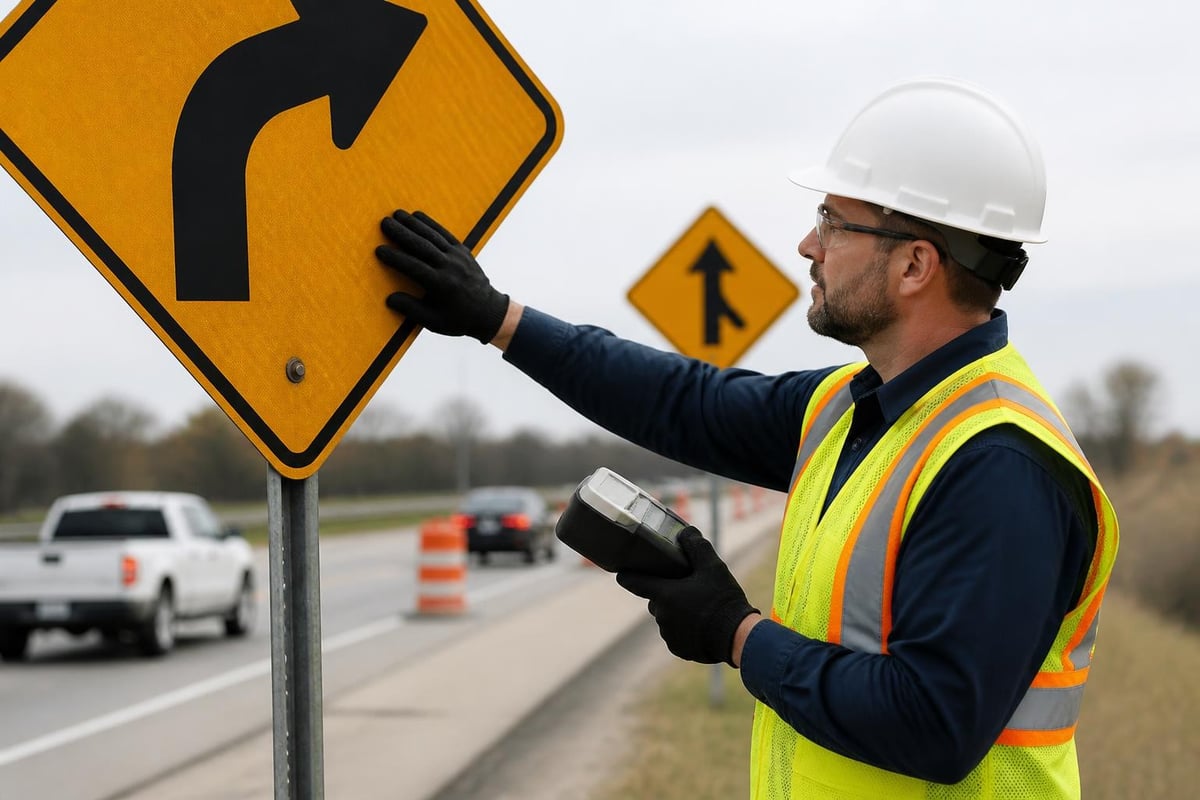
Placement Strategies and Visibility Optimisation
Even perfectly designed signs fail if poorly positioned. Signage road placement considers sightlines, reaction distances, and environmental factors that affect visibility and comprehension.
The sight distance triangle ensures approaching drivers see signs with sufficient time to process information and respond appropriately. This calculation accounts for vehicle speed, road geometry, and expected driver reaction times. Signs positioned too close to decision points create dangerous situations, whilst premature placement may lead to information being forgotten.
Lateral Positioning and Height Specifications
Offset distances from the carriageway edge balance visibility against clearance requirements for vehicles and maintenance equipment. Standard mounting heights typically range between 1.5 and 2.5 metres for roadside installations, with overhead gantries used where lateral space proves insufficient.
Urban environments present unique challenges. Building facades, street furniture, and vegetation compete for visual attention. Strategic placement ensures signage road elements remain dominant within the driver's field of view whilst respecting urban design objectives.
International Standards and Regional Variations
Whilst core principles remain consistent globally, signage road implementations vary significantly between jurisdictions. The UK Traffic Signs Manual demonstrates how national standards adapt international best practices to local conditions and regulatory frameworks.
Shape coding provides an additional recognition layer. Octagonal signs universally indicate stop requirements, whilst triangular signs warn of hazards. Circular signs typically convey mandatory instructions or prohibitions. These shape conventions transcend language barriers, supporting international tourism and freight movement.
Harmonisation Efforts and Future Trends
European Union standardisation initiatives promote cross-border consistency whilst respecting national preferences. Digital technologies now enable variable message signs that adapt to real-time conditions, displaying speed limits, lane closures, or hazard warnings as circumstances change.
For businesses requiring high-quality road and directional signage, Lightbox Signage offers illuminated solutions that maintain visibility around the clock. These fabricated displays prove particularly valuable for entrance identification, wayfinding, and directional applications where 24-hour visibility enhances safety and accessibility.
Supporting Infrastructure and Mounting Systems
Robust signage road installations require engineered support structures capable of withstanding wind loading, vibration, and environmental stresses. Recent research on sign support systems and asset management highlights the importance of proper foundation design and material selection.
Post Materials and Installation Methods
Common mounting solutions include:
- Steel posts: Durable and suitable for high-wind areas
- Aluminium extrusions: Lightweight with excellent corrosion resistance
- Breakaway systems: Designed to yield upon impact, reducing vehicle damage
- Overhead gantries: Span multiple lanes for maximum visibility
- Wall-mounted brackets: Urban installations on existing structures
Foundation requirements vary with soil conditions, sign size, and wind exposure. Concrete footings provide stability for permanent installations, whilst temporary works signage may use weighted bases or driven posts for rapid deployment.
Temporary Works and Construction Zone Signage
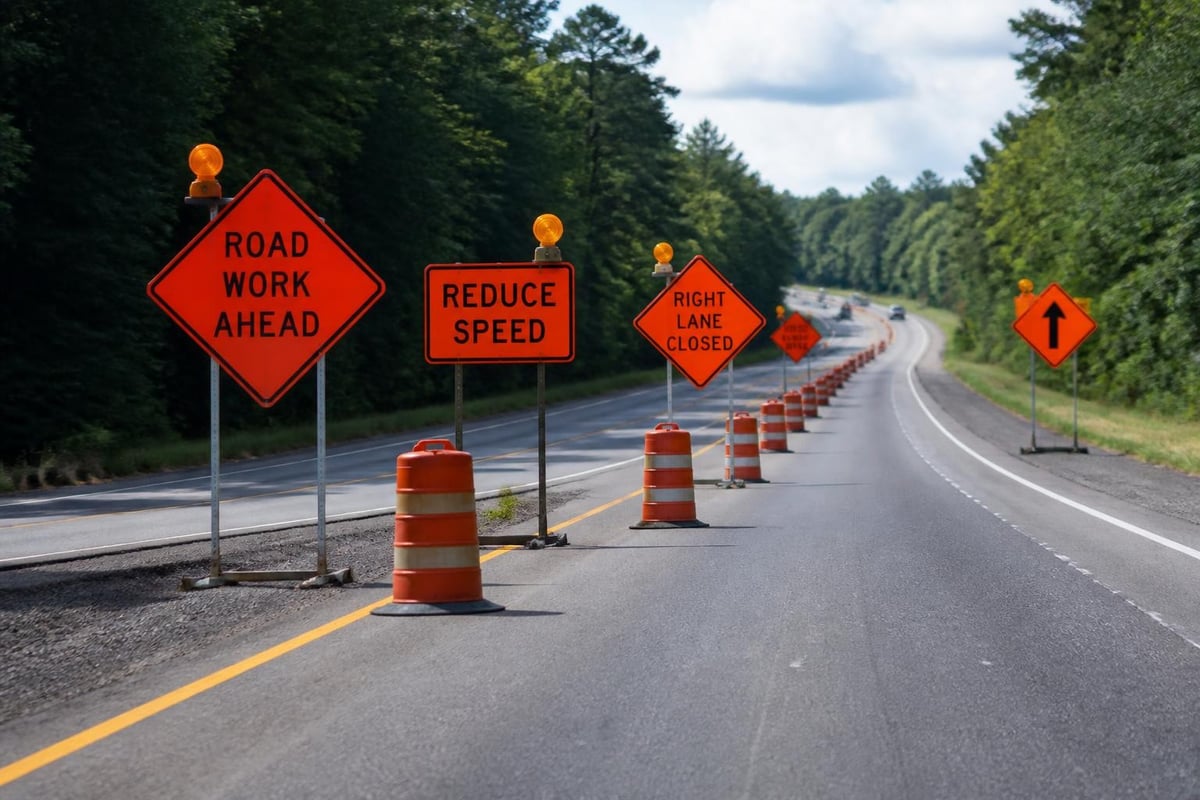
Construction activities require specialised signage road solutions that guide traffic safely through altered conditions. These temporary installations must match or exceed the visibility and legibility of permanent signs whilst remaining easily relocated as work progresses.
Advanced warning sequences alert drivers to upcoming works zones, allowing speed reduction and lane changes before reaching constricted areas. Proper spacing between warning signs depends on approach speed and sight distance, with closer intervals required on high-speed routes.
| Road Type | First Warning Distance | Intermediate Warning | Final Warning |
|---|---|---|---|
| Motorway (120 km/h) | 1,000-1,500m | 500-750m | 250-300m |
| Rural Road (80 km/h) | 500-750m | 250-350m | 100-150m |
| Urban Street (50 km/h) | 200-300m | 100-150m | 50-75m |
Integration with Digital and Smart City Systems
Modern signage road infrastructure increasingly incorporates digital elements that respond dynamically to traffic conditions, weather events, and incidents. Variable message signs communicate time-sensitive information that static signs cannot convey.
Connected vehicle technologies promise to revolutionise road signage by delivering sign information directly to vehicle displays. This infrastructure-to-vehicle communication supplements physical signs, providing redundancy and enabling earlier warnings of hazards beyond the driver's line of sight.
Benefits of Hybrid Physical-Digital Approaches
Whilst digital systems offer flexibility, physical signage road elements remain essential. They function during power outages, require no wireless connectivity, and serve all road users regardless of vehicle technology. The optimal approach combines permanent static signs for constant regulatory and directional needs with digital displays for variable conditions.
Businesses seeking to enhance wayfinding and directional signage can explore directional signs that guide visitors efficiently whilst maintaining professional aesthetics. Clear directional information reduces confusion and improves the overall visitor experience on commercial and industrial properties.
Environmental Considerations and Sustainability
Sustainable signage road practices minimise environmental impact whilst maintaining safety standards. Material selection increasingly favours recyclable aluminium substrates over wood or steel, with water-based inks replacing solvent-based alternatives.
Solar-powered illumination eliminates grid connection requirements for remote locations, reducing installation costs whilst supporting renewable energy objectives. LED technology dramatically reduces power consumption compared to fluorescent or incandescent lighting, with service lives exceeding 50,000 hours reducing maintenance frequency.
The Human Factors Perspective
Effective signage road design acknowledges human perception limitations and decision-making processes. Driver workload management ensures critical information receives attention without overwhelming cognitive capacity.
The World Health Organization's road safety research demonstrates strong correlations between clear, consistent signage and reduced accident rates. Well-designed sign systems support safe driving behaviours by providing timely, unambiguous guidance that reduces uncertainty and panic responses.
Age-Related Vision Considerations
Aging populations require enhanced legibility through larger text, higher contrast, and increased retroreflectivity. Whilst younger drivers may read smaller signs from greater distances, transport authorities must design for the entire user population, including those with diminished visual acuity.
Glare reduction through proper lamp shielding and matte finishes prevents reflective surfaces from obscuring sign messages. Anti-graffiti coatings protect sign faces whilst maintaining reflective performance, reducing maintenance costs in vandalism-prone areas.
Compliance, Liability, and Legal Frameworks
Property owners and businesses installing signage road elements on private land that connects to public highways face regulatory obligations. Non-compliant installations may create liability exposure if inadequate signage contributes to accidents or confusion.
Due diligence requires consultation with local highway authorities before installing signs visible from public roads. Colour schemes, symbols, and wording must avoid confusion with official traffic control devices, whilst still providing effective wayfinding for visitors and delivery drivers.
For comprehensive signage solutions that blend wayfinding functionality with brand identity, businesses can review the full range of options at Signshoponline, where custom designs meet regulatory requirements whilst enhancing property navigation.
Asset Management and Lifecycle Costing
Strategic signage road management balances initial investment against long-term maintenance requirements. Higher-quality materials and retroreflective sheeting command premium prices but deliver extended service lives that reduce total ownership costs.
Comprehensive asset registers track installation dates, material specifications, and maintenance history for each sign. Geographic information systems (GIS) enable efficient route planning for inspection teams whilst providing data for predictive replacement programmes.
Return on Investment Calculations
| Investment Level | Initial Cost | Expected Life | Annual Maintenance | Total 15-Year Cost |
|---|---|---|---|---|
| Budget Materials | £150 | 5 years | £25 | £700 |
| Standard Grade | £250 | 10 years | £15 | £625 |
| Premium Systems | £400 | 15+ years | £10 | £550 |
Premium materials prove most cost-effective over extended horizons, particularly when factoring in labour costs for replacement activities and traffic management during maintenance operations.
Effective signage road systems combine engineering precision, human factors research, and sustainable practices to create infrastructure that saves lives whilst guiding efficient movement. From material selection and retroreflectivity standards to placement strategies and maintenance protocols, every element contributes to overall performance. Whether you're managing highway networks, developing commercial properties, or enhancing industrial sites, professional signage solutions ensure safety and clarity. Signshoponline delivers comprehensive signage solutions including custom road signs, directional displays, and illuminated systems that meet exacting standards whilst supporting your unique wayfinding requirements.


