

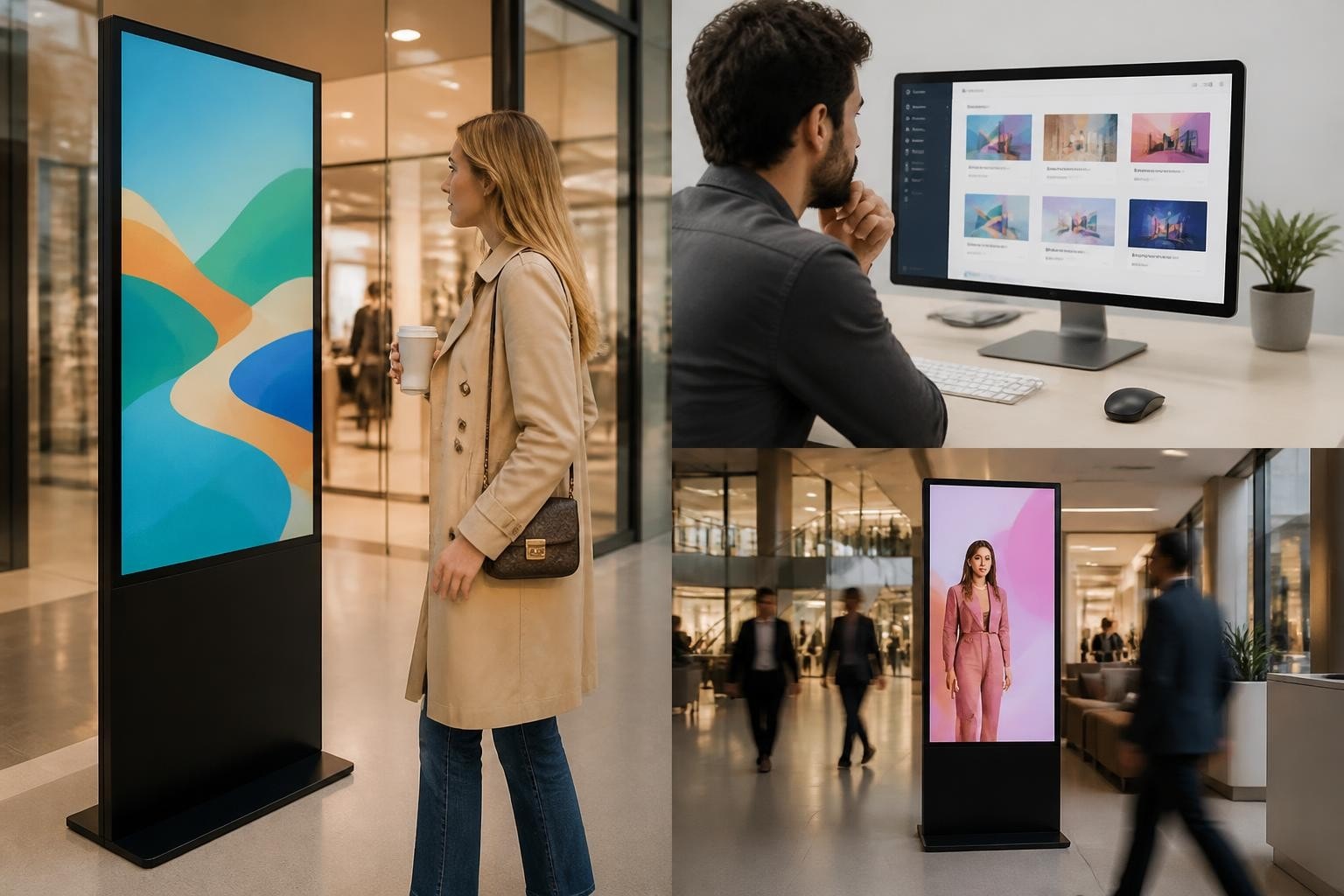
Totem digital signage has revolutionised how businesses communicate with customers in physical spaces. These freestanding vertical displays combine eye-catching design with dynamic content delivery, creating powerful touchpoints that capture attention and drive engagement. Unlike traditional static signage, totem digital signage offers the flexibility to update messaging instantly, deliver targeted content based on time of day, and measure viewer interactions with precision. As we move further into 2026, these sophisticated communication tools have become essential infrastructure for retailers, corporate environments, healthcare facilities, and public spaces seeking to deliver information efficiently whilst enhancing brand presence.
Understanding Totem Digital Signage Technology
Totem digital signage represents a specialised category of digital display technology designed for vertical, freestanding deployment. These units typically feature high-resolution LED or LCD screens housed within durable enclosures that protect internal components whilst maintaining an aesthetically pleasing appearance.
The core components include the display panel, media player, content management system, and connectivity hardware. Modern totem digital signage units range from simple single-screen configurations to complex multi-screen arrays with integrated touch capabilities, cameras for audience analytics, and sensors for environmental monitoring.
Hardware Specifications and Considerations
When selecting totem digital signage hardware, several critical factors determine performance and longevity:
- Display brightness: Measured in nits, typically ranging from 300 to 2,500 depending on ambient lighting conditions
- Resolution: Common options include Full HD (1920×1080), 4K (3840×2160), and ultra-wide formats
- Operating temperature range: Essential for installations in non-climate-controlled environments
- Touch technology: Capacitive, infrared, or SAW (Surface Acoustic Wave) options for interactive applications
- Enclosure materials: Powder-coated steel, aluminium, or weather-resistant composites
Commercial-grade displays built specifically for totem digital signage applications typically offer 16-18 hour daily operation ratings, compared to consumer displays rated for 8-10 hours. This distinction becomes crucial for installations requiring continuous operation in retail or transport environments.
| Feature | Standard Grade | Commercial Grade | Outdoor Grade |
|---|---|---|---|
| Brightness | 300-450 nits | 500-700 nits | 1,500-2,500 nits |
| Daily Operation | 8-10 hours | 16-18 hours | 24 hours |
| Temperature Range | 0-40°C | -10-50°C | -30-60°C |
| Warranty | 1-2 years | 3-5 years | 3-7 years |

Strategic Placement and Environmental Considerations
Effective totem digital signage deployment begins with strategic placement analysis. High-traffic areas such as building entrances, queue lines, and decision points offer maximum visibility and engagement potential. Research indicates that totems positioned within 1.5 to 3 metres of natural pedestrian pathways achieve 60-80% higher view rates compared to peripherally located units.
Environmental factors significantly impact both content visibility and hardware longevity. Ambient light assessment helps determine required brightness levels, whilst temperature and humidity monitoring informs climate control requirements. For outdoor installations, weatherproofing becomes paramount, with IP65 or higher ratings recommended for protection against dust and water ingress.
Accessibility and Compliance Standards
Modern totem digital signage installations must address accessibility requirements to serve all users effectively. The Web Content Accessibility Guidelines (WCAG) provide fundamental principles for digital content, whilst hardware-specific guidance from the U.S. Access Board addresses physical accessibility considerations.
Key accessibility features include:
- Adjustable screen height or dual-height displays accommodating wheelchair users
- Audio output capabilities for vision-impaired users
- High contrast modes and text scaling options
- Touch targets minimum 44×44 pixels for interactive elements
- Screen reader compatibility for complex navigation interfaces
The Kiosk Manufacturers Association accessibility checklist offers practical guidance for ensuring totem digital signage meets accessibility standards, covering both hardware ergonomics and software interface design.
Content Strategy and Management
Content quality determines totem digital signage effectiveness more than any hardware specification. Successful implementations balance informational value with visual appeal, delivering messages that resonate with target audiences whilst respecting attention constraints.
The average viewer attention span for totem digital signage ranges from 3 to 7 seconds for passive viewing and 20 to 45 seconds for interactive engagement. Content must therefore communicate primary messages within these windows, using visual hierarchy, motion graphics, and concise copy to maximise comprehension.
Content Management Systems and Workflows
Professional content management systems (CMS) enable centralised control of distributed totem digital signage networks. These platforms facilitate scheduling, playlist management, and real-time updates across single units or thousands of displays simultaneously.
Essential CMS capabilities include:
- Cloud-based access for remote management and monitoring
- Template libraries for consistent brand presentation
- Dynamic content integration from databases, social feeds, and external APIs
- User permission hierarchies for multi-location organisations
- Proof-of-play reporting and compliance verification
Many businesses find that integrating traditional signage elements with their digital strategy creates cohesive brand experiences. For instance, lightbox signage can complement totem digital signage installations, providing static branding elements that maintain presence during display maintenance or power interruptions.


Interactive Capabilities and User Engagement
Touch-enabled totem digital signage transforms passive displays into interactive experiences. These implementations support wayfinding applications, product configurators, service directories, and self-service transactions that reduce staff workload whilst improving customer satisfaction.
Interactive totem digital signage design requires careful consideration of user experience principles. Touch interfaces should respond within 100 milliseconds to maintain the perception of direct manipulation, whilst navigation structures must remain intuitive for first-time users without training or instruction.
Analytics and Performance Measurement
Advanced totem digital signage systems incorporate analytics capabilities that provide valuable insights into viewer behaviour and content performance. Camera-based systems utilising computer vision can measure dwell time, demographic approximations, and attention patterns without identifying individuals.
The Interactive Advertising Bureau's DOOH Measurement Guide establishes standardised metrics for measuring digital out-of-home performance, including:
| Metric | Definition | Application |
|---|---|---|
| Opportunity to See (OTS) | Potential viewers passing display | Traffic volume assessment |
| Viewable Impressions | Viewers within sight lines for minimum duration | Advertising value calculation |
| Dwell Time | Average duration viewers engage with content | Content effectiveness measurement |
| Interaction Rate | Percentage of viewers engaging with touch features | Interactive content optimisation |
These measurements enable data-driven content optimisation, helping businesses refine messaging based on demonstrated performance rather than assumptions.
Integration with Broader Marketing Ecosystems
Totem digital signage delivers maximum value when integrated within comprehensive marketing strategies. These displays serve as physical touchpoints that complement digital marketing channels, creating cohesive omnichannel experiences that reinforce brand messages across multiple customer journey stages.
Integration opportunities include QR code displays linking to mobile experiences, social media feed aggregation, real-time inventory updates connected to e-commerce systems, and personalised content triggered by mobile app proximity detection. Such implementations blur boundaries between physical and digital engagement, creating seamless experiences that meet modern consumer expectations.
Businesses implementing totem digital signage alongside complementary physical marketing materials often achieve synergistic results. For example, teardrop banners positioned near totem displays can direct attention to digital content whilst providing static branding that remains visible from greater distances.
Industry-Specific Applications and Case Studies
Different industries leverage totem digital signage to address sector-specific communication challenges. Retail environments use these displays for promotional campaigns, product information, and dynamic pricing updates that respond to inventory levels or competitive pressures.
Healthcare facilities deploy totem digital signage for wayfinding, appointment check-in, health information dissemination, and queue management. The ability to update content instantly proves particularly valuable during health emergencies, enabling rapid communication of protocol changes or facility status updates.
Retail and Shopping Centres
Retail represents the largest deployment sector for totem digital signage. According to industry data from the Out of Home Advertising Association, digital out-of-home advertising spending has grown consistently, with retail and consumer goods categories driving significant investment.
Shopping centres utilise totem digital signage for directory services, promotional campaigns, and tenant advertising programmes. Multi-tenant environments benefit from centralised content management that allows individual retailers to upload promotional content within allocated time slots, creating new revenue streams for property managers.
High-end retail installations increasingly incorporate transparent OLED displays, interactive product catalogues with augmented reality previews, and integration with mobile loyalty programmes that personalise content based on customer purchase history.

Technical Infrastructure and Connectivity
Robust network infrastructure underpins reliable totem digital signage operations. Most modern installations utilise ethernet connectivity for bandwidth-intensive content delivery and real-time management, with cellular backup providing redundancy for mission-critical applications.
Content delivery networks (CDN) optimise distribution of media assets to distributed totem digital signage networks, reducing bandwidth consumption through local caching whilst ensuring rapid updates when content changes. This architecture proves particularly valuable for organisations managing hundreds or thousands of displays across multiple geographic regions.
Power Management and Sustainability
Energy efficiency considerations influence both operational costs and environmental impact. Modern LED displays consume significantly less power than legacy LCD technologies, with typical consumption ranging from 150 to 400 watts for standard portrait-orientation totems.
Intelligent power management features include:
- Automated brightness adjustment based on ambient light sensors
- Scheduled power-down during low-traffic periods
- Presence detection that activates displays only when viewers approach
- Energy monitoring and reporting for facility management systems
These capabilities reduce electricity consumption by 30-50% compared to continuous full-brightness operation, delivering measurable cost savings whilst supporting corporate sustainability objectives.
Maintenance, Support and Total Cost of Ownership
Calculating total cost of ownership for totem digital signage requires consideration beyond initial hardware investment. Ongoing costs include content creation, software licensing, network connectivity, electricity, and maintenance services.
Preventive maintenance schedules should address display cleaning, ventilation system inspection, software updates, and component testing. Most commercial installations benefit from maintenance contracts that guarantee response times for failures, particularly for customer-facing deployments where downtime directly impacts business operations.
Industry benchmarks suggest budgeting approximately 15-20% of initial hardware cost annually for software, content, and maintenance expenses. This allocation ensures displays remain current with security patches, content stays fresh and engaging, and hardware issues receive prompt resolution.
Security Considerations and Risk Mitigation
Totem digital signage systems represent potential security vulnerabilities if not properly configured and maintained. Network segmentation isolates signage systems from critical business infrastructure, whilst regular security updates protect against emerging threats.
Best practices include:
- Changing default passwords on media players and CMS platforms
- Implementing certificate-based authentication for remote management
- Regular security audits and penetration testing
- Physical security measures preventing unauthorised access to hardware
- Backup and disaster recovery procedures ensuring content availability
Organisations deploying totem digital signage in regulated industries must also consider compliance requirements for data protection, accessibility, and content standards specific to their sectors.
Future Trends and Emerging Technologies
Artificial intelligence and machine learning are transforming totem digital signage from static display platforms into intelligent communication systems. Computer vision enables demographic-based content optimisation, whilst natural language processing supports voice-activated interfaces that improve accessibility and user experience.
Emerging trends include transparent displays that maintain sight lines whilst delivering information, flexible OLED screens enabling curved and unconventional form factors, and holographic projection systems creating three-dimensional content without requiring special glasses. These technologies remain premium options in 2026 but are becoming increasingly viable for signature installations and flagship locations.
The convergence of totem digital signage with Internet of Things (IoT) ecosystems enables contextual content delivery based on environmental sensors, building management systems, and real-time data feeds. Retail installations might adjust promotional content based on weather conditions, traffic patterns, or inventory levels, creating dynamic experiences that respond to changing circumstances.
For organisations expanding beyond digital solutions, traditional fabricated signage elements like dimensional lettering and reception signs continue to play important roles in creating comprehensive wayfinding and branding programmes that complement digital installations.
Return on Investment and Business Case Development
Quantifying totem digital signage ROI requires establishing measurable objectives aligned with business goals. Common metrics include increased foot traffic, higher conversion rates, reduced perceived wait times, decreased staff workload for information provision, and advertising revenue generation.
Retail implementations typically measure sales lift for promoted products, comparing performance during digital campaign periods against baseline sales data. Healthcare and corporate environments focus on operational efficiency improvements, such as reduced directional queries to staff or faster wayfinding to destinations.
A comprehensive business case should address:
| Component | Considerations | Measurement Approach |
|---|---|---|
| Initial Investment | Hardware, installation, network infrastructure | Capital budgeting analysis |
| Operational Costs | Content, software, maintenance, electricity | Annual recurring expense projection |
| Revenue Opportunities | Advertising sales, sponsorships | Market rate research for comparable venues |
| Efficiency Gains | Staff time savings, process improvements | Time-motion studies and workflow analysis |
| Brand Value | Enhanced perception, competitive differentiation | Customer surveys and brand tracking |
Organisations with successful totem digital signage deployments report payback periods ranging from 18 months to 4 years, depending on revenue generation capabilities and operational efficiency improvements realised.
Totem digital signage represents a powerful communication tool that bridges physical and digital customer experiences whilst delivering measurable business value through enhanced engagement and operational efficiency. Whether you're planning your first installation or expanding an existing network, the key to success lies in strategic placement, compelling content, and ongoing optimisation based on performance data. Signshoponline offers comprehensive signage solutions including digital displays, traditional signage elements, and promotional materials that work together to create cohesive brand experiences across all customer touchpoints.


