


The transformation of visual communication in commercial environments has accelerated dramatically over the past decade, driven by advances in display technology and content management systems. Digital signage and displays have evolved from simple electronic billboards into sophisticated interactive platforms that deliver targeted messaging, enhance customer experiences, and provide measurable engagement metrics. Businesses across retail, hospitality, healthcare, education, and corporate sectors now leverage these dynamic solutions to capture attention, convey information, and influence behaviour in ways traditional static signage cannot match.
Understanding Digital Signage Technology
Modern digital signage and displays encompass a broad spectrum of hardware configurations, from compact single-screen installations to expansive video walls spanning entire building facades. The core components include the display panel itself, a media player or system-on-chip processor, content management software, and network connectivity infrastructure.
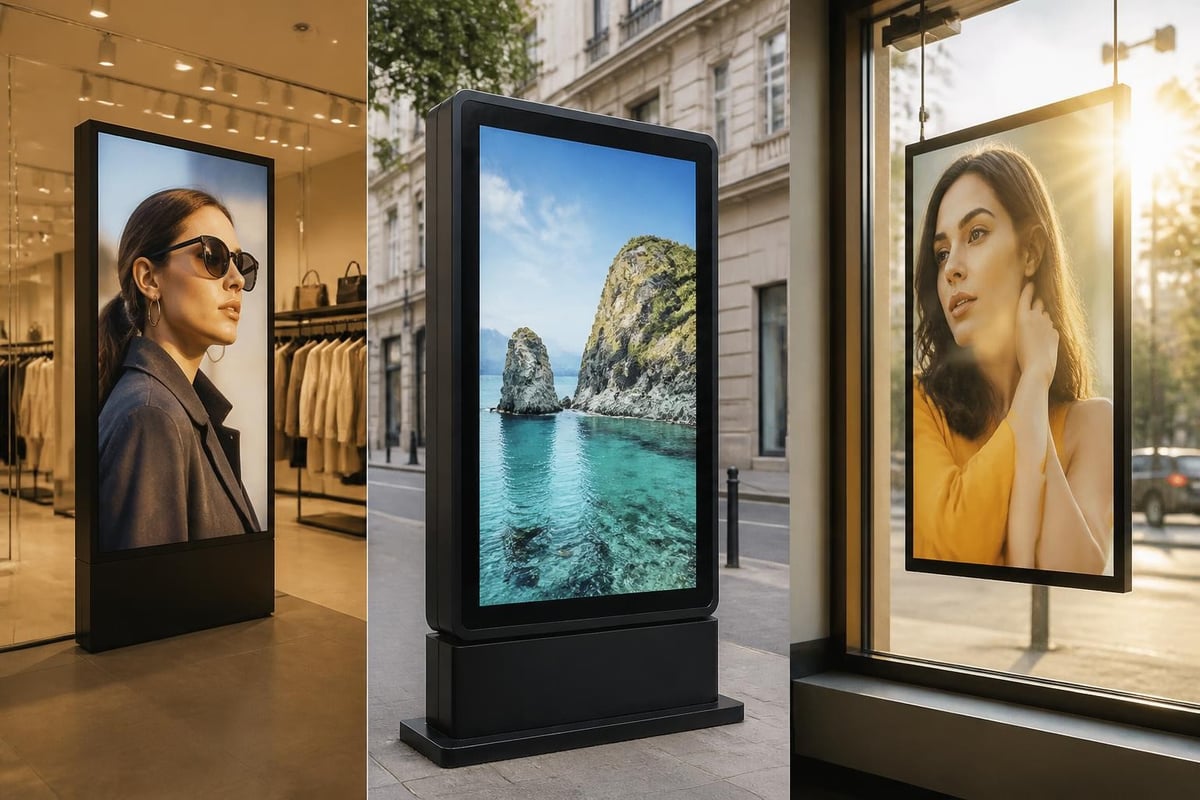
Display technology has progressed significantly, with LED, LCD, and OLED panels each offering distinct advantages. LED displays provide exceptional brightness suitable for outdoor environments and direct sunlight exposure, whilst LCD screens deliver excellent colour accuracy and resolution for indoor applications at competitive price points. OLED technology offers superior contrast ratios and viewing angles, though typically at premium pricing levels.
Hardware Specifications and Selection Criteria
Selecting appropriate hardware requires careful consideration of deployment environment, viewing distance, ambient lighting conditions, and content requirements. The HDMI Association specification overview provides technical guidance on connectivity standards that support high-resolution content delivery and advanced features such as HDR.
| Display Type | Optimal Environment | Brightness Range | Typical Resolution | Lifespan |
|---|---|---|---|---|
| Indoor LCD | Retail, Corporate | 300-700 nits | 1920×1080 to 4K | 50,000-100,000 hours |
| Outdoor LED | Street, Stadiums | 4,000-10,000 nits | Variable (pixel pitch dependent) | 100,000+ hours |
| High-Brightness LCD | Window Displays | 2,500-5,000 nits | 1920×1080 to 4K | 50,000-80,000 hours |
| Video Wall Panels | Control Rooms, Retail | 500-800 nits | Combined resolution | 60,000-100,000 hours |
Screen orientation matters considerably. Portrait mode suits directories, wayfinding applications, and fashion retail environments, whilst landscape orientation works well for video content, menu boards, and corporate communications. Some installations benefit from ultra-wide aspect ratios that command attention in high-traffic corridors.
Temperature management represents a critical consideration often overlooked during specification. Commercial-grade displays incorporate enhanced cooling systems and operate reliably across broader temperature ranges than consumer electronics. Outdoor installations require weatherproof enclosures with climate control, whilst indoor units in enclosed spaces may need ventilation planning.
Content Management and Strategy
The effectiveness of digital signage and displays hinges not merely on hardware capabilities but on strategic content development and management. Content management systems (CMS) serve as the central nervous system, enabling schedulers to deploy messaging across single locations or global networks from unified platforms.
Modern CMS platforms offer cloud-based administration, real-time updates, conditional content triggering based on external data feeds, and comprehensive analytics dashboards. Integration capabilities allow systems to pull information from inventory databases, social media feeds, weather services, and transport schedules.
Content Design Principles
Effective digital signage content adheres to fundamental design principles adapted for the medium's unique characteristics. Message hierarchy ensures viewers grasp key information within the brief attention window available. Most viewers engage with digital displays for 3-7 seconds, necessitating clear focal points and minimal text density.
Typography selection impacts readability dramatically at distance. Sans-serif fonts with substantial stroke weight perform optimally, whilst script or condensed typefaces reduce legibility. The Web Content Accessibility Guidelines provide valuable direction on contrast ratios, text sizing, and colour combinations that ensure content remains accessible to viewers with visual impairments.
Motion and animation attract attention but require judicious application. Subtle transitions between content slides maintain visual interest without overwhelming viewers, whilst excessive movement creates visual fatigue. Video content delivers compelling narratives but demands higher bandwidth and processing power.
Content refresh cycles vary by application and audience. Retail environments benefit from frequent updates aligned with promotions and inventory changes, whilst corporate communications may update weekly or monthly. The IAB Digital Out-of-Home Best Practices framework offers guidance on content rotation strategies and creative specifications.
- Retail environments: 15-30 second loops with 4-8 messages
- Corporate lobbies: 45-60 second loops with brand, news, and wayfinding content
- Quick-service restaurants: Menu content with promotional overlays
- Transportation hubs: Real-time schedules interspersed with advertising
- Healthcare facilities: Educational content, wayfinding, and patient communication
Applications Across Business Sectors
Digital signage and displays serve diverse functions across industry verticals, each with specific requirements and success metrics. Understanding these applications helps organisations identify opportunities within their operations.
Retail environments deploy digital displays for product promotion, brand storytelling, queue entertainment, and dynamic pricing. Interactive touchscreens enable product configuration, inventory checking, and endless-aisle capabilities. Digital window displays attract foot traffic whilst showcasing inventory without physical space constraints. Many retailers integrate lightbox signage alongside digital screens to create layered visual merchandising strategies combining traditional illuminated graphics with dynamic content.

Corporate communications leverage internal networks to share company news, recognise achievements, display performance metrics, and reinforce culture. Lobby installations create memorable first impressions for visitors whilst conference room displays facilitate scheduling and wayfinding.
Quick-Service Restaurant and Hospitality
The food service sector has embraced digital menu boards extensively, enabling daypart transitions, promotional highlighting, and calorie information display mandated by regulations. Dynamic pricing responds to inventory levels and demand patterns whilst upselling strategically through visual merchandising techniques.
| Application | Primary Function | Secondary Benefits | ROI Indicators |
|---|---|---|---|
| Menu Boards | Product Display | Upselling, Perceived Value | Average Transaction Value, Items per Order |
| Order Confirmation | Customer Communication | Accuracy, Efficiency | Order Errors, Service Time |
| Queue Entertainment | Customer Experience | Perceived Wait Time | Customer Satisfaction Scores |
| Drive-Through | External Communication | Brand Presence | Transaction Volume, Accuracy |
Hotels utilise digital signage for event directories, local attraction information, and promotional messaging. Integration with property management systems enables personalised greetings and targeted offers based on guest profiles.
Out-of-Home and Digital Advertising
The out-of-home advertising sector has experienced substantial transformation through digital signage and displays, with programmatic buying platforms enabling sophisticated targeting and campaign management. Out-of-home advertising revenue has reached unprecedented levels as advertisers recognise the medium's effectiveness in reaching audiences beyond traditional channels.
Digital out-of-home (DOOH) networks provide measurable impressions, daypart targeting, and creative flexibility impossible with traditional billboards. Campaigns update instantly across networks, allowing real-time optimisation and responsive messaging triggered by weather, events, or time-sensitive offers.
Audience measurement has matured considerably, with organisations like Geopath providing standardised methodologies for quantifying reach and frequency. Mobile location data, computer vision analytics, and vehicle tracking enable advertisers to validate exposure and attribute customer actions to DOOH campaigns.
The Media Rating Council OOH Measurement Standards establish industry benchmarks for counting impressions and reporting performance metrics, lending credibility comparable to traditional media channels.

Location-Based Targeting and Data Integration
Advanced DOOH networks leverage location intelligence to deliver contextually relevant messaging. Proximity to competitors, demographic composition of surrounding areas, traffic patterns, and environmental conditions all inform content decisions. Integration with customer data platforms enables sequential messaging strategies that guide consumers through awareness, consideration, and conversion stages across multiple touchpoints.
Implementation and Network Infrastructure
Successful digital signage deployments require robust network infrastructure, power provisioning, and ongoing maintenance protocols. Planning these elements during initial design prevents operational challenges and ensures reliable performance.
Network connectivity options include wired Ethernet, cellular LTE/5G, and Wi-Fi, each with advantages depending on location constraints and bandwidth requirements. Cloud-based content management typically requires minimal bandwidth for updates, though high-resolution video streaming demands greater capacity.
Power considerations extend beyond basic electrical service. Displays consume varying wattage based on size and brightness settings, whilst outdoor installations require weatherproof power supplies and potentially solar or backup systems. Energy management features reduce operating costs through dimming schedules and standby modes.
Mounting and Installation Standards
Professional installation ensures displays remain securely positioned whilst maintaining aesthetic appeal and meeting safety regulations. Wall mounts, ceiling suspensions, floor stands, and custom fabrications each suit different applications.
- Site survey and specification: Measure viewing distances, assess ambient lighting, identify power sources, and evaluate structural load capacity
- Structural mounting: Ensure attachment points support display weight with appropriate safety margins per local building codes
- Cable management: Conceal power and data cables for clean appearance whilst maintaining serviceability
- Display commissioning: Calibrate brightness, colour settings, and audio levels for optimal performance in specific environment
- Content scheduling: Programme initial playlists and establish update procedures with client stakeholders
- Staff training: Educate end-users on basic operation, content management, and troubleshooting procedures
Accessibility compliance deserves attention during planning stages. The US Access Board guidance on signs under the ADA provides specifications for tactile elements, mounting heights, and visual characteristics that ensure digital signage complements rather than replaces accessible wayfinding.
Emerging Technologies and Future Trends
The digital signage industry continues evolving rapidly, with several technologies poised to reshape capabilities and applications. Industry events like ISE 2024 showcase innovations that preview the medium's trajectory.
MicroLED technology promises display panels with exceptional brightness, contrast, and longevity whilst consuming less power than current LED solutions. Modular configurations enable creative installations without traditional aspect ratio constraints. Analyst insights from ISE 2024 highlight accelerating adoption across premium installations.
Artificial intelligence integration enables several advanced capabilities:
- Computer vision analytics track viewer demographics, attention duration, and emotional responses
- Content optimisation algorithms adjust messaging based on audience composition and engagement patterns
- Predictive maintenance monitors display health and alerts operators to potential failures before service interruptions
- Natural language processing powers voice-activated wayfinding and information kiosks
- Dynamic content generation creates personalised messaging variations automatically
Transparent OLED displays create striking installations that layer digital content over physical environments. Retail windows, museum cases, and architectural glass benefit from this technology's unique aesthetic whilst maintaining sightlines.
Sustainability considerations increasingly influence purchasing decisions. Energy-efficient displays, recyclable materials, and extended product lifecycles reduce environmental impact whilst lowering total cost of ownership. Some organisations power displays with renewable energy sources and showcase sustainability messaging through the same screens.
Integration with Broader Marketing Ecosystems
Digital signage and displays function most effectively when integrated within comprehensive marketing and communication strategies. Siloed deployments miss opportunities for cross-channel reinforcement and unified customer experiences.
Omnichannel coordination ensures messaging consistency across digital signage, mobile applications, websites, and social media. Promotional campaigns launch simultaneously across channels, with digital displays reinforcing online offers and directing customers to digital engagement points.
Analytics and Performance Measurement
Modern systems generate extensive data on content performance, viewer engagement, and operational health. Analytics platforms aggregate metrics including:
- Impression counts: Number of potential viewers based on traffic patterns and dwell time
- Engagement rates: Percentage of viewers who stop and attend to content
- Interaction metrics: Touchscreen interactions, QR code scans, and triggered actions
- Content completion rates: Percentage of message sequences viewed in entirety
- System uptime: Display operational status and content delivery reliability
These insights inform content refinement, scheduling optimisation, and ROI calculation. Attribution models connect DOOH exposure to website visits, store traffic, and conversion events through mobile location data and unique promotional codes.
Many organisations complement digital displays with traditional signage elements such as reception signs and dimensional lettering that provide permanent branding whilst digital screens deliver timely, changeable messaging. This layered approach balances consistency with flexibility.
Maintenance and Ongoing Operations
Long-term success with digital signage and displays requires systematic maintenance protocols and operational governance. Neglected systems deteriorate in performance, damaging brand perception and wasting initial investment.
Preventive maintenance schedules should address:
- Screen cleaning using appropriate materials that prevent surface damage
- Filter replacement in climate-controlled enclosures
- Software and firmware updates to patch security vulnerabilities and add features
- Content library management to archive outdated assets and maintain organised repositories
- Network security audits to prevent unauthorised access and malware infections
Remote monitoring capabilities enable operators to oversee distributed networks efficiently. Automated alerts notify technical teams of display failures, unusual temperature readings, or connectivity issues. Some systems capture screen-level screenshots periodically to verify proper content playback.
Content governance policies establish approval workflows, brand standards, and update procedures. Defined roles clarify who creates content, approves messaging, manages schedules, and responds to urgent changes. Documentation ensures knowledge transfer as personnel change.
Support contracts with manufacturers or specialised service providers ensure rapid response to hardware failures. Spare part inventories minimise downtime, particularly for mission-critical installations in retail or transportation environments where non-functional displays create negative customer experiences.
Training programmes keep staff current on system capabilities and content creation techniques. As platforms add features and best practices evolve, ongoing education ensures organisations extract maximum value from their investments in digital signage and displays.
Digital signage and displays have evolved into powerful communication platforms that deliver measurable results across retail, corporate, hospitality, and public environments. Strategic implementation combining appropriate hardware selection, compelling content, robust infrastructure, and ongoing optimisation creates engaging experiences that capture attention and drive desired actions. Whether you're seeking to enhance customer experiences, streamline internal communications, or capture advertising revenue, Signshoponline provides comprehensive digital signage solutions tailored to your specific requirements, backed by expert consultation and reliable support.


