

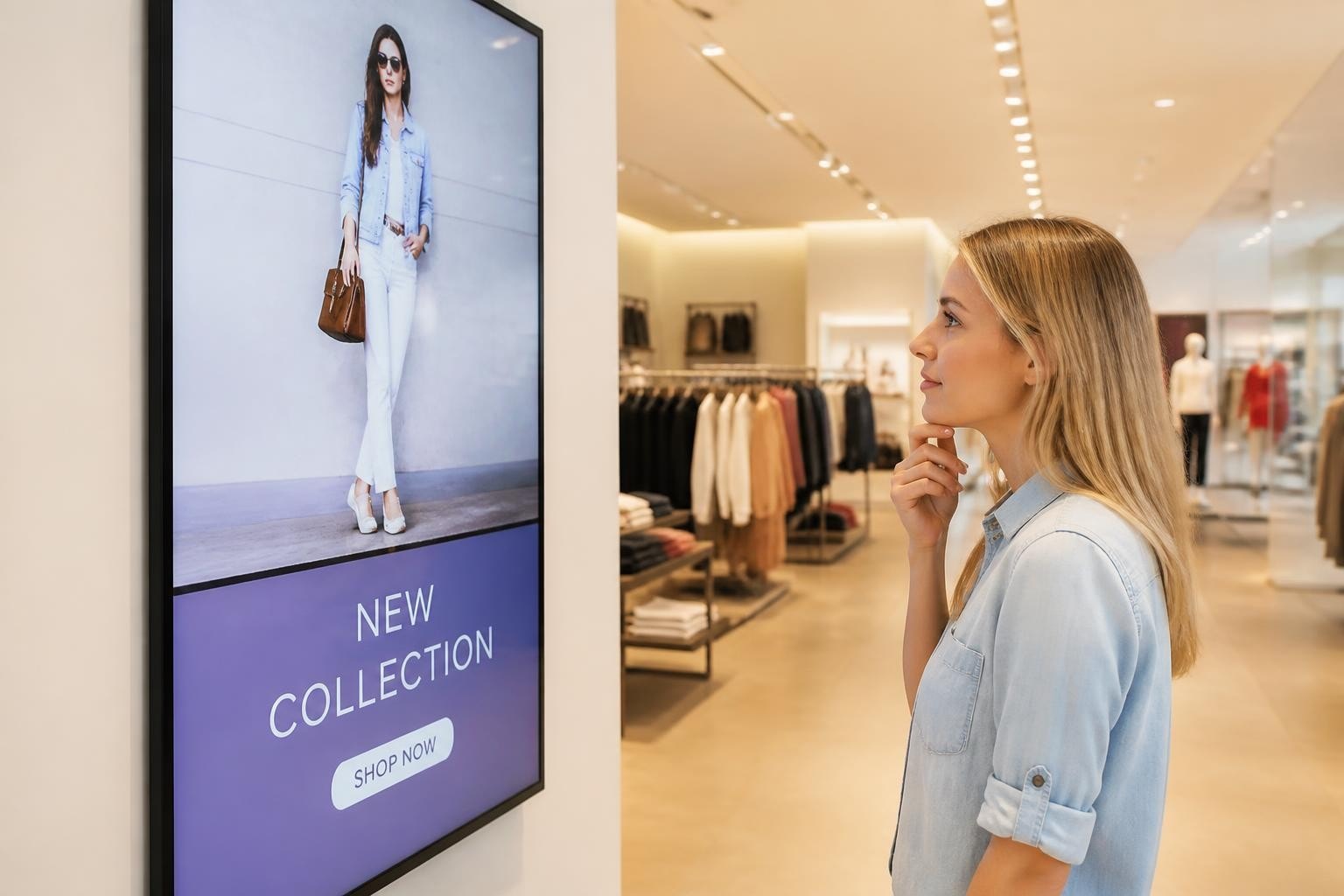
The relationship between digital signage and retail has evolved from a novelty to an essential component of modern store environments. Retailers who harness dynamic display technology create immersive experiences that traditional static signage simply cannot match. From high street boutiques to large shopping centres, digital screens now deliver targeted messages, real-time promotions, and interactive content that responds to customer behaviour and inventory levels. This transformation represents more than just replacing printed posters with screens; it fundamentally reshapes how brands communicate with shoppers at critical decision-making moments.
The Strategic Value of Digital Signage and Retail Integration
Digital signage and retail strategies intersect at the point where customer attention translates into purchasing decisions. Research demonstrates that dynamic content captures attention 400% more effectively than static displays, yet the true value extends far beyond initial engagement. Retailers deploy screens to reduce perceived wait times, provide wayfinding assistance, and deliver personalised product recommendations based on time of day, weather conditions, or inventory levels.
The measurable impact on sales performance makes digital signage and retail partnerships compelling from a financial perspective. Stores implementing strategic screen placement report conversion rate increases ranging from 15% to 33%, whilst impulse purchases near digital displays rise by similar margins. These metrics align with findings from Deloitte's analysis of retail technology trends, which identifies in-store digital media as a top investment priority for omnichannel retailers.
ROI Considerations for Retail Display Technology
When evaluating digital signage and retail investments, retailers must balance upfront hardware costs against operational savings and revenue uplift. A comprehensive cost-benefit analysis includes:
- Content management systems that centralise updates across multiple locations
- Energy consumption relative to LED efficiency improvements
- Staff time savings from eliminating manual poster changes
- Advertising revenue potential through third-party brand partnerships
- Customer data collection capabilities for personalisation
The Department of Energy provides guidance on energy-efficient displays that help retailers reduce operational costs whilst meeting sustainability objectives. Modern LED screens consume significantly less power than earlier technologies, with some models offering automated brightness adjustment based on ambient lighting conditions.
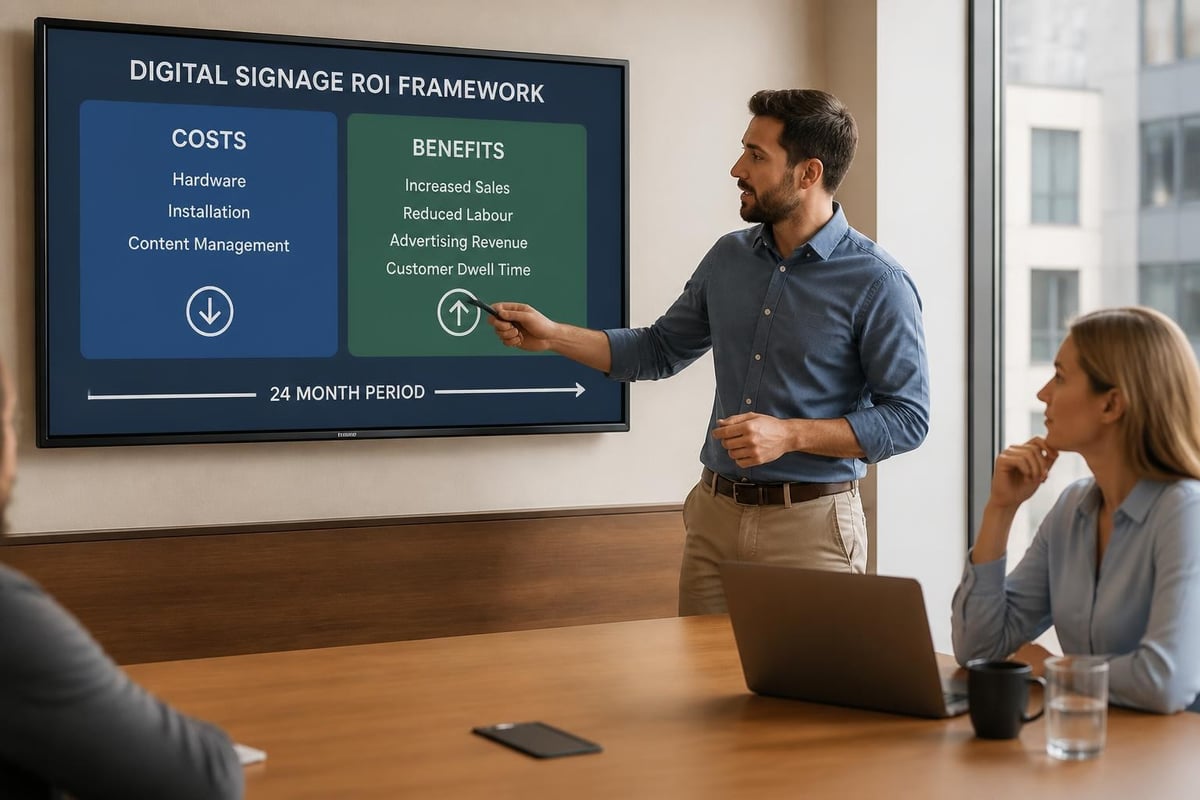
| Investment Component | Typical Cost Range | Payback Period | Annual Benefit |
|---|---|---|---|
| Display Hardware | £800 - £5,000 per screen | 12-18 months | Energy savings, durability |
| Content Management | £30 - £150/month | 6-12 months | Labour reduction, consistency |
| Installation | £200 - £800 per screen | Immediate | Professional integration |
| Content Creation | £500 - £2,000/campaign | 3-6 months | Higher conversion rates |
Content Strategies That Drive Retail Performance
Effective digital signage and retail content strategies extend beyond displaying products and prices. The most successful implementations leverage dayparting, which adjusts messages throughout the day to match shifting customer demographics and shopping behaviours. Morning content might highlight breakfast items and coffee, whilst evening displays promote dinner ingredients or ready-made meals.
Psychological principles underpin successful retail screen content. Movement attracts attention, yet excessive motion causes fatigue. The optimal balance incorporates subtle animation that draws the eye without overwhelming the senses. Colour psychology also plays a crucial role, with warm tones encouraging impulse purchases whilst cooler shades communicate trust and reliability.
Dynamic Content Categories for Maximum Impact
Retailers rotating between varied content types maintain customer engagement across multiple store visits:
- Promotional messaging featuring time-limited offers with countdown timers
- Product demonstrations showing items in use or highlighting features
- Social proof displaying customer reviews, ratings, and user-generated content
- Educational content providing how-to guides and styling suggestions
- Entertainment including industry news, seasonal content, or brand storytelling
- Wayfinding offering interactive store maps and product location assistance
The IAB's digital out-of-home playbook establishes industry standards for content delivery, measurement, and attribution that help retailers benchmark performance against sector norms. These guidelines prove particularly valuable when coordinating digital signage and retail media strategies across multiple locations.
Placement Optimisation and Store Layout Integration
Digital signage and retail spatial planning determines whether screens enhance or disrupt the shopping journey. High-traffic zones near entrances communicate brand messages and current promotions, whilst decision zones at product displays influence final purchase choices. Queue areas represent premium locations where captive audiences engage with content during otherwise frustrating wait times.
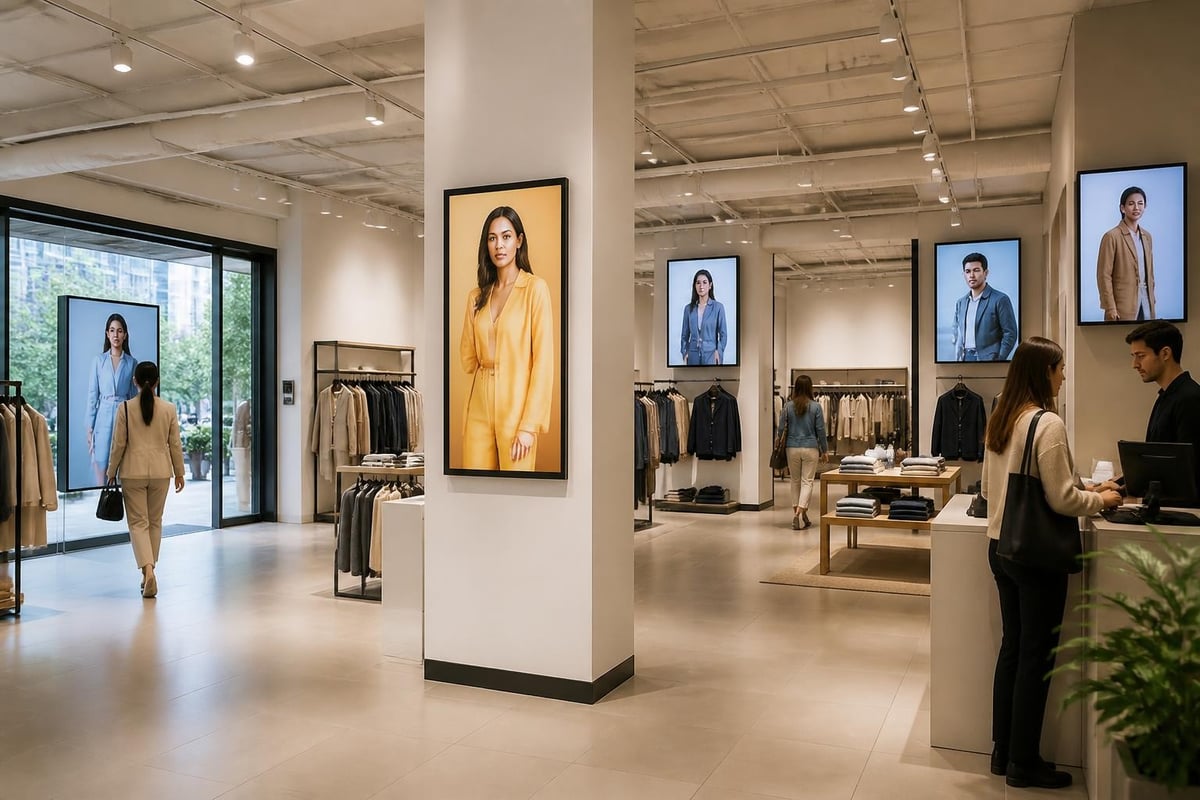
Vertical placement height affects visibility and perceived importance. Eye-level screens create intimate connections with content, whilst elevated displays broadcast messages across wider areas. Retailers must also consider viewing angles, accounting for customer approach patterns and sightlines from different departments.
The integration of channel letters with digital displays creates sophisticated branded environments that combine traditional dimensional signage with dynamic content capabilities. This hybrid approach maintains brand consistency whilst offering flexibility for promotional updates.
Technical Specifications That Matter
Screen selection impacts both content quality and operational reliability. Key technical considerations include:
- Resolution: 1080p minimum for screens under 50 inches, 4K for larger displays
- Brightness: 500+ nits for indoor retail, 2,500+ nits for window-facing screens
- Viewing angle: 178-degree panels ensure content visibility from oblique approaches
- Commercial-grade durability: 16-18 hour daily operation ratings versus consumer displays
- Connectivity: WiFi, Ethernet, and USB options for flexible content management
Temperature and humidity tolerance proves essential in environments with fluctuating conditions. Retail spaces near entrances experience temperature variations that consumer-grade screens cannot withstand over extended periods.
Measurement, Analytics, and Attribution
The relationship between digital signage and retail success requires rigorous measurement frameworks. Modern systems incorporate camera-based analytics (with appropriate privacy safeguards) that track attention metrics, demographic composition, and engagement duration. These data points inform content optimisation whilst demonstrating return on investment.
Nielsen's expansion of out-of-home measurement provides standardised audience metrics that enable cross-channel campaign attribution. Retailers can now compare digital signage performance against other marketing channels using consistent measurement methodologies.
Attribution remains challenging when customers encounter multiple touchpoints before purchase. Advanced retailers implement unique promotion codes displayed on screens, enabling direct tracking of screen-influenced transactions. Point-of-sale integration links product scans with screen content displayed immediately before purchase.
| Metric Category | Key Indicators | Measurement Method | Business Impact |
|---|---|---|---|
| Attention | Views, dwell time, engagement rate | Computer vision analytics | Content effectiveness |
| Conversion | Sales lift, basket size, category growth | POS integration | Revenue attribution |
| Operational | Content updates, system uptime, energy use | CMS reporting | Cost management |
| Audience | Demographics, traffic patterns, repeat visits | Anonymous analytics | Targeting refinement |
The IAB measurement guide offers practical frameworks for establishing KPIs that align with broader retail objectives whilst maintaining technical feasibility.
Compliance, Accessibility, and Legal Considerations
Digital signage and retail deployments must navigate regulatory requirements affecting both content and physical installation. Audio output requires volume limitations that prevent nuisance whilst maintaining intelligibility. Screen brightness must balance visibility against light pollution concerns, particularly for window-facing displays.
Accessibility considerations ensure all customers benefit from digital content. The ADA provides guidance on accessible design principles that extend to retail signage, including text sizing, contrast ratios, and audio description options. Interactive touchscreens require mounting heights that accommodate wheelchair users alongside standing customers.
Content regulations vary by jurisdiction, yet common requirements include:
- Truth in advertising standards enforced by regulatory bodies
- Privacy compliance for any data collection or camera systems
- Disclosure requirements for pricing, terms, and promotional conditions
- Age-appropriate content filtering based on audience composition
- Intellectual property licensing for music, images, and video content
The FTC's advertising guidance clarifies disclosure requirements and truthful representation standards that apply to digital retail environments. Violations carry reputational and financial consequences that far exceed compliance costs.
Technology Integration and Future Developments
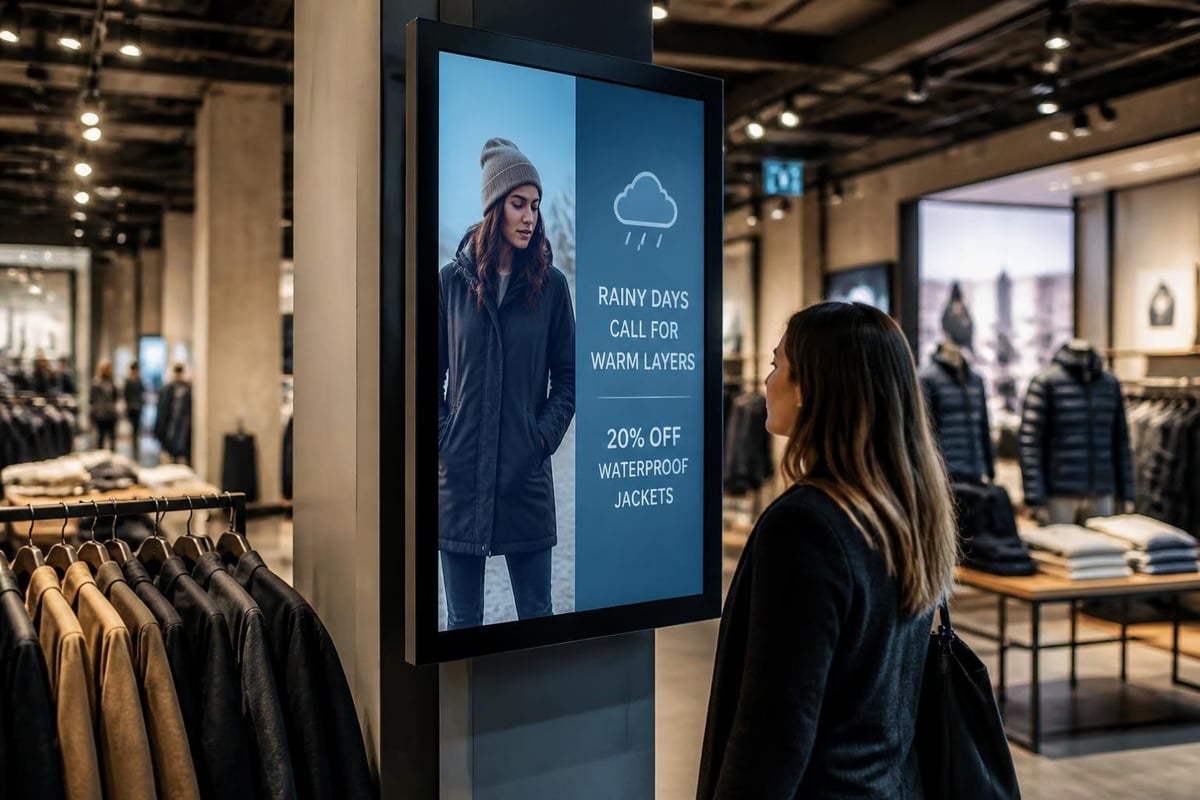
Digital signage and retail systems increasingly connect with broader technology ecosystems. Inventory management integration enables real-time product availability displays that reduce customer frustration when items are out of stock. Weather API connections trigger relevant product promotions based on current conditions or forecasts.
Artificial intelligence transforms content personalisation capabilities. Computer vision identifies demographic characteristics (age range, gender expression) without collecting personally identifiable information, then serves appropriate content variations. Machine learning algorithms continuously optimise content rotation based on conversion performance.
Emerging technologies promise further evolution. Transparent OLED displays transform windows and glass partitions into dynamic content surfaces without blocking natural light. Holographic projection systems create three-dimensional product visualisations that customers examine from multiple angles. Near-field communication enables smartphone interactions that transfer screen content to personal devices for later reference.
Implementation Roadmap for Retailers
Successful digital signage and retail programmes follow structured deployment phases:
- Audit existing signage to identify replacement opportunities and content gaps
- Define objectives with specific, measurable targets for each screen location
- Design content workflows establishing creation, approval, and scheduling processes
- Pilot installations testing technology and content in limited locations
- Measure and refine analysing performance data to optimise before expansion
- Scale strategically rolling out proven approaches across additional locations
- Maintain and evolve establishing ongoing content refresh and hardware maintenance
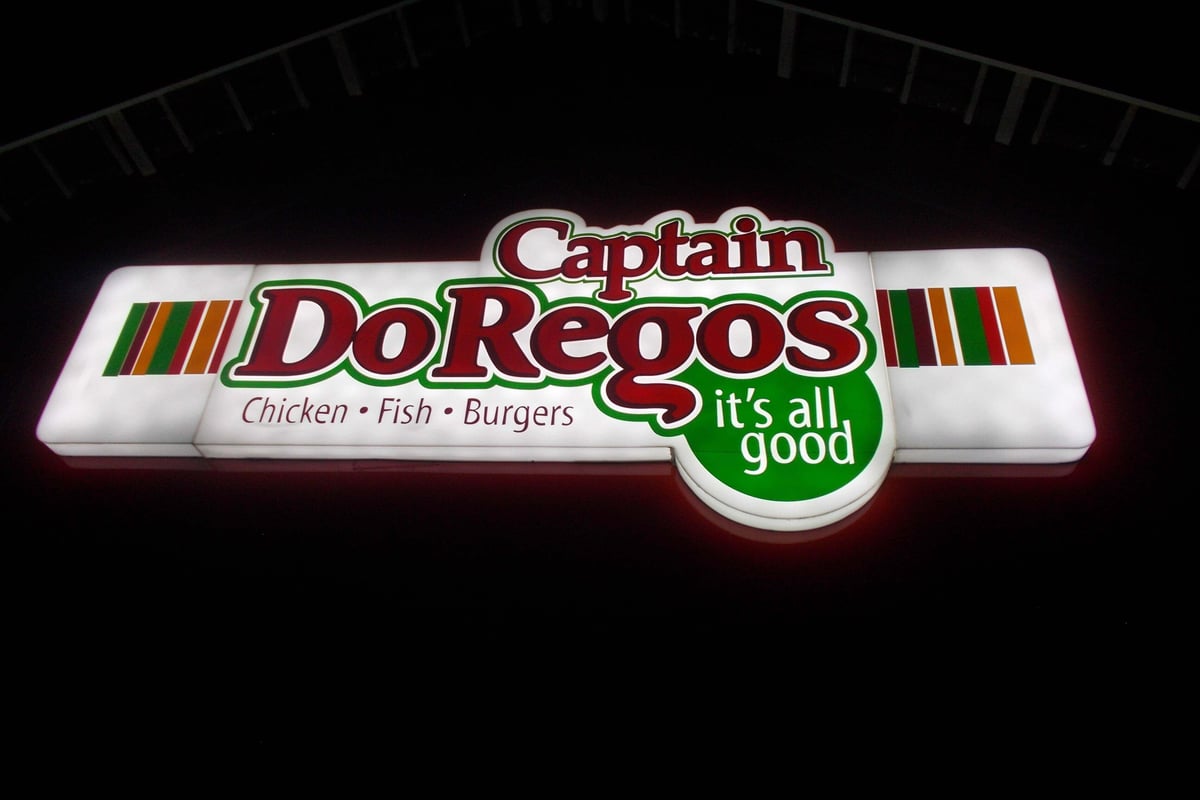
Illuminated displays enhance visibility and perceived value. Lightbox signage offers consistent backlighting that makes content stand out in varied ambient conditions, whether as standalone promotional features or integrated with digital screen installations. Retailers benefit from combining static lightbox elements that maintain brand presence with dynamic screens that deliver timely promotional messages, creating layered visual environments that balance consistency with flexibility.
Content Production and Creative Considerations
Digital signage and retail content demands different creative approaches than traditional advertising. Screen dimensions, viewing distances, and attention spans require simplified messaging that communicates key points within 3-5 seconds. Text hierarchy guides the eye from headline to call-to-action, whilst negative space prevents visual clutter that reduces comprehension.
Motion graphics prove more effective than static images, yet subtlety outperforms aggressive animation. Gentle parallax effects, smooth transitions, and purposeful movement direct attention without causing distraction. Loop lengths require careful planning to prevent staff and regular customers experiencing content fatigue whilst ensuring first-time visitors see complete messages.
Professional content creation services range from template-based tools to bespoke production partnerships. The choice depends on brand sophistication, budget constraints, and internal creative capabilities:
- Template platforms (£20-£80/month): Pre-designed layouts with customisation options
- Design subscriptions (£150-£400/month): Unlimited requests with professional designers
- Agency partnerships (£800-£3,000/campaign): Bespoke creative for major campaigns
- In-house production (variable): Internal teams with appropriate software and skills
Retail Dive's coverage of digital signage transformation highlights how creative excellence differentiates leaders from followers in competitive retail environments.
Network Management and Operational Efficiency
Multi-location retailers require centralised content management systems that enable corporate marketing teams to maintain brand consistency whilst allowing local store input for community-specific promotions. Cloud-based platforms distribute content updates instantly across dozens or hundreds of locations, eliminating the logistical challenges of physical media distribution.
User permission structures balance control with flexibility. Corporate administrators maintain master templates and brand guidelines, regional managers schedule location-appropriate promotions, and store managers can trigger specific content for immediate events or inventory situations. Automated scheduling ensures content relevance without requiring constant manual intervention.
Remote monitoring capabilities identify technical issues before they impact customer experience. System alerts notify managers when screens go offline, content fails to load, or hardware sensors detect temperature anomalies. Proactive maintenance extends hardware lifespan whilst ensuring consistent operational performance.
The operational excellence enabled by digital signage and retail management platforms extends beyond content delivery. Analytics dashboards provide visibility into system health, content performance, and audience engagement across entire retail networks. These insights inform strategic decisions about expansion, content investment, and resource allocation.
Industry-Specific Applications and Use Cases
Digital signage and retail implementations vary significantly across sectors. Fashion retailers emphasise aspirational lifestyle imagery and runway content that builds brand desire, whilst supermarkets prioritise promotional messaging and product location information. Electronics stores deploy interactive displays allowing customers to compare specifications, and restaurants feature dynamic menu boards that adjust based on time of day and inventory levels.
Specialist applications demonstrate the technology's versatility:
- Jewellery retailers use high-resolution screens showcasing product detail impossible to see in display cases
- Automotive showrooms feature configurators letting customers visualise option combinations
- Pharmacies deliver health information and product education whilst respecting medical privacy
- Garden centres provide seasonal planting guides and care instructions matched to inventory
- Sporting goods stores show products in action through demonstration videos and athlete endorsements
Each sector develops content strategies aligned with customer expectations and purchase behaviours, yet underlying principles of attention, engagement, and conversion remain consistent.
Integration With Traditional Signage Elements
Digital signage and retail environments benefit from balanced integration with conventional signage types. Teardrop banners and wall banners maintain brand presence in areas where power access or sightlines make screens impractical. The combination creates visual rhythm that guides customers through spaces whilst managing installation and operational costs.
Wayfinding systems particularly benefit from hybrid approaches. Permanent directional signage provides primary navigation, whilst digital screens offer detailed product location, real-time queue information, and temporary event directions. This layered approach ensures functionality even during technical issues whilst maximising the advantages of each medium.
Brand consistency across signage types requires coordinated design systems. Colour palettes, typography, messaging tone, and visual style should remain recognisable whether displayed on neon signs, printed banners, or digital screens. This cohesion strengthens brand recognition whilst creating professional retail environments that build customer trust.
Digital signage and retail partnerships deliver measurable improvements in customer engagement, operational efficiency, and sales performance when implemented with clear strategic objectives and consistent content excellence. Whether you're upgrading a single location or deploying screens across multiple stores, success requires balancing technical capabilities with creative execution and rigorous performance measurement. Signshoponline provides comprehensive signage solutions including digital displays, lightboxes, banners, and branded promotional materials that work together to create cohesive retail environments. Contact our team to discuss how custom signage solutions can transform your retail space and deliver the results your business demands.


