

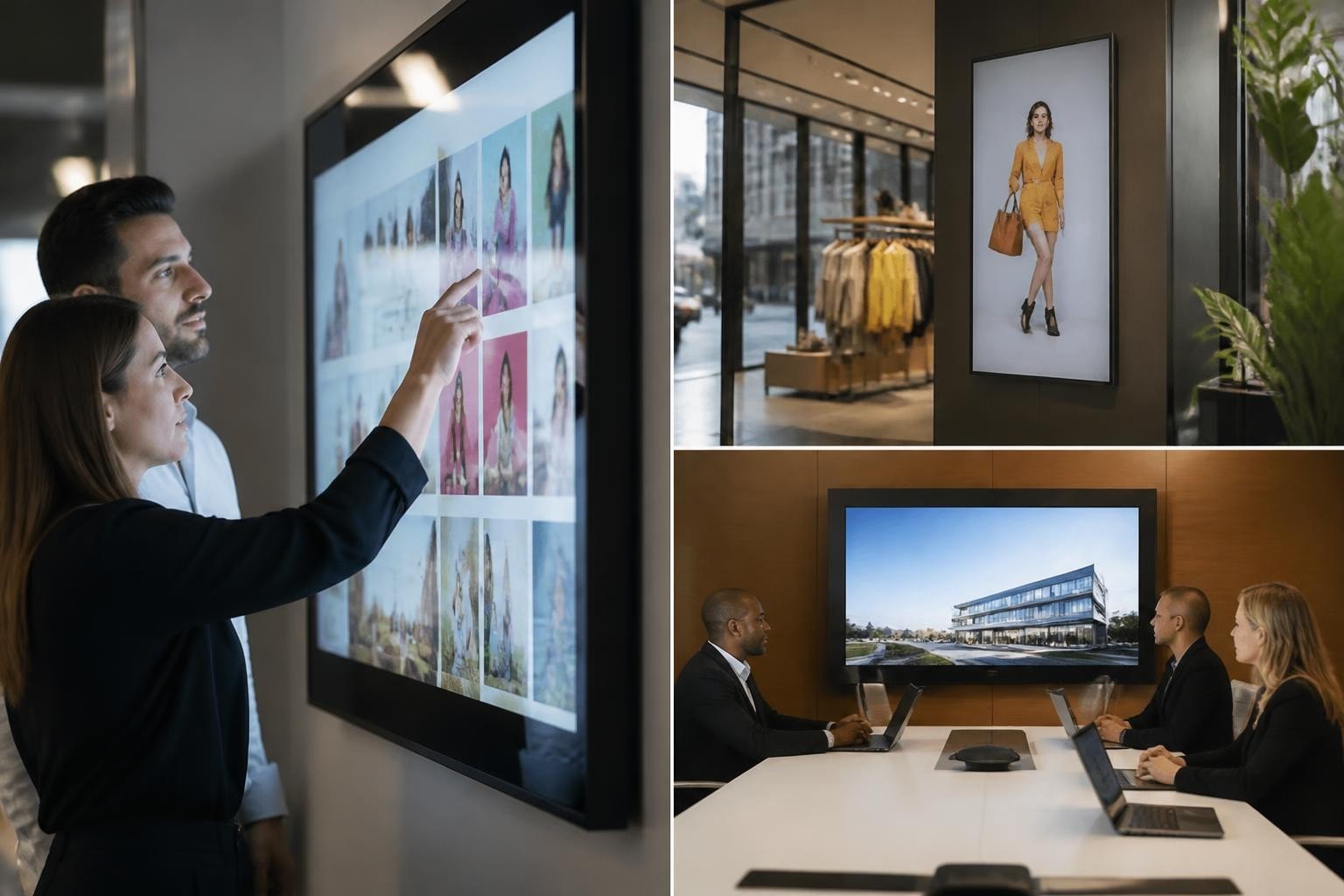
Digital signage for business has evolved from a novel technology into an essential communication tool that shapes customer experiences, drives purchasing decisions, and streamlines internal operations. In 2026, organisations across retail, hospitality, healthcare, and corporate sectors rely on dynamic displays to deliver targeted messages, enhance brand visibility, and adapt to rapidly changing market conditions. Whether you're considering your first screen installation or expanding an existing network, understanding the strategic applications, technical requirements, and measurable benefits of digital signage enables informed decision-making that aligns with your business objectives.
Strategic Applications Across Business Sectors
Digital signage for business serves fundamentally different purposes depending on the environment and audience. Retail environments leverage screens to influence purchase behaviour at critical decision points throughout the customer journey.
Retail and Point-of-Sale Applications
Shopping centres and standalone shops deploy digital displays to showcase promotions, demonstrate product features, and reduce perceived wait times at checkout queues. Dynamic pricing updates allow retailers to respond instantly to competitor actions or inventory levels without the labour costs associated with manual price tag changes.
Research from Deloitte's retail technology insights demonstrates that in-store digital touchpoints significantly influence purchasing decisions, particularly when integrated with personalised recommendations and inventory visibility. Fashion retailers use full-length screens to display outfit combinations, whilst grocery stores rotate recipes featuring ingredients currently on promotion.
The IAB's DOOH and In-Store Retail Media Playbook provides comprehensive frameworks for measuring the effectiveness of digital signage within retail media networks, establishing clear metrics for return on investment that extend beyond simple dwell time measurements.

Corporate Communications and Wayfinding
Corporate offices employ digital signage for business to streamline visitor management, display meeting room schedules, and communicate company announcements across dispersed locations. Reception areas benefit from professional displays that reinforce brand identity whilst providing practical information about building navigation and current occupancy.
Internal communications departments reduce email overload by broadcasting urgent updates, celebrating team achievements, and sharing key performance indicators through strategically positioned screens in break rooms and corridors. Manufacturing facilities use screens to display real-time production metrics, safety reminders, and shift schedules.
Healthcare providers integrate digital signage with queue management systems to reduce perceived wait times and provide health education content. Educational institutions coordinate campus-wide communications about events, emergency notifications, and directional guidance.
| Sector | Primary Use Cases | Average ROI Timeline |
|---|---|---|
| Retail | Promotions, product information, queue management | 6-12 months |
| Corporate | Internal comms, wayfinding, meeting schedules | 12-18 months |
| Hospitality | Event schedules, dining menus, local attractions | 8-14 months |
| Healthcare | Queue management, health education, wayfinding | 10-16 months |
Technical Infrastructure and Content Management
Implementing digital signage for business requires careful consideration of hardware specifications, network architecture, and content management systems that align with your operational requirements and technical capabilities.
Hardware Selection and Environmental Factors
Screen selection depends on viewing distance, ambient lighting conditions, and installation environment. Commercial-grade displays incorporate features absent from consumer televisions, including extended warranty coverage, higher brightness ratings (typically 500-2,500 nits), and orientation flexibility for portrait or landscape mounting.
Outdoor installations demand weatherproof enclosures with temperature regulation, direct sunlight readability, and vandal-resistant construction. Indoor screens in high-traffic areas benefit from protective glass overlays and robust mounting systems that withstand vibration and accidental impacts.
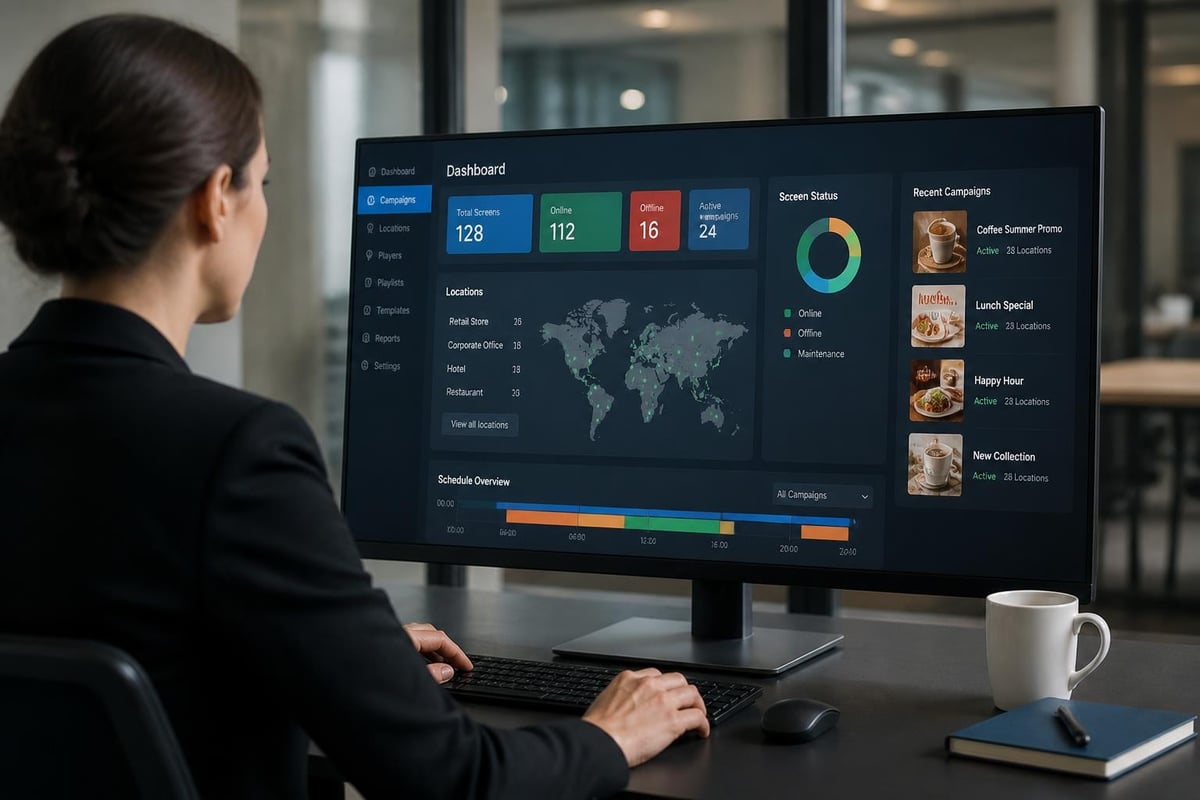
Media players powering the displays range from basic system-on-chip solutions embedded within the screen to dedicated computing devices capable of rendering complex animations and real-time data integrations. Cloud-based content management platforms enable centralised control across distributed locations whilst local caching ensures content continuity during network disruptions.
- Network connectivity: Wired Ethernet provides stable performance; wireless connections suit temporary installations
- Power requirements: Consider surge protection and uninterruptible power supplies for mission-critical applications
- Mounting solutions: Wall brackets, ceiling suspensions, freestanding kiosks, or window-facing installations
- Interactive capabilities: Touchscreen overlays, gesture recognition, or mobile device integration
Content Strategy and Scheduling
Effective digital signage for business balances information delivery with visual appeal, avoiding the common pitfall of screen clutter that diminishes message impact. Content zones divide screens into regions dedicated to specific information types: primary promotional messages, secondary news feeds, time/weather widgets, and brand elements.
Scheduling tools automate content rotation based on time of day, day of week, or external triggers such as weather conditions or inventory levels. Restaurants display breakfast menus until 11:00, transition to lunch offerings, then evening dining options-all without manual intervention.
Dynamic data integration pulls real-time information from business systems:
- Point-of-sale integration displays current promotions and inventory availability
- Social media feeds showcase user-generated content and brand mentions
- Weather services adjust messaging based on current conditions
- Transport data provides arrival times for nearby public transit
- Calendar systems display upcoming events and meeting room availability
Professional design templates maintain brand consistency across campaigns whilst reducing production time for routine updates. Signshoponline supports businesses in developing cohesive visual strategies that complement existing signage elements including dimensional lettering and reception signs.
Accessibility and Regulatory Compliance
Digital signage for business must address accessibility requirements to ensure equal access for individuals with disabilities whilst maintaining compliance with applicable regulations. The U.S. Department of Justice guidance on web accessibility establishes expectations for digital content that extend to interactive displays and video content shown on public-facing screens.
Technical Accessibility Standards
The U.S. Access Board's chapter on signs provides detailed specifications for electronic and variable message signs, including requirements for character height, contrast ratios, and refresh rates that accommodate various visual abilities. Whilst these are American standards, they represent best practices applicable globally.
Key accessibility considerations include:
- Text legibility: Minimum character heights based on viewing distance; sans-serif typefaces; high contrast ratios
- Colour independence: Information conveyed through colour must have alternative indicators
- Reading time: Static messages displayed long enough for comprehension; scrolling text moves slowly
- Audio descriptions: Video content includes captions or transcripts; audio output accommodates hearing-impaired users
- Physical placement: Screen height and angle allow viewing from wheelchair height
For businesses operating in regulated industries or public spaces, the Access Board PDF guide on signage offers comprehensive technical specifications that ensure compliance whilst enhancing usability for all visitors.
Security Considerations for Connected Displays
Digital signage for business represents networked devices that require cybersecurity protocols to prevent unauthorised access, content manipulation, and network breaches. As internet-connected systems, displays present attack surfaces that malicious actors may exploit to display inappropriate content, steal network credentials, or pivot to other business systems.
Network Hardening and Device Management
The NIST report on IoT barriers highlights common vulnerabilities in internet-connected devices and recommends security frameworks applicable to digital signage deployments. Isolating signage networks from primary business systems through VLAN segmentation limits potential damage from compromised devices.
Essential security measures include:
- Default password changes on all devices and management platforms
- Regular firmware updates addressing known vulnerabilities
- Encrypted communications between players and content servers
- Physical security preventing unauthorised USB access or device theft
- Activity logging detecting unusual content changes or access patterns
The CISA Internet Exposure Reduction guidance provides practical steps for minimising attack surfaces on internet-connected devices, particularly relevant for organisations managing large screen deployments across multiple sites.
Content approval workflows prevent unauthorised messages from appearing on screens whilst maintaining audit trails for regulatory compliance. Role-based access controls limit editing permissions to authorised personnel, with multi-factor authentication protecting administrative accounts.

| Security Layer | Implementation | Business Impact |
|---|---|---|
| Network isolation | Dedicated VLAN for signage devices | Limits breach propagation |
| Access control | Multi-factor authentication, role permissions | Prevents unauthorised content |
| Encryption | TLS for content delivery, encrypted storage | Protects proprietary information |
| Monitoring | Activity logs, anomaly detection | Early threat identification |
| Physical security | Locked enclosures, tamper detection | Prevents device manipulation |
Measuring Performance and Return on Investment
Digital signage for business justifies investment through measurable improvements in customer engagement, operational efficiency, and revenue generation. Establishing baseline metrics before installation enables accurate assessment of impact across relevant key performance indicators.
Quantitative Metrics and Analytics
Dwell time analysis measures how long customers spend viewing specific content or within defined areas, indicating message effectiveness and interest levels. Computer vision systems track audience demographics, attention patterns, and emotional responses without collecting personally identifiable information.
Point-of-sale correlation analyses compare sales data for promoted products against non-promoted items, isolating the revenue impact attributable to digital signage campaigns. A/B testing rotates different creative approaches and messages to identify which variants drive strongest performance.
- Foot traffic patterns: Heatmaps showing movement through retail spaces
- Conversion rates: Percentage of viewers who take desired actions
- Average transaction value: Uplift in basket size following promotional exposure
- Operational savings: Reduced printing costs, faster information updates
- Employee engagement: Internal communications reach and comprehension
Corporate environments measure meeting room utilisation improvements, reduction in misdirected visitor queries, and employee satisfaction with internal communications. Healthcare facilities track patient satisfaction scores related to wait time perception and information clarity.
Content Performance Optimisation
Analytics dashboards reveal which content types, layouts, and scheduling patterns deliver strongest engagement. Iterative refinement based on performance data continuously improves campaign effectiveness without additional hardware investment.
Seasonal patterns inform content planning, whilst real-time analytics enable rapid response to underperforming campaigns. Integration with customer relationship management systems allows personalised messaging triggered by loyalty programme data or previous purchase behaviour.
Integration with Existing Business Systems
Digital signage for business delivers maximum value when integrated with enterprise systems rather than operating as isolated displays. Application programming interfaces enable bidirectional communication between signage platforms and inventory management, point-of-sale, customer relationship management, and building automation systems.
Operational Efficiency Through Automation
Inventory systems automatically trigger promotions when stock levels exceed thresholds or expiration dates approach. Event-driven content responds to external factors: rainy weather triggers umbrella promotions whilst temperature drops promote hot beverages.
Queue management integration displays current wait times and directs customers to available service points, reducing congestion and improving satisfaction. Meeting room booking systems show real-time availability outside conference spaces, preventing double-bookings and facilitating impromptu collaborations.
Emergency notification systems override scheduled content during critical situations, broadcasting evacuation instructions, severe weather alerts, or security lockdown procedures across all screens simultaneously. Integration with building automation ensures screens activate during emergencies even if previously powered down.
Businesses seeking comprehensive signage solutions benefit from consulting specialists who understand both traditional elements like pylon signs and billboard signs alongside digital implementations.
Future-Proofing Your Investment
Digital signage for business requires forward-thinking infrastructure decisions that accommodate evolving technologies and expanding applications. Scalable architecture supports adding screens to growing networks whilst modular components allow incremental capability enhancements.
Emerging Technologies and Capabilities
Artificial intelligence enables content personalisation based on audience demographics detected through computer vision, adjusting messaging to viewer age ranges, gender composition, and attention patterns. Natural language processing analyses social media sentiment to inform content strategies and identify trending topics relevant to your audience.
Augmented reality overlays blend digital content with physical environments, allowing customers to visualise products in context before purchase. Interactive displays incorporate gesture recognition and mobile device connectivity, transforming passive viewing into engaging experiences.
Sustainability considerations influence hardware selection, with energy-efficient LED backlighting and occupancy sensors reducing power consumption during low-traffic periods. Cloud-based management platforms eliminate on-premises server infrastructure whilst enabling remote monitoring and troubleshooting across distributed locations.
Standards-based platforms prevent vendor lock-in, ensuring content investments remain viable as hardware evolves. Open-source content management systems offer customisation flexibility whilst established commercial platforms provide comprehensive support and regular feature updates.
Digital signage for business transforms how organisations communicate with customers, employees, and visitors through dynamic, responsive content that adapts to real-time conditions and audience needs. Strategic implementation balances technical capabilities, content quality, accessibility requirements, and security considerations to deliver measurable returns on investment. Signshoponline combines expertise in traditional and digital signage solutions to help businesses develop comprehensive visual communication strategies that engage audiences and support operational objectives across retail, corporate, and public environments.


