


Modern buildings, campuses, and facilities face an increasingly complex challenge: helping visitors navigate unfamiliar spaces efficiently whilst delivering relevant information at the right moment. Digital signage and wayfinding solutions have emerged as powerful tools that combine dynamic visual communication with intelligent navigation assistance, transforming how organisations guide people through their environments. These integrated systems deliver measurable benefits including reduced confusion, improved visitor satisfaction, and enhanced operational efficiency across sectors from healthcare to retail.
Understanding Digital Signage and Wayfinding Integration
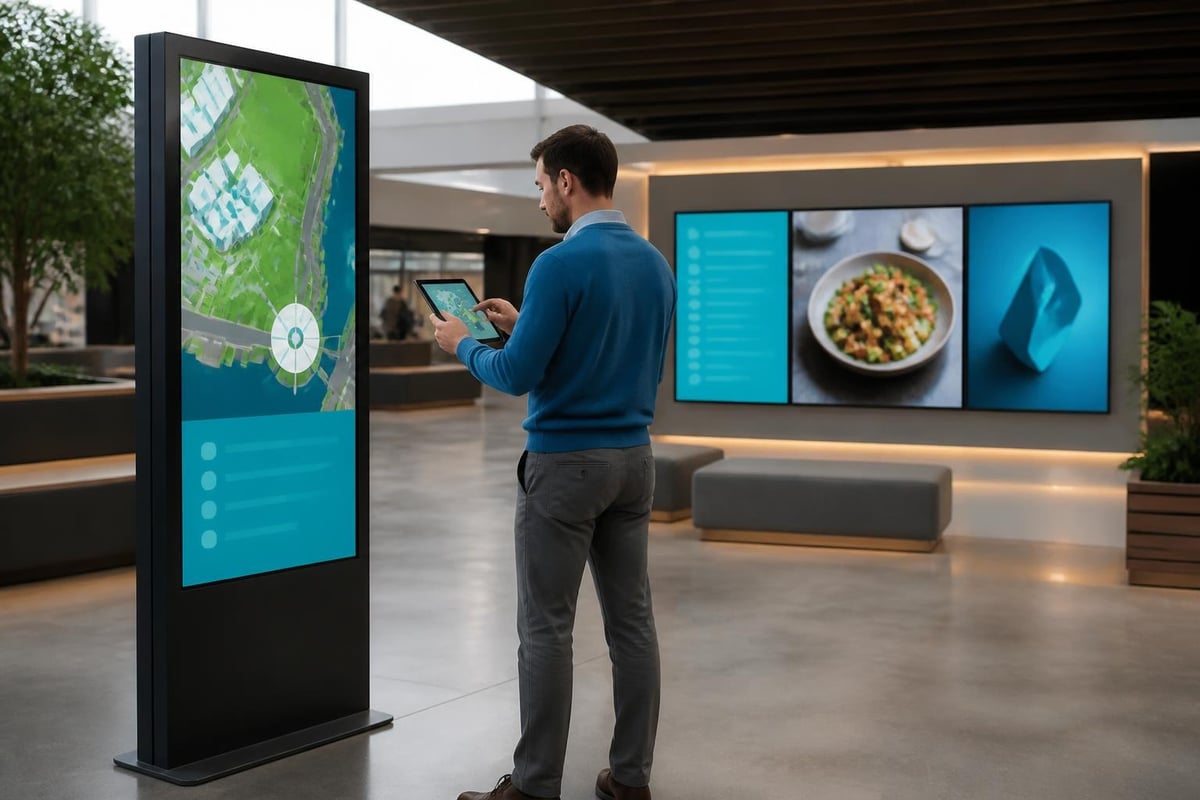
Digital signage and wayfinding represent the convergence of two critical communication functions within built environments. Traditional static directional signs provide fixed information that quickly becomes outdated when layouts change or temporary events occur. Digital systems overcome these limitations through dynamic content delivery and real-time updates.
Core Components of Modern Systems
Effective digital signage and wayfinding deployments comprise several interconnected elements working in harmony:
- Display hardware including LED screens, LCD panels, and interactive touchscreens positioned at decision points
- Content management systems (CMS) that control messaging, maps, and directional information across multiple screens
- Positioning technology such as Bluetooth Low Energy (BLE) beacons, Wi-Fi triangulation, or ultra-wideband (UWB) sensors
- Backend databases storing floor plans, points of interest, and routing algorithms
- Integration platforms connecting wayfinding to booking systems, emergency alerts, and building management
The technical approaches underpinning indoor positioning systems have evolved significantly, offering unprecedented accuracy for location-aware wayfinding applications.
Key Differences Between Signage and Wayfinding Functions
| Function | Digital Signage | Wayfinding |
|---|---|---|
| Primary purpose | Information delivery and promotion | Navigation assistance and orientation |
| User interaction | Typically passive viewing | Often interactive with search and routing |
| Content update frequency | High (hourly or event-driven) | Moderate (when layouts change) |
| Typical placement | High-traffic areas, lobbies | Decision points, intersections, entrances |
| Measurement metrics | Impressions, dwell time, engagement | Time to destination, task completion, user satisfaction |
Both functions complement each other within comprehensive digital communication strategies. A hospital corridor screen might display health promotion messages whilst simultaneously providing directions to departments, creating value through multi-purpose installations.
Strategic Benefits Across Industries
Digital signage and wayfinding systems deliver sector-specific advantages that justify investment across diverse applications. Understanding these benefits helps organisations prioritise features during system selection.
Healthcare Environments
Hospitals and medical campuses present particularly challenging navigation scenarios with frequent layout changes, anxious visitors, and time-sensitive appointments. Research on IoT-based indoor wayfinding solutions for hospital visitors demonstrates measurable improvements in navigation efficiency and reduced stress levels when digital systems replace traditional static signage.
Healthcare-specific benefits include:
- Reduced missed appointments through clearer directional guidance
- Lower staff interruptions from direction requests
- Dynamic routing around closed corridors or construction zones
- Emergency messaging integration for rapid facility-wide alerts
- Multi-language support for diverse patient populations
Beyond navigation, lightbox signage installations in waiting areas can display queue information and health education content, maximising the communication value of each display point.
Retail and Commercial Complexes
Shopping centres, airports, and mixed-use developments leverage digital signage and wayfinding to enhance the customer experience whilst creating new revenue opportunities:
- Promotional integration displaying special offers near relevant store locations
- Event navigation guiding visitors to temporary pop-ups or seasonal attractions
- Analytics capture tracking foot traffic patterns to optimise tenant placement
- Advertising revenue from third-party promotional content within wayfinding interfaces
Commercial deployments increasingly incorporate mobile integration, allowing visitors to plan routes on smartphones and receive turn-by-turn directions synchronised with strategically placed directional signs throughout the facility.
Corporate Campuses and Educational Institutions
Large corporate and university environments benefit from digital signage and wayfinding through improved first-day experiences for new employees and students, efficient room-finding for meetings and classes, and dynamic event management for conferences and ceremonies.
Modern systems integrate with calendar and booking platforms, displaying personalised greetings and directions when visitors check in. This creates a professional impression whilst reducing reception workload.
Implementation Planning and Technical Considerations
Successful digital signage and wayfinding deployments require careful planning across multiple dimensions. Organisations that invest time in strategic planning achieve higher adoption rates and return on investment.
Site Assessment and Hardware Placement
Physical surveys identify optimal screen locations based on:
- Sight lines and viewing distances ensuring readability from natural approach angles
- Decision points where visitors choose between multiple route options
- Power and network infrastructure minimising installation costs
- Ambient lighting conditions affecting screen visibility and energy requirements
- Environmental factors including temperature, humidity, and potential physical impacts
The NYC Active Design Guidelines provide valuable frameworks for accessible placement and design principles that promote inclusive navigation experiences.
Content Strategy and Information Architecture
| Content Layer | Update Frequency | Responsible Party | Technical Requirements |
|---|---|---|---|
| Base maps and floor plans | Annually or with renovations | Facilities management | CAD file integration, coordinate system |
| Directory listings | Monthly | Building operations | Database synchronisation |
| Promotional content | Daily to weekly | Marketing department | CMS scheduling capability |
| Emergency alerts | Real-time as needed | Security team | Override functionality, multi-screen broadcast |
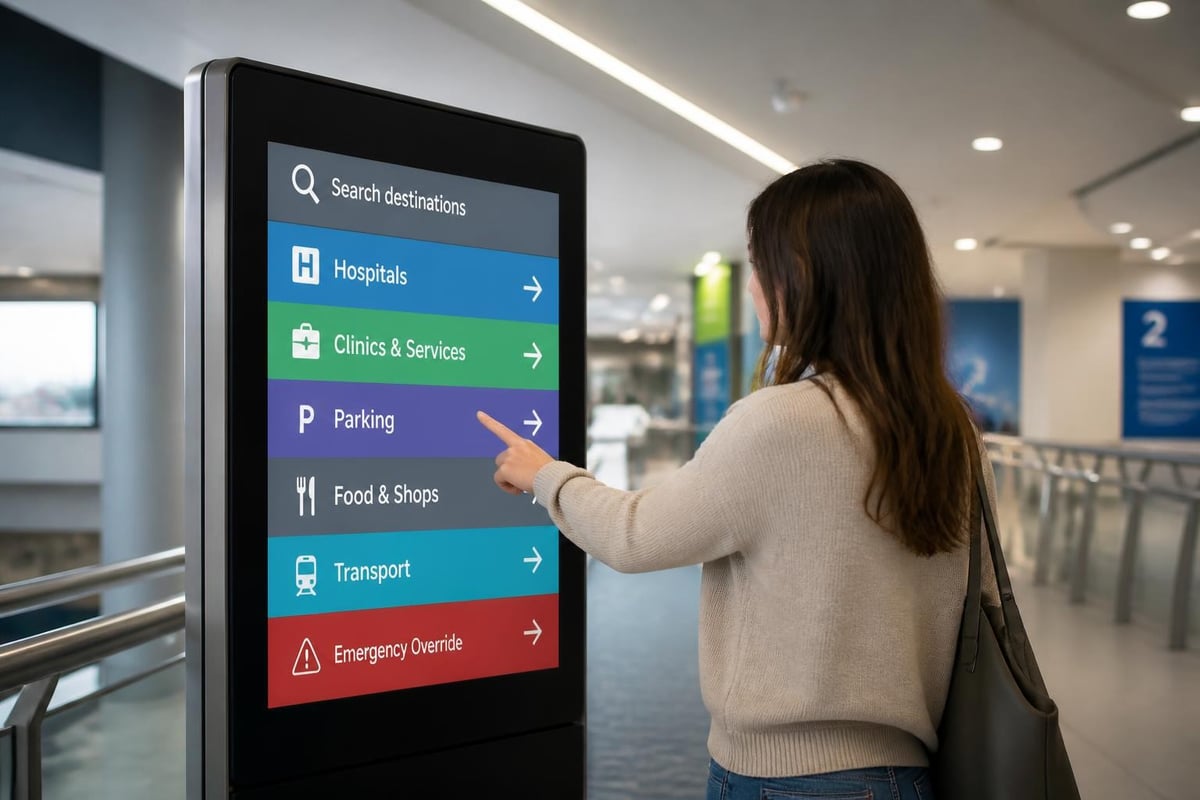
Effective information architecture prioritises clarity over comprehensiveness. Displaying too many points of interest overwhelms users and reduces wayfinding effectiveness. Most successful implementations limit initial directory views to primary destinations, offering progressive disclosure through search or categorisation.
Accessibility and Compliance Requirements
Digital signage and wayfinding systems must accommodate users with diverse abilities. The ADA guidance on digital accessibility establishes baseline requirements that extend beyond physical signage to digital interfaces.
Essential accessibility features include:
- High contrast colour schemes meeting WCAG 2.1 standards (minimum 4.5:1 ratio for normal text)
- Text sizing options or zoom functionality for interactive displays
- Audio output alternatives for visual information
- Screen reader compatibility for touchscreen interfaces
- Physical accessibility of interactive displays at appropriate mounting heights
- Alternative static signage backup for critical wayfinding functions
Municipal standards such as the Multnomah County Wayfinding and Sign Standards demonstrate evolving expectations for accessible digital communication in public spaces, setting benchmarks that forward-thinking organisations voluntarily adopt.
Security and Network Architecture
Connected digital signage and wayfinding systems introduce cybersecurity considerations that require proactive management. These devices represent potential entry points into broader organisational networks if not properly segmented and secured.
Network Segmentation Best Practices
Isolating signage systems on dedicated VLANs or separate physical networks limits potential security breaches. The NIST guidance on IoT device cybersecurity provides authoritative recommendations for securing connected devices including display systems.
Recommended security measures:
- Network isolation preventing signage devices from accessing corporate data systems
- Firmware update protocols ensuring displays receive security patches without manual intervention
- Content validation preventing unauthorised content injection through compromised CMS credentials
- Encrypted communications protecting data transmission between CMS and display endpoints
- Physical security restricting USB ports and preventing unauthorised access to device controls
Data Privacy Considerations
Digital signage and wayfinding systems that incorporate analytics, mobile integration, or personalised content must address privacy implications. Organisations should establish clear policies regarding:
- What tracking data is collected (foot traffic patterns, dwell times, search queries)
- How long data is retained and for what purposes
- Whether personally identifiable information is linked to navigation behaviour
- How visitors are informed about data collection practices
- Opt-out mechanisms for mobile app integration features
Transparent privacy practices build visitor trust whilst reducing regulatory compliance risks across jurisdictions with varying data protection requirements.
Emerging Technologies and Future Trends
Digital signage and wayfinding continues evolving with new technologies enhancing capability and user experience. Organisations planning long-term investments should consider emerging trends in system design.
Augmented Reality Navigation
AR-enabled wayfinding overlays directional information onto real-world views through smartphone cameras or dedicated headsets. Recent research on augmented reality indoor wayfinding in hospital environments demonstrates significant improvements in navigation efficiency and cognitive load reduction compared to traditional map-based interfaces.
Whilst full AR deployment remains limited in 2026, hybrid approaches combining strategically placed screens with AR mobile applications offer practical implementation paths. Neon signs and distinctive physical landmarks can serve as AR anchor points, bridging digital and physical wayfinding elements.
Artificial Intelligence and Predictive Routing
AI-powered systems optimise routes based on:
- Real-time congestion data diverting visitors around crowded corridors
- Personalised preferences remembering accessibility requirements or preferred routes
- Contextual awareness adjusting suggestions based on time of day or scheduled events
- Natural language processing enabling conversational wayfinding queries
These capabilities transform digital signage and wayfinding from reactive information displays into proactive navigation assistants.
Integration with Building Systems
Modern implementations increasingly connect wayfinding platforms to:
| System Integration | Benefit | Implementation Complexity |
|---|---|---|
| HVAC and lighting | Energy savings through occupancy-aware control | Medium |
| Access control | Personalised employee navigation and security | High |
| Queue management | Dynamic routing to shortest wait times | Medium |
| Parking systems | End-to-end journey from car park to destination | High |
| Emergency systems | Evacuation routing and assembly point guidance | Very High |
These integrations amplify the value proposition of digital signage and wayfinding beyond simple navigation assistance.
Content Management and Operational Efficiency
Ongoing content management determines long-term system success. Organisations should establish clear governance frameworks before deployment.
Roles and Responsibilities
Effective digital signage and wayfinding operations typically distribute responsibilities across multiple stakeholders:
- Content administrators updating directory listings, maps, and promotional material
- Technical managers maintaining hardware, software updates, and network connectivity
- Department liaisons providing subject-matter expertise for specialised content
- Executive sponsors ensuring strategic alignment and resource allocation
Clear role definitions prevent gaps in system maintenance whilst avoiding duplicated efforts.
Performance Metrics and Continuous Improvement
Measuring digital signage and wayfinding effectiveness requires both quantitative and qualitative approaches:
Quantitative metrics:
- Average time to destination (measured through mobile app analytics or beacon tracking)
- Help desk requests for directions (reduction indicates improved system effectiveness)
- Interactive display engagement rates and most-searched destinations
- System uptime and display availability percentages
Qualitative metrics:
- User satisfaction surveys at key decision points
- Observational studies of navigation behaviour and confusion indicators
- Staff feedback on reduced interruptions
- Accessibility audit outcomes
Regular review of these metrics identifies improvement opportunities and justifies ongoing investment in system enhancements.
Vendor Selection and System Architecture
Choosing appropriate technology partners significantly impacts long-term satisfaction with digital signage and wayfinding deployments. Organisations should evaluate vendors across multiple dimensions beyond initial purchase price.
Critical Evaluation Criteria
When assessing potential systems and suppliers, prioritise:
- Scalability to accommodate facility expansion or additional display endpoints
- Integration capabilities with existing building management and communication platforms
- Content management flexibility allowing non-technical staff to make routine updates
- Hardware durability and manufacturer warranty terms for commercial environments
- Support responsiveness including local presence and emergency service commitments
- Update frequency for software features and security patches
- Total cost of ownership including licensing, maintenance, and content creation expenses
Request reference installations in similar environments and conduct site visits to evaluate real-world performance before finalising vendor selection.
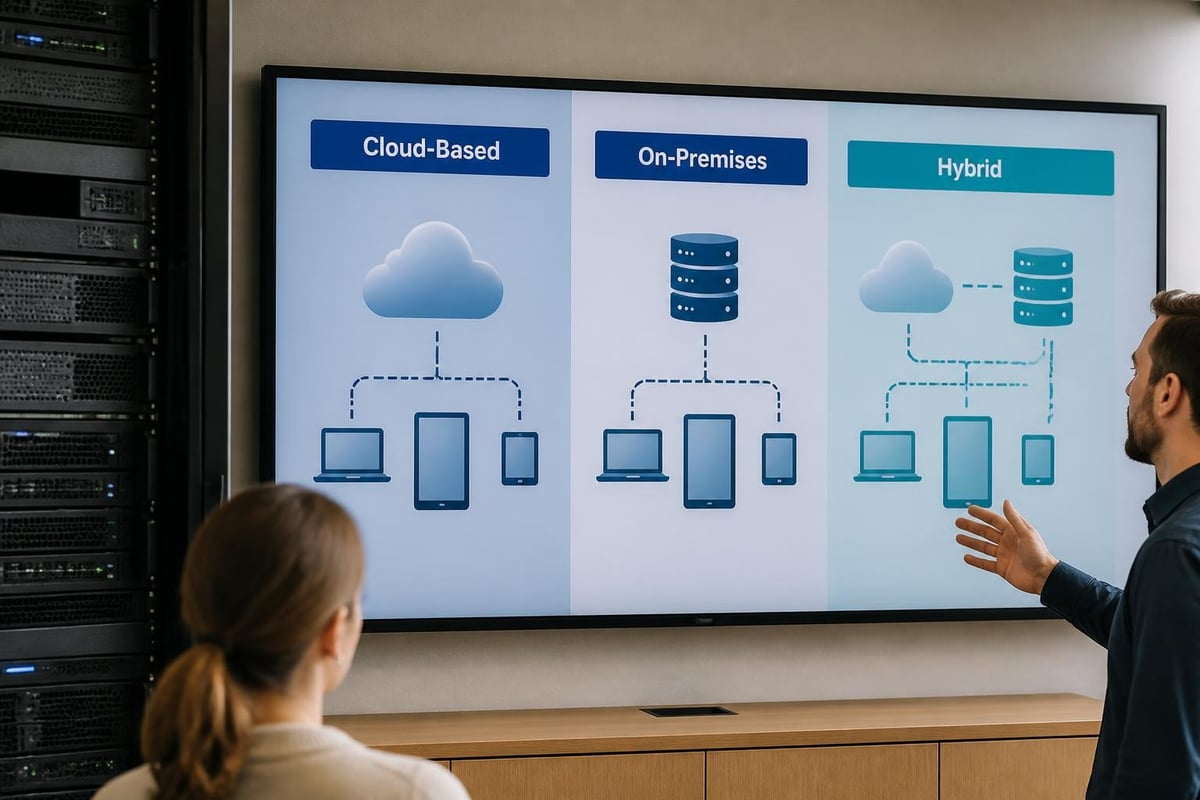
Cloud Versus On-Premises Architecture
| Deployment Model | Advantages | Considerations |
|---|---|---|
| Cloud-based | Lower upfront costs, automatic updates, remote management, elastic capacity | Ongoing subscription fees, internet dependency, potential latency |
| On-premises | Complete data control, no recurring fees, no internet dependency | Higher initial investment, internal IT support required, manual updates |
| Hybrid | Critical functions local, content distribution cloud-based | Complexity in system integration, requires expertise in both models |
Most organisations in 2026 favour cloud-based or hybrid approaches that balance operational flexibility with reliability requirements. Facilities with mission-critical navigation needs (hospitals, airports) often implement hybrid architectures ensuring core wayfinding functions during internet disruptions.
Digital signage and wayfinding systems represent strategic investments that enhance visitor experiences whilst improving operational efficiency across diverse environments. From healthcare campuses to retail complexes, these integrated platforms deliver measurable value through dynamic navigation assistance and intelligent information delivery. Whether you're implementing your first wayfinding solution or upgrading existing infrastructure, Signshoponline provides comprehensive digital signage solutions tailored to your specific navigation and communication requirements. Contact our team to explore how modern signage technology can transform your facility's wayfinding capabilities.


