


The digital signage player serves as the brain behind every modern dynamic display, transforming static screens into powerful communication tools that engage audiences and deliver targeted messages. Whether you operate a retail chain, manage corporate communications, or run a hospitality venue, understanding the capabilities and specifications of media players is essential for maximising your investment in digital signage infrastructure. These compact devices have evolved from simple video-loop machines into sophisticated content delivery systems capable of handling complex scheduling, interactive applications, and real-time data integration.
Understanding Digital Signage Player Architecture
A digital signage player functions as a dedicated computing device that retrieves, processes, and outputs multimedia content to one or more display screens. At its core, the player connects to your content management system, downloads scheduled playlists, and renders video, images, web pages, and interactive applications in the correct sequence and format.
Modern players come in several distinct form factors. System-on-chip (SoC) solutions integrate the player directly into the display panel, eliminating the need for external hardware and reducing cable clutter. External media players, in contrast, exist as standalone boxes that connect via HDMI or DisplayPort, offering greater flexibility for retrofitting existing displays or supporting multi-screen configurations.
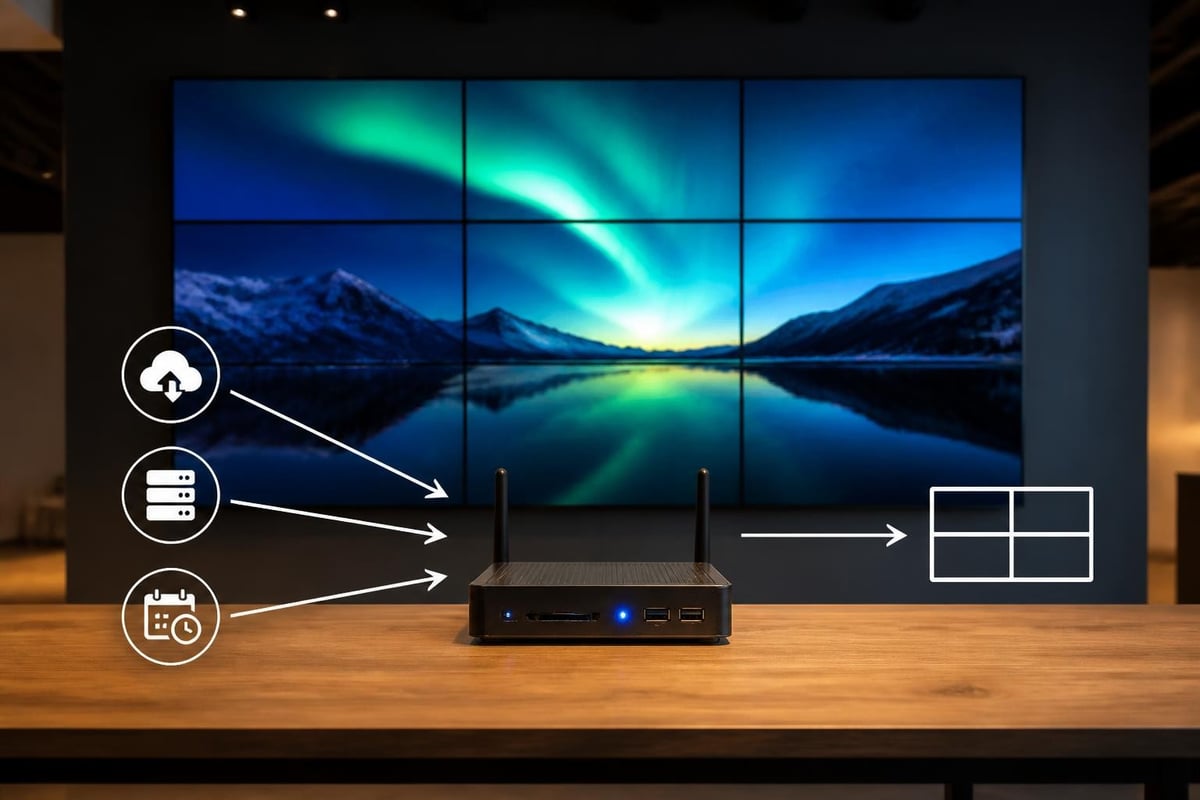
The processing power within each player varies significantly based on intended application. Entry-level players typically feature ARM-based processors suitable for static images, simple video loops, and basic HTML content. Mid-range units incorporate more powerful chipsets capable of handling 4K video, live data feeds, and moderately complex web applications. Enterprise-grade players may include dedicated graphics processors, enabling video wall synchronization, 3D rendering, and resource-intensive interactive experiences.
Operating System Considerations
The operating system your digital signage player runs determines compatibility, security, and long-term support. Android-based players dominate the market due to their cost-effectiveness, extensive app ecosystem, and familiarity amongst IT teams. These devices typically run modified versions of Android optimized for continuous operation and remote management.
Linux-based players appeal to organizations requiring open-source flexibility and granular control over system behaviour. The WPE WebKit rendering engine has emerged as a powerful solution for HTML5-based signage, particularly in low-power scenarios where efficiency is paramount. Windows-based players offer seamless integration with existing enterprise IT infrastructure and support legacy applications, though they generally command higher licensing costs.
Key Technical Specifications to Evaluate
When selecting a digital signage player, several technical parameters directly impact performance, reliability, and total cost of ownership. Processing power, measured in CPU cores and clock speed, determines how smoothly your content plays and how many simultaneous tasks the player can handle. A quad-core processor running at 1.5 GHz represents the minimum threshold for reliable 1080p video playback with basic interactivity.
Memory and storage requirements:
- RAM: 2GB minimum for basic content; 4GB for full HD video and web content; 8GB or more for 4K, interactive applications, or video walls
- Storage: 8GB sufficient for cloud-based content; 32GB recommended for local caching; 64GB or SSD for high-turnover retail environments with frequent content updates
- Expandable storage: MicroSD or USB support enables content updates without network dependency
Graphics capabilities warrant particular attention. Integrated GPU solutions handle standard signage requirements, whilst dedicated graphics cards become necessary for video walls requiring frame-synchronized output across multiple displays. The player must support your target resolution (1080p, 4K, or 8K) at the desired refresh rate, with adequate bandwidth across all video outputs.
| Specification | Entry Level | Professional | Enterprise |
|---|---|---|---|
| Processor | Dual-core ARM | Quad-core ARM/x86 | Hexa-core x86 |
| RAM | 2GB | 4-8GB | 8-16GB |
| Storage | 8-16GB | 32-64GB | 128GB+ SSD |
| Video Output | Single 1080p | Dual 4K | Multi-display 4K/8K |
| Price Range | £100-£250 | £250-£600 | £600-£2,000+ |
Connectivity and Network Requirements
Network connectivity forms the lifeline between your content management platform and deployed players. Ethernet connections provide the most reliable option, supporting power-over-Ethernet (PoE) configurations that eliminate separate power supplies. Wi-Fi connectivity offers installation flexibility but may introduce latency or dropout issues in congested RF environments.
The W3C core profile for web-based digital signage establishes standards for network APIs, media handling, and remote management protocols. Compliance with these standards ensures your player can integrate with diverse content platforms and management tools without vendor lock-in.
Additional connectivity considerations include USB ports for local content updates or peripheral devices, GPIO pins for sensor integration, and serial ports for legacy equipment control. Bluetooth support enables proximity marketing applications and mobile device interaction.
Content Management and Scheduling Capabilities
The sophistication of your digital signage player's content management capabilities determines operational efficiency and creative possibilities. Basic players support simple playlist scheduling, cycling through a fixed sequence of images and videos at predetermined intervals. Advanced units offer dayparting functionality, automatically adjusting content based on time of day, day of week, or specific date ranges.
Trigger-based scheduling elevates content responsiveness by linking playback to external events. A retail player might switch to promotional content when queue lengths exceed a threshold, or a transport hub display could prioritize service updates when sensors detect platform congestion. Integration with weather APIs, social media feeds, or enterprise databases transforms static messaging into dynamic, contextually relevant communication.
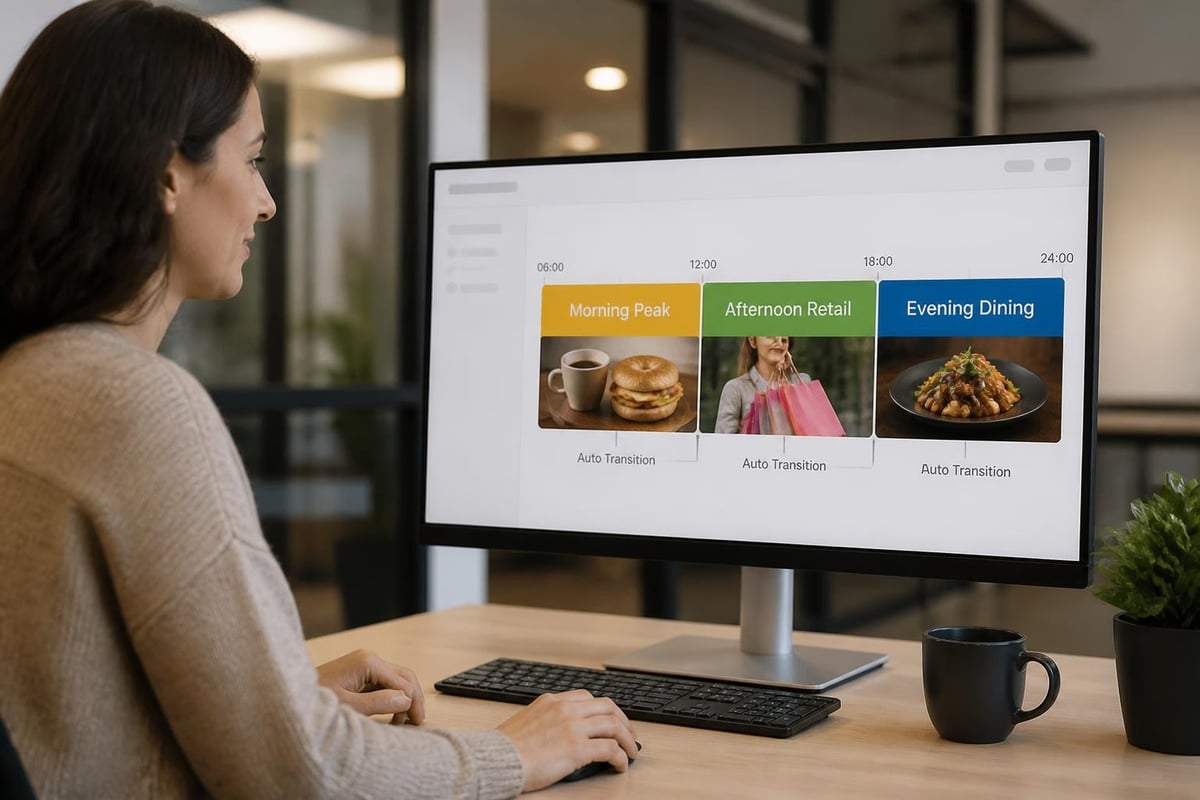
Remote management capabilities significantly impact operational costs, particularly for multi-site deployments. Cloud-based management platforms enable centralized content distribution, real-time monitoring, and automated health checks across hundreds or thousands of players. Look for support for SNMP monitoring, automated screenshot capture, and remote reboot functionality.
HTML5 and Web-Based Content
Modern digital signage players increasingly embrace HTML5 as the primary content format, moving beyond traditional video files and static images. This shift enables responsive designs that adapt to different screen sizes, interactive touchscreen applications, and seamless integration with web services. The W3C community's primer on web-based signage outlines the architectural benefits and implementation considerations for browser-based content delivery.
Web-based content requires players with robust JavaScript engines, CSS3 support, and hardware-accelerated rendering. Ensure compatibility with your chosen authoring tools and frameworks, whether proprietary design software or standard web development environments. Video codec support (H.264, H.265, VP9, AV1) impacts file sizes and streaming efficiency.
Edge Computing and Advanced Features
The convergence of digital signage with edge computing creates opportunities for intelligent, responsive displays that process data locally rather than relying solely on cloud connectivity. According to Google Cloud's 2024 State of Edge Computing report, edge deployments are expanding rapidly across retail and hospitality sectors, driven by requirements for low-latency interactivity and offline resilience.
Edge-capable digital signage players embed processing power sufficient for computer vision, audience analytics, and personalized content delivery. A camera-equipped player might analyze demographic characteristics of viewers and adjust advertising creative in real-time, or detect dwell time to measure engagement effectiveness. Privacy considerations and regulatory compliance (GDPR, POPIA) necessitate careful implementation of these features, with clear signage and appropriate data handling protocols.
Advanced player capabilities:
- Computer vision for audience measurement and demographics
- AI-powered content optimization based on viewing patterns
- Sensor fusion integrating environmental data (temperature, occupancy, light levels)
- Blockchain-based proof-of-play for advertising verification
- Voice interaction and natural language processing
The Invidis Yearbook 2024 highlights the industry's movement toward AI-integrated players that can dynamically adjust brightness, contrast, and content pacing based on ambient conditions and observed attention patterns. These capabilities position digital signage as an active participant in smart building ecosystems rather than passive display devices.
Power Consumption and Environmental Factors
Energy efficiency directly impacts operational costs and environmental sustainability. The ENERGY STAR specifications for signage displays provide benchmarks for evaluating power consumption, though players themselves often consume less than the displays they drive. A typical Android-based player draws 5-15 watts during operation, whilst high-performance units with discrete graphics may require 50-100 watts.
Power management features enable significant savings in environments with predictable downtime. Scheduled power-on and power-off functionality eliminates unnecessary operation during closed hours, whilst automatic brightness adjustment reduces consumption during low-traffic periods. PoE-capable players simplify installation in locations where electrical outlets are scarce or costly to install.
Operating temperature ranges determine deployment viability in challenging environments. Standard commercial-grade players tolerate 0°C to 40°C ambient temperatures, suitable for climate-controlled indoor spaces. Industrial-rated units withstand -20°C to 60°C, essential for outdoor installations, vehicle integration, or factory environments. Fanless designs improve reliability in dusty conditions but may limit processing power.
When planning comprehensive signage solutions, pairing your digital signage player with appropriate housing is crucial. Lightbox Signage provides weather-resistant, illuminated enclosures that protect players and displays in outdoor or semi-protected environments whilst maintaining visual impact day and night.

Installation and Maintenance Considerations
Physical mounting options influence both aesthetics and serviceability. VESA mounting patterns enable secure attachment to display backs or wall mounts, creating clean installations with minimal visible hardware. Some manufacturers offer players with magnetic mounts or snap-fit mechanisms for tool-free installation and quick replacement.
Cable management deserves careful planning, particularly in customer-facing environments where exposed wiring detracts from professional appearance. Integrated cable channels, lockable connectors, and colour-matched cabling maintain visual coherence. For outdoor or high-security installations, tamper-resistant enclosures and sealed connectors prevent unauthorized access or environmental damage.
Firmware Updates and Security
Regular firmware updates patch security vulnerabilities, improve stability, and occasionally add features. Evaluate the manufacturer's track record for releasing timely updates and the anticipated support lifecycle for each player model. Enterprise deployments benefit from staged rollout capabilities that test updates on a subset of devices before network-wide deployment.
Security hardening grows increasingly critical as digital signage players connect to corporate networks and process sensitive data. Change default passwords, disable unnecessary services, implement network segmentation, and restrict administrative access to authorized personnel. Certificate-based authentication and encrypted content delivery prevent unauthorized content injection or player hijacking.
Redundancy and failover mechanisms minimize downtime in mission-critical applications. Dual-player configurations with automatic switchover ensure continuity if the primary unit fails. For single-player installations, local content caching enables continued operation during network outages, reverting to a default playlist when cloud connectivity is lost.
Integration with Broader Signage Ecosystems
Your digital signage player rarely operates in isolation. Integration with existing infrastructure-point-of-sale systems, building management platforms, customer relationship management software, and marketing automation tools-multiplies the value of dynamic displays. RESTful APIs, webhooks, and standard protocols (MQTT, HTTP, WebSockets) enable bi-directional data exchange.
Consider how players interact with other signage elements in your environment. A comprehensive wayfinding solution might combine digital displays powered by media players with traditional metal signs and vehicle lettering for cohesive brand presentation across touchpoints. Data gathered from interactive digital displays can inform static signage placement and messaging strategies.
Academic research into edge AI architectures, such as the systematic review published in ArXiv, explores methods for distributed intelligence across player networks. These approaches enable coordinated behaviour, where multiple displays share processing workloads or adapt collectively to changing conditions across a venue.
Selecting the Right Player for Your Application
Matching player capabilities to use case requirements prevents both over-specification (wasting budget on unnecessary features) and under-specification (limiting creative possibilities or operational efficiency). Retail environments with frequent content updates and high-resolution product imagery demand ample storage and processing power. Corporate lobbies displaying static welcome messages alongside basic video loops can function perfectly well on entry-level hardware.
Application-specific requirements:
- Retail stores: Fast boot times, reliable scheduling, support for high-resolution product images, integration with inventory systems
- Restaurants and hospitality: Menu board templates, easy content updates, daypart scheduling, attractive pricing displays
- Corporate communications: Integration with enterprise directories, calendar systems, and collaboration tools; support for live data feeds
- Transportation hubs: Reliability, redundancy, real-time data integration, multi-language support
- Outdoor advertising: Industrial temperature rating, remote diagnostics, proof-of-play logging, weather-resistant enclosures
The total cost of ownership extends beyond initial hardware purchase. Factor in content creation tools, management platform subscriptions, network infrastructure, power consumption, and technical support requirements. Cloud-based management platforms typically charge per-player annual fees, whilst some manufacturers include management software with hardware purchase but limit advanced features.
Multi-location deployments benefit from standardizing on a single player platform, simplifying inventory management, technical support, and content creation workflows. However, maintain flexibility for site-specific requirements-a flagship retail location might justify premium players with advanced interactivity, whilst smaller satellite stores operate efficiently on basic units.
Future-Proofing Your Investment
Technology evolution in the digital signage industry accelerates year-over-year, with higher resolutions, more sophisticated content formats, and emerging interaction paradigms reshaping expectations. Selecting players with headroom for growth-spare processing capacity, expandable memory, and modern connectivity standards-extends useful lifespan and delays replacement costs.
Display resolution continues its upward trajectory. Whilst 1080p remains common in 2026, 4K adoption grows rapidly, and 8K deployments appear in flagship retail and entertainment venues. Ensure your player supports resolutions beyond current requirements to accommodate future display upgrades without concurrent player replacement.
Content complexity escalates as creative teams leverage advanced authoring tools and audiences expect more engaging experiences. Augmented reality overlays, 3D product visualization, and real-time personalization push processing requirements beyond what sufficed for earlier static or simple video-based content. The shift toward web-based content delivery, as outlined in standards-focused guidance, emphasizes HTML5 rendering performance over traditional video decode capabilities.
Interoperability with emerging protocols and platforms prevents vendor lock-in and preserves investment value. Open-standard support enables migration between content management systems, integration with new data sources, and adoption of innovative delivery methods as they mature. Proprietary players that function only with a single CMS create dependency and limit strategic flexibility.
Choosing the right digital signage player requires balancing immediate functional requirements with long-term strategic goals, considering both technical specifications and operational realities. The investment in appropriate media players pays dividends through reliable performance, creative flexibility, and seamless integration with broader marketing and communication strategies. Whether you're launching your first digital display or expanding an existing network, Signshoponline provides expert guidance and comprehensive solutions spanning digital signage players, custom displays, and integrated promotional materials to elevate your brand presence.


