


Retail environments have undergone a remarkable transformation over the past decade, with technology reshaping how brands communicate with shoppers at the point of purchase. Amongst the most impactful innovations, retail digital screens have emerged as essential tools for creating immersive customer experiences, driving sales, and delivering measurable return on investment. These dynamic displays replace static signage with intelligent, responsive content that adapts to shopper behaviour, time of day, and promotional calendars. Whether deployed as window displays, wayfinding solutions, or promotional end-caps, digital screens represent a fundamental shift in how retailers capture attention and influence purchasing decisions in an increasingly competitive marketplace.
The Evolution of In-Store Communication
Traditional retail signage served its purpose for decades, but the limitations became increasingly apparent as consumer expectations evolved. Printed posters and static displays offered no flexibility, required costly reprinting for each campaign change, and failed to capture the attention of digitally native shoppers accustomed to dynamic content.
The shift towards digital retail experiences has accelerated dramatically since 2020. Retailers recognized that screens could do far more than simply display product information. They could entertain, educate, and guide customers through their shopping journey whilst simultaneously collecting valuable data on engagement and dwell time.
From Passive to Interactive Displays
Modern retail digital screens represent a significant leap from early digital signage. Today's solutions incorporate touchscreen capabilities, motion sensors, and integration with inventory management systems to deliver contextually relevant messages. A screen near the entrance might display weather-appropriate product suggestions, whilst displays in the changing room area could showcase styling tips and complementary items.
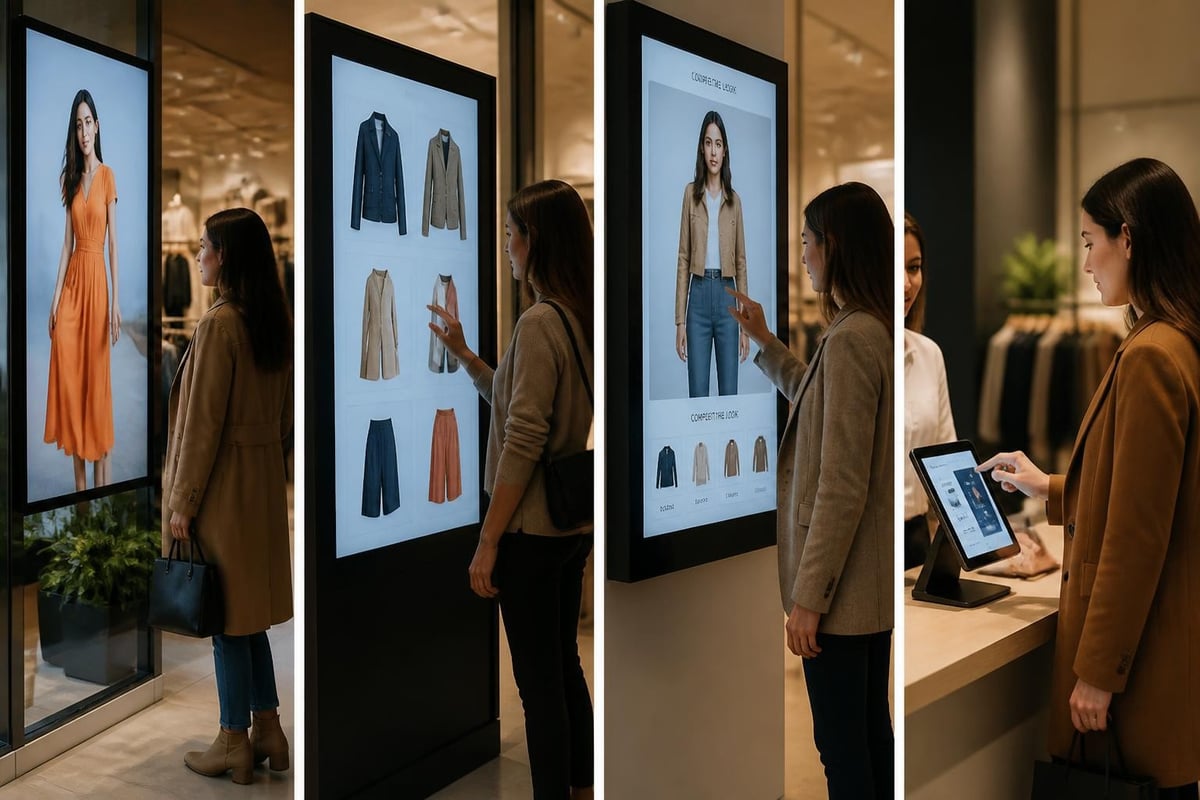
The technology has matured to the point where screens can recognize returning customers (with appropriate consent), adjust content based on time of day, and even modify messaging based on current stock levels. This level of sophistication transforms passive viewing into an active dialogue between brand and shopper.
Strategic Applications Across Store Formats
Different retail environments demand tailored approaches to digital screen deployment. The effectiveness of these installations depends heavily on understanding foot traffic patterns, customer demographics, and specific business objectives.
Department Stores and Large Format Retail
In spacious retail environments, digital screens serve multiple strategic purposes. Large-format displays near entrances create immediate impact, communicating current promotions and establishing brand tone. Throughout the store, smaller screens assist with wayfinding, reducing staff workload whilst improving customer satisfaction.
| Application | Primary Benefit | Typical ROI Indicator |
|---|---|---|
| Entrance displays | Brand storytelling & promotion | Increased basket size |
| Department markers | Navigation & discovery | Reduced staff queries |
| End-cap promotions | Impulse purchases | Conversion rate lift |
| Queue entertainment | Dwell time optimization | Customer satisfaction scores |
Department stores particularly benefit from networked screen systems that can coordinate campaigns across multiple touchpoints. A customer might see a fashion campaign at the entrance, encounter complementary styling advice in the relevant department, and receive a time-sensitive offer whilst queuing, creating a cohesive narrative that guides purchase decisions.
Boutique and Specialty Retail
Smaller retail spaces require a more considered approach to screen placement. The official definition and core features of digital out-of-home advertising emphasize the importance of context and relevance, principles that apply equally to boutique environments.
In these intimate settings, retail digital screens often serve dual purposes. A well-placed display might showcase product demonstrations whilst simultaneously reinforcing brand identity through carefully curated visual content. The key lies in ensuring screens enhance rather than overwhelm the shopping experience.
Specialty retailers frequently use screens to educate customers about product provenance, craftsmanship, or usage scenarios. A premium chocolate retailer might display origin stories and tasting notes, whilst a technical sports retailer could show performance comparisons and athlete endorsements.
Content Strategy and Creative Effectiveness
The most sophisticated screen infrastructure delivers minimal value without compelling content. Successful retailers approach content creation with the same rigour they apply to window displays and store layout, recognizing that poor content actively damages brand perception.
The Psychology of Digital Attention
Shoppers encounter hundreds of visual stimuli during a typical store visit, making attention a scarce commodity. Retail digital screens must compete not only with physical merchandise but also with smartphones and other digital devices customers carry.
Research into in-store advertising effectiveness demonstrates that movement, contrast, and relevance drive engagement. However, excessive motion or overly bright displays can irritate shoppers and create negative associations. The most effective content strikes a balance, using subtle animation to attract attention whilst maintaining visual harmony with the physical environment.
- Messaging hierarchy: Lead with benefit, support with detail, conclude with clear call-to-action
- Refresh rate: Update content at least weekly to maintain novelty
- Duration: Individual messages should display for 8-12 seconds for optimal comprehension
- Visual consistency: Align digital content with broader brand guidelines and in-store aesthetics
- Localization: Tailor content to specific store demographics and regional preferences
Dynamic Content Management
Advanced content management systems enable retailers to schedule campaigns, conduct A/B testing, and respond rapidly to market conditions. A fashion retailer might automatically switch from highlighting winter coats to promoting umbrellas when local weather forecasts predict rain.
The IAB's practical playbook provides detailed guidance on activation strategies, emphasizing the importance of coordinating digital screen content with broader marketing calendars and promotional activities.
Technical Infrastructure and Investment Considerations
Deploying retail digital screens requires careful planning around hardware selection, content delivery networks, and ongoing maintenance. The initial investment can be substantial, but understanding the technical landscape helps retailers make informed decisions that balance capability with budget.
Hardware Selection Criteria
Not all screens suit every retail environment. Brightness requirements vary dramatically between window-facing displays (requiring 2,500+ nits to compete with sunlight) and interior installations (typically 500-700 nits). Similarly, commercial-grade displays designed for 16-18 hours daily operation prove more cost-effective than consumer models despite higher upfront costs.
| Factor | Window Display | Interior Display | Interactive Kiosk |
|---|---|---|---|
| Brightness | 2,500-5,000 nits | 500-700 nits | 400-500 nits |
| Operating hours | 12-16 hours | 10-14 hours | 8-12 hours |
| Typical lifespan | 3-5 years | 5-7 years | 4-6 years |
| Maintenance frequency | Quarterly | Bi-annually | Monthly |
Signshoponline offers comprehensive digital signage solutions that address these varied requirements, with expertise in matching hardware specifications to specific retail applications. Their lightbox signage represents another complementary option for retailers seeking illuminated displays with lower operational complexity.

Network Architecture and Content Delivery
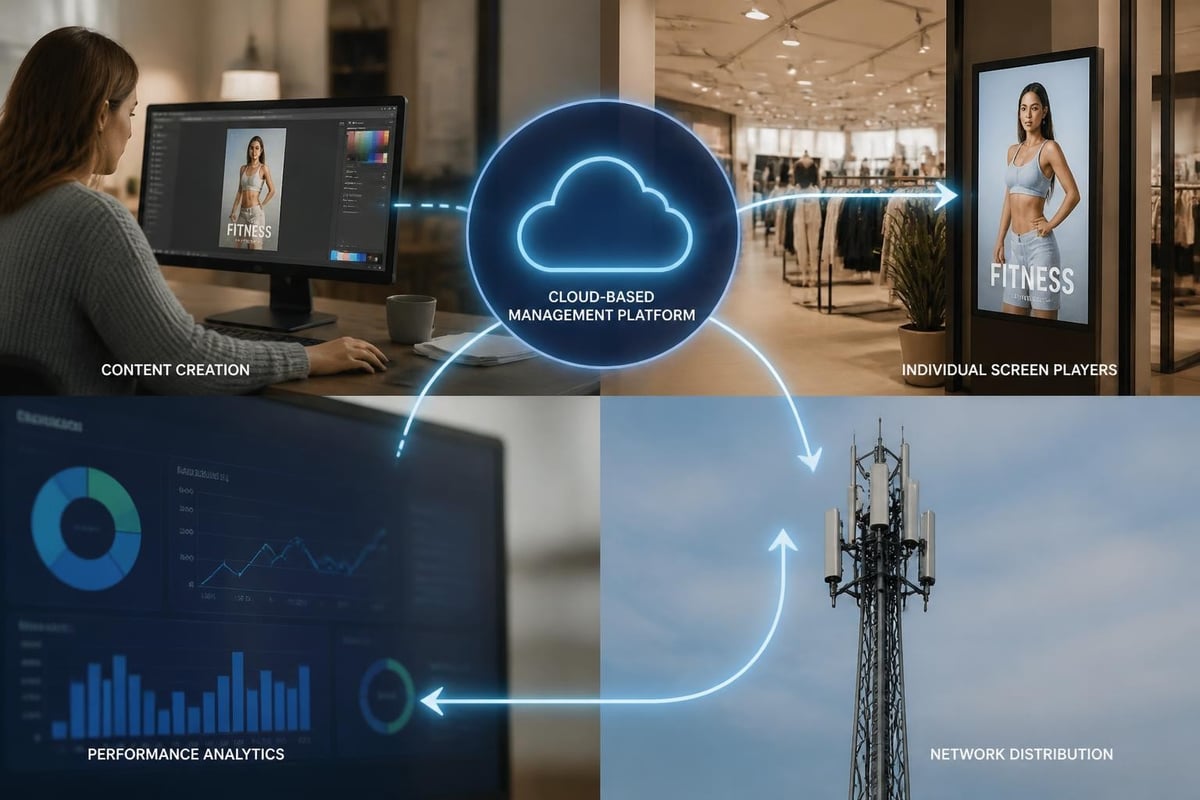
Modern retail digital screens rely on robust network infrastructure to deliver content reliably. Cloud-based content management systems have largely replaced local servers, offering advantages in scalability, remote management, and disaster recovery. However, this approach demands reliable internet connectivity and raises questions about bandwidth costs and content security.
Retailers must consider whether to manage content in-house or partner with specialist providers. Whilst internal management offers greater control and potentially lower long-term costs, it requires dedicated staff with technical expertise and creative capabilities.
Measuring Performance and Optimizing Returns
The digital nature of these installations enables unprecedented measurement capabilities compared to traditional signage. However, measuring return on store technology investments remains challenging, requiring clear methodologies and realistic expectations.
Key Performance Indicators
Successful retailers establish baseline metrics before installation and track multiple indicators to build a comprehensive picture of screen effectiveness. Direct sales attribution proves difficult in physical retail, necessitating proxy metrics that correlate with business outcomes.
- Dwell time: Duration customers spend in zones with screen visibility
- Engagement rate: Percentage of passing traffic that visibly responds to content
- Conversion uplift: Sales increase for promoted products versus control items
- Campaign reach: Estimated number of customers exposed to specific messages
- Content completion: Percentage of viewers who watch entire message sequences
Advanced installations incorporate camera-based analytics that measure attention whilst respecting privacy through anonymization. These systems can determine viewer demographics, emotional responses, and optimal content duration, enabling continuous optimization.
Attribution and Testing Methodologies
Rigorous retailers employ controlled testing to isolate screen impact from other variables. A/B testing might involve displaying promotional content on screens in half the store network whilst maintaining standard content in control locations, then comparing sales performance across matched store pairs.
Seasonal adjustments, competitive activity, and broader marketing campaigns complicate attribution. The most sophisticated measurement frameworks incorporate econometric modelling that accounts for these confounding factors, though such approaches require statistical expertise and substantial data volume.
Integration with Broader Retail Media Strategies
Retail digital screens no longer operate in isolation but form part of integrated retail media networks that connect in-store and digital experiences. This convergence creates opportunities for enhanced personalization and revenue generation through third-party advertising.
The Retail Media Opportunity
Forward-thinking retailers recognize that their in-store screens represent valuable advertising inventory. Consumer packaged goods brands pay substantial premiums to reach shoppers at the point of purchase, when purchase intent peaks and competitors' products sit metres away on adjacent shelves.
The retail media landscape has expanded dramatically, with in-store screens playing an increasingly important role. Retailers can now offer brands sophisticated targeting capabilities, showing different products to different customer segments based on time, location, and purchase history.
This dual-purpose approach transforms screens from cost centres into potential revenue generators. However, retailers must carefully balance promotional revenue against customer experience, ensuring third-party advertising aligns with store positioning and doesn't overwhelm proprietary messaging.
Omnichannel Integration
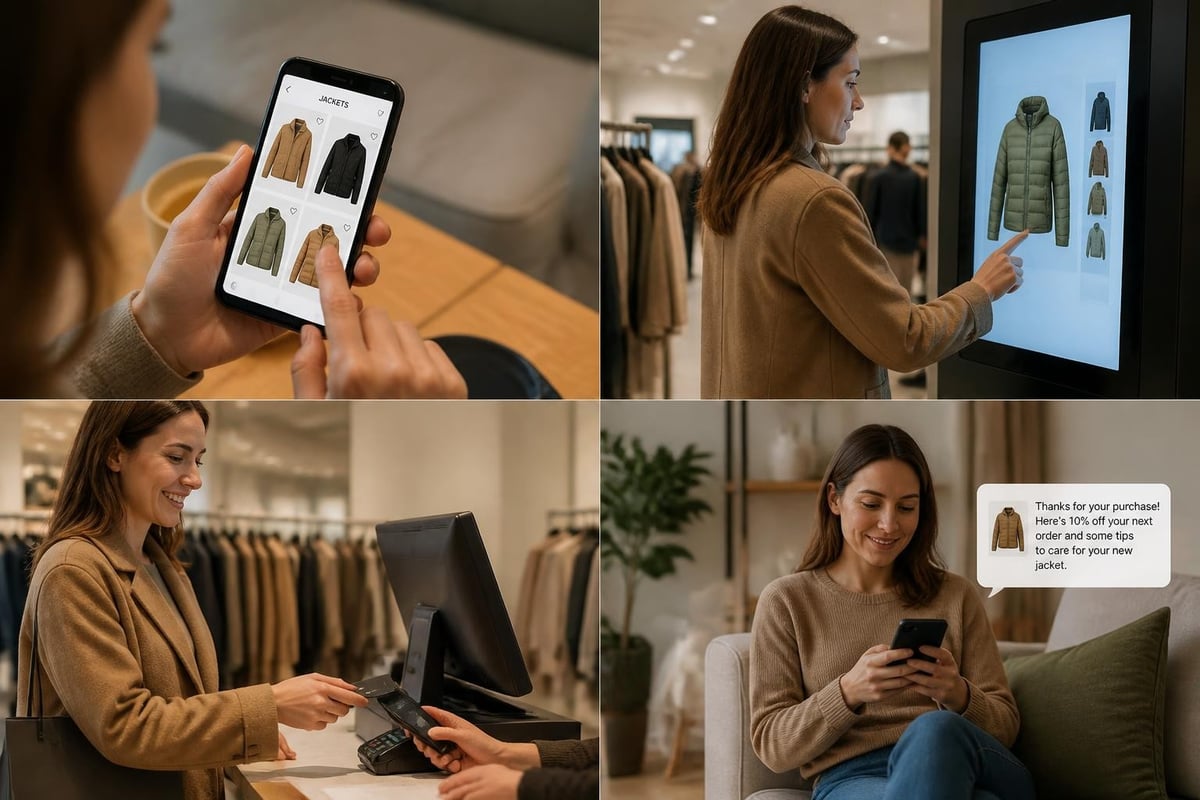
The most powerful applications connect in-store screens with mobile apps, e-commerce platforms, and loyalty programmes. A customer browsing online might receive personalized recommendations on in-store screens when they visit, creating seamless experiences across channels.
Consumer expectations around retail technology continue rising, with shoppers increasingly expecting retailers to remember their preferences and provide relevant, timely information regardless of channel. Retail digital screens that access unified customer data platforms can deliver this personalization at scale.
Future Developments and Emerging Technologies
The retail digital screen landscape continues evolving rapidly, with emerging technologies promising to enhance capabilities whilst new challenges around sustainability and privacy require careful navigation.
Artificial Intelligence and Computer Vision
AI-powered content optimization represents the next frontier in screen effectiveness. Systems can automatically adjust messaging based on real-time factors including current inventory levels, weather conditions, traffic patterns, and even individual customer characteristics detected through computer vision.
These capabilities raise important questions about privacy and consent. Whilst anonymous analytics prove widely acceptable, facial recognition and individual tracking face increasing regulatory scrutiny. Responsible retailers establish clear policies, provide transparency, and offer opt-out mechanisms.
Sustainability Considerations
Energy consumption from continuous screen operation raises environmental concerns, particularly as retailers expand their digital estates. Newer display technologies including micro-LED and improved LCD panels offer significantly better energy efficiency, whilst smart brightness adjustment reduces power consumption during low-traffic periods.
The broader industry outlook emphasizes sustainability as both a consumer expectation and operational imperative. Retailers must balance the customer engagement benefits of digital screens against energy costs and carbon footprint, potentially offsetting through renewable energy procurement or carbon credits.
Augmented Reality and Spatial Computing
Experimental installations now combine physical screens with augmented reality experiences accessed through customers' smartphones. A furniture retailer might use screens to showcase room settings, with customers able to visualize products in their own homes through AR applications triggered by on-screen QR codes.
As spatial computing devices become more accessible, entirely new formats may emerge that blend physical and digital retail environments in ways currently difficult to imagine. Forward-thinking retailers experiment with these technologies whilst maintaining focus on proven solutions that deliver immediate value.
Implementation Best Practices
Successful retail digital screen deployments require methodical planning, realistic budgeting, and commitment to ongoing optimization. Retailers who treat installation as a one-time project rather than continuous programme rarely achieve satisfactory returns.
Planning and Site Assessment
Comprehensive site surveys identify optimal screen locations based on foot traffic flow, sightlines, and power availability. The most common mistake involves deploying screens in visually prominent but strategically ineffective locations. A screen positioned where customers naturally pause (near escalators, fitting rooms, or queue areas) typically outperforms larger installations in high-traffic but low-dwell zones.
Professional signage providers like Signshoponline bring valuable expertise in assessing retail environments and recommending configurations that balance visibility, practicality, and budget. Their experience across diverse retail formats helps avoid common pitfalls and accelerates time to value.
Vendor Selection and Partnership
The retail digital screen market includes hardware manufacturers, software platforms, content agencies, and integration specialists. Few retailers possess in-house expertise across all these domains, making partner selection critical to success.
- Technical support: Availability, response times, and on-site capabilities
- Content services: In-house creative teams versus third-party requirements
- Scalability: Ability to expand network as business grows
- Integration capabilities: APIs and compatibility with existing systems
- Training and change management: Support for staff adoption
Long-term total cost of ownership often proves more important than initial hardware pricing. Screens requiring frequent maintenance, proprietary consumables, or expensive content management fees can quickly exceed the lifetime cost of premium alternatives with lower ongoing expenses.
Training and Change Management
Staff understanding and buy-in significantly impact screen effectiveness. Employees who understand system capabilities can answer customer questions, report technical issues promptly, and even suggest content improvements based on shopper feedback.
Retailers should establish clear ownership for content calendars, technical maintenance, and performance monitoring. Without defined responsibilities, screens often display outdated content or suffer extended downtime, undermining the investment and potentially damaging brand perception.
Complementary Signage Solutions
Whilst retail digital screens offer remarkable flexibility and impact, they function best as part of a broader signage ecosystem that includes traditional elements where appropriate. Not every communication requires digital delivery, and the most effective retail environments strategically combine multiple formats.
Directional signage, promotional banners, and window displays each serve specific purposes where digital alternatives might prove unnecessarily complex or expensive. Teardrop banners provide cost-effective outdoor promotion for events and seasonal campaigns, whilst neon signs create distinctive brand moments that complement digital installations.
The key lies in understanding each medium's strengths and deploying them strategically. Digital screens excel at frequently changing messages, time-sensitive promotions, and dynamic content, whilst permanent architectural elements and seasonal physical displays contribute to overall store atmosphere and wayfinding.
Retail digital screens have evolved from novel experiments to essential components of modern store environments, offering unprecedented flexibility in customer communication whilst generating measurable business results. Success requires thoughtful planning, quality content, ongoing optimization, and integration with broader retail strategies. Signshoponline provides comprehensive signage solutions including digital displays, traditional formats, and expert guidance to help retailers create cohesive, effective communication ecosystems that engage customers and drive sales across all touchpoints.


