


Digital signage monitors have transformed how businesses communicate with customers, employees, and visitors. Unlike consumer televisions, these professional-grade displays are engineered for continuous operation, enhanced durability, and superior performance in demanding commercial environments. From retail stores and corporate lobbies to transport hubs and healthcare facilities, digital signage monitors deliver dynamic content that captures attention and drives engagement. Understanding the technical specifications, deployment considerations, and operational requirements of these displays ensures organisations make informed investment decisions that align with their communication objectives.
Understanding Digital Signage Monitor Technology
Professional digital signage monitors differ fundamentally from consumer displays in construction, components, and capabilities. These purpose-built screens incorporate commercial-grade panels designed to operate 16-24 hours daily without degradation, whereas consumer televisions typically expect 4-6 hours of daily use.
The thermal management systems in digital signage monitors feature enhanced cooling mechanisms, robust power supplies, and temperature-resistant components. Many models include built-in media players, eliminating the need for external devices and reducing cabling complexity. VESA standards govern critical aspects of these displays, from mounting interfaces to video signal specifications, ensuring interoperability across manufacturers.
Panel Technologies and Display Types
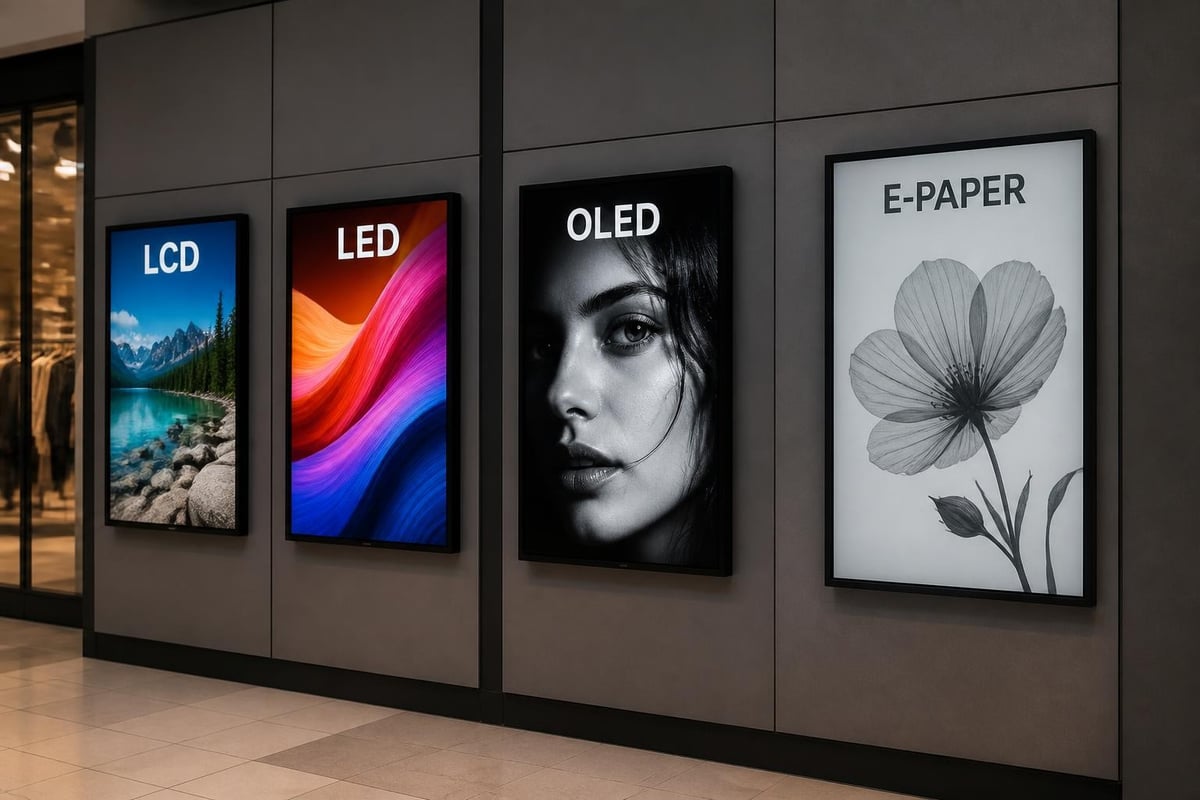
Several panel technologies serve different digital signage applications:
- LCD panels offer excellent brightness, wide availability, and cost-effectiveness for most indoor applications
- LED direct-view displays provide superior brightness and seamless tiling for large-format installations
- OLED screens deliver exceptional contrast ratios and viewing angles for premium applications
- E-paper displays consume minimal power and excel in static-content environments with ambient light
The choice between these technologies depends on viewing distance, ambient lighting conditions, content refresh rates, and budget constraints. Recent innovations in commercial display technology continue to expand the possibilities for creative installations.
Critical Specifications for Commercial Displays
Brightness, measured in nits or candelas per square metre, represents perhaps the most critical specification for digital signage monitors. Indoor environments typically require 350-700 nits, whilst window-facing displays demand 1,500-2,500 nits to overcome ambient light. Outdoor installations may require 5,000 nits or more to maintain visibility in direct sunlight.
Resolution determines content clarity and the minimum viewing distance. Full HD (1920×1080) suffices for most applications, whilst 4K (3840×2160) displays enable closer viewing distances and finer detail. DisplayHDR standards provide third-party verification of brightness, contrast, and colour performance for high-dynamic-range content.
Operational Specifications
| Specification | Consumer TV | Digital Signage Monitor |
|---|---|---|
| Operating hours | 40,000 hours | 50,000-100,000 hours |
| Daily runtime | 4-6 hours | 16-24 hours |
| Cooling system | Basic | Enhanced commercial-grade |
| Warranty | 1-2 years | 3-5 years |
| Thermal range | 0-40°C | -20 to 50°C (varies) |
Portrait orientation capability distinguishes many digital signage monitors from consumer displays. Whilst standard televisions risk overheating in vertical mounting due to compromised airflow, commercial monitors incorporate cooling systems designed for any orientation.
Connectivity and Content Management Integration
Modern digital signage monitors offer diverse connectivity options to accommodate various content sources and network architectures. HDMI and DisplayPort inputs handle high-definition video signals, whilst USB ports enable direct media playback from storage devices. Many displays include RS232 or RJ45 ports for remote management and diagnostics.
Network connectivity has become essential for centralized content management. Displays with integrated ethernet or Wi-Fi capabilities can receive scheduled content updates, system commands, and firmware patches without physical access. This capability proves invaluable for networks spanning multiple locations or difficult-to-access installations.
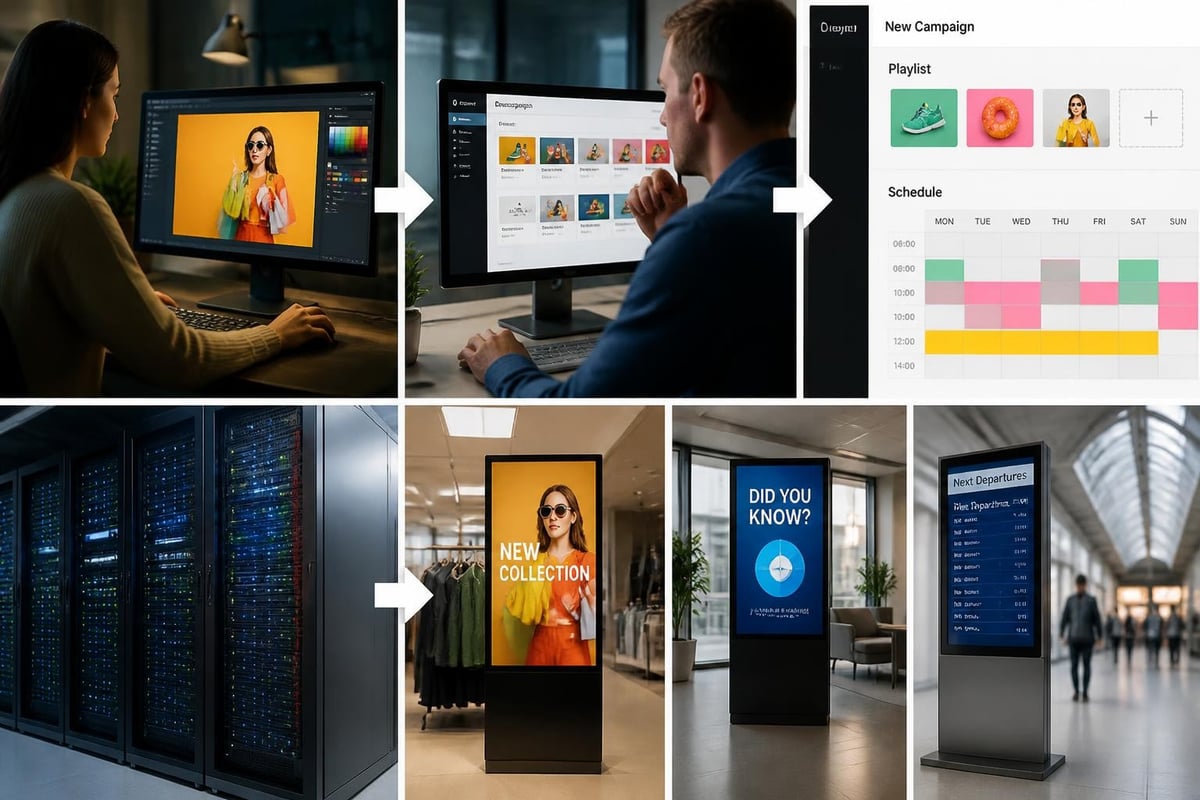
The integration with content management systems (CMS) determines operational efficiency. Professional CMS platforms enable remote content scheduling, playlist management, and performance monitoring across entire display networks. Some digital signage monitors include embedded CMS clients, simplifying deployment and reducing external hardware requirements.
System Architecture Considerations
Choosing between standalone media players, system-on-chip (SoC) displays, or networked player solutions affects both initial investment and ongoing operational costs. SoC displays integrate processing, storage, and connectivity into the monitor itself, reducing cable clutter and potential points of failure. External media players offer greater processing power and easier upgrades but add complexity to installations.
Cloud-based content delivery enables real-time updates and dynamic content adaptation based on audience analytics, weather conditions, or inventory levels. Local caching ensures continuous operation even during network interruptions, whilst scheduled synchronization optimizes bandwidth usage.
Environmental Considerations and Durability
Installation environment profoundly influences digital signage monitor selection. Indoor-controlled environments present minimal challenges, whilst high-traffic public spaces, outdoor locations, or industrial settings demand specialized solutions. Ingress Protection (IP) ratings indicate resistance to dust and moisture, with IP65-rated enclosures providing protection against water jets and dust ingress.
Temperature extremes challenge display operation. Standard commercial monitors operate reliably between 0°C and 40°C, whilst outdoor-rated units function from -30°C to 50°C using integrated heating and cooling systems. Direct sunlight exposure requires not only high brightness but also anti-reflective coatings and temperature management to prevent thermal shutdown.
Vandalism resistance matters in unattended public installations. Tempered or laminated glass screens withstand impact better than standard panels, whilst tamper-resistant mounting systems and locked enclosures deter theft and unauthorized access. Some installations benefit from protective barriers that maintain viewing access whilst preventing physical contact.
Security and Compliance Requirements
Digital signage monitors connected to corporate networks or the internet face cybersecurity threats similar to other IoT devices. Security guidelines for digital signage recommend network segmentation, strong authentication, regular firmware updates, and disabled unused services to minimize attack surfaces.
Default credentials represent a significant vulnerability. Changing factory-set passwords, disabling unnecessary network services, and implementing certificate-based authentication strengthen security posture. Applying IoT security best practices from established frameworks helps organizations protect against unauthorized access and malware.
- Regular security audits identify vulnerabilities before exploitation
- Firmware updates patch known security holes and improve functionality
- Network monitoring detects unusual traffic patterns or unauthorized access attempts
- Physical security controls prevent USB-based attacks or unauthorized configuration changes
- Encrypted content delivery protects proprietary information during transmission
Data privacy regulations may govern digital signage deployments, particularly those incorporating cameras, facial recognition, or audience analytics. Understanding GDPR, local privacy laws, and industry-specific requirements ensures compliant implementations that respect individual privacy rights whilst delivering business objectives.
Installation and Mounting Solutions
Professional installation ensures digital signage monitors deliver optimal performance and longevity. Weight distribution, ventilation clearances, and structural support all require careful consideration. Wall-mounted displays need reinforced mounting surfaces capable of supporting several times the display weight to ensure long-term safety.
VESA mounting patterns standardize the attachment interface between displays and mounting hardware. Common patterns include 200×200mm, 400×400mm, and 600×400mm, with larger displays requiring more robust mounting solutions. Ceiling-suspended installations, totem mounts, and freestanding kiosks each present unique structural and accessibility requirements.
Cable management affects both aesthetics and serviceability. Concealed cabling creates cleaner installations but complicates future modifications, whilst accessible cable runs simplify maintenance at the cost of visual impact. Power and signal cables should follow separate conduits to minimize electromagnetic interference.
Viewing Angles and Placement Strategy
- Determine primary viewing zones and average viewing distances
- Calculate optimal screen height (typically eye level for standing or seated audiences)
- Consider horizontal and vertical viewing angles (IPS panels offer 178° viewing angles)
- Assess ambient light sources and potential glare issues
- Plan content aspect ratios to match physical display orientation
Usability research on wayfinding and information displays provides evidence-based guidance on optimal placement, content hierarchy, and legibility factors that maximize audience comprehension and engagement.

For businesses seeking complementary signage solutions alongside their digital displays, Lightbox Signage provides 24-hour visibility through illuminated designs. These fabricated light boxes offer consistent branding elements that work in tandem with dynamic digital content, creating cohesive visual communication across both traditional and digital platforms.
Maintenance and Lifecycle Management
Digital signage monitors require proactive maintenance to ensure continuous operation and content quality. Cleaning schedules should account for installation environment-high-traffic areas accumulate dust and fingerprints faster than protected locations. Microfibre cloths and approved cleaning solutions prevent screen damage whilst removing contaminants that degrade image quality.
| Maintenance Task | Frequency | Purpose |
|---|---|---|
| Screen cleaning | Weekly-monthly | Remove dust, fingerprints, maintain image clarity |
| Ventilation inspection | Quarterly | Ensure adequate airflow, prevent overheating |
| Cable connection check | Bi-annually | Prevent signal degradation, loose connections |
| Firmware updates | As released | Security patches, feature enhancements |
| Content audit | Monthly | Remove outdated content, verify playback |
Burn-in prevention strategies protect displays from permanent image retention. Varying content regularly, incorporating screensavers during idle periods, and avoiding static elements in fixed positions extend display lifespan. Modern commercial displays include pixel-shift technology and refresh algorithms that mitigate burn-in risk.
Performance Optimization and Content Strategy
Content quality directly impacts viewer engagement and message retention. Resolution, frame rate, and colour depth should align with display capabilities to prevent scaling artifacts or playback issues. Source content exceeding display resolution wastes bandwidth and storage without improving visual quality.
Contrast ratios between text and backgrounds ensure legibility across viewing distances. Design principles for public information displays recommend high-contrast colour schemes, generous font sizes, and simplified layouts that communicate key messages within typical dwell times of 3-7 seconds.
Animation and video content capture attention more effectively than static images, but excessive motion causes viewer fatigue. Strategic use of movement to highlight key messages, calls-to-action, or wayfinding information balances engagement with comprehension. File format optimization reduces bandwidth consumption whilst maintaining acceptable quality levels.
Content Scheduling and Dayparting
Dynamic scheduling adapts content to audience demographics, traffic patterns, and business objectives throughout the day. Morning content in retail environments might highlight coffee and breakfast items, whilst afternoon programming shifts to prepared meals and convenience products. Corporate lobbies can display visitor welcome messages during business hours and brand content after hours.
Integration with external data sources enables real-time content adaptation. Weather APIs trigger seasonal product promotions, traffic feeds update estimated arrival times, and inventory systems highlight available stock. This responsiveness increases content relevance and viewer engagement.
Total Cost of Ownership Calculations
Initial hardware costs represent only one component of digital signage monitor ownership. Energy consumption, maintenance, content creation, and eventual replacement all contribute to lifecycle expenses. Energy-efficient displays reduce operating costs significantly over multi-year deployments-a 20% reduction in power consumption saves substantial amounts across large networks.
Extended warranties and service agreements provide cost predictability and minimize downtime. Professional-grade displays typically include three-year warranties, with extended coverage options available for critical installations. Comparing warranty terms, response times, and replacement policies helps organizations select suppliers aligned with operational requirements.
Content management system fees, whether subscription-based cloud services or perpetual software licenses, represent ongoing operational expenses. Evaluating CMS capabilities, scalability, and included support services against total cost reveals the most economical solutions for specific deployment scales and complexity levels.
Replacement planning should account for technology advancement rates and business growth. Industry trends indicate five-to-seven-year replacement cycles for most commercial installations, though high-usage environments may require more frequent updates. Budgeting for gradual fleet renewal prevents sudden capital expenditure whilst maintaining modern capabilities.
Future-Proofing Digital Signage Investments
Technological advancement continues reshaping digital signage capabilities. 8K displays, transparent OLED screens, and flexible LED panels expand creative possibilities whilst challenging content production workflows. Selecting displays with upgradeable firmware, standard connectivity interfaces, and modular components extends useful lifespan despite rapid innovation.
Artificial intelligence integration enables audience analytics, content optimization, and predictive maintenance. Cameras and sensors can measure viewer demographics, dwell time, and engagement levels, providing data-driven insights that refine content strategy. Privacy considerations and regulatory compliance must guide these implementations to maintain public trust.
Sustainability considerations increasingly influence procurement decisions. Energy efficiency ratings, recyclable materials, and responsible disposal programs align digital signage investments with corporate environmental objectives. Some manufacturers offer take-back programs and refurbishment services that reduce electronic waste whilst providing cost-effective upgrade paths.
Digital signage monitors deliver powerful communication capabilities when matched carefully to operational requirements, environmental conditions, and content strategies. Understanding brightness specifications, connectivity options, security requirements, and maintenance needs ensures successful deployments that engage audiences and deliver measurable business results. Whether you're implementing a single display or a comprehensive network across multiple locations, Signshoponline provides expert guidance and professional solutions tailored to your specific communication objectives, combining traditional signage excellence with cutting-edge digital display technology.


