


Retail environments are evolving rapidly, and instore digital signage has emerged as a cornerstone technology for businesses seeking to engage customers, communicate brand values, and drive purchasing decisions at the point of sale. Unlike static printed materials, digital displays offer dynamic, updateable content that can respond to inventory changes, time of day, weather conditions, or even individual shopper demographics. As retailers face mounting pressure to create memorable experiences whilst maximizing conversion rates, the strategic deployment of instore digital signage has shifted from a novelty to a competitive necessity across sectors ranging from fashion boutiques to supermarkets and electronics showrooms.
The Business Case for Instore Digital Signage
Implementing instore digital signage delivers measurable returns across multiple business metrics. Research demonstrates that digital displays at the point of sale can influence purchasing behaviour significantly, with studies showing positive effects on shopper attention and sales lift when content is relevant and well-placed.
Beyond direct sales impact, digital signage reduces operational costs associated with printing, distributing, and updating traditional signage materials. A single screen can cycle through dozens of messages throughout the day, promoting breakfast items in the morning and dinner specials in the evening without requiring physical materials or manual labour.
Measuring Return on Investment
Calculating the ROI of instore digital signage requires examining both hard and soft benefits:
| Benefit Category | Measurable Impact | Timeframe |
|---|---|---|
| Reduced printing costs | £500-£2,000 monthly savings | Immediate |
| Increased impulse purchases | 15-30% lift on promoted items | 2-4 weeks |
| Enhanced brand perception | 20-40% improvement in surveys | 3-6 months |
| Staff time savings | 5-10 hours weekly | Immediate |
The retail digital signage market continues to expand, driven by falling hardware costs and growing recognition of digital touchpoints as essential elements of the modern shopping journey.
Strategic Placement and Content Zones
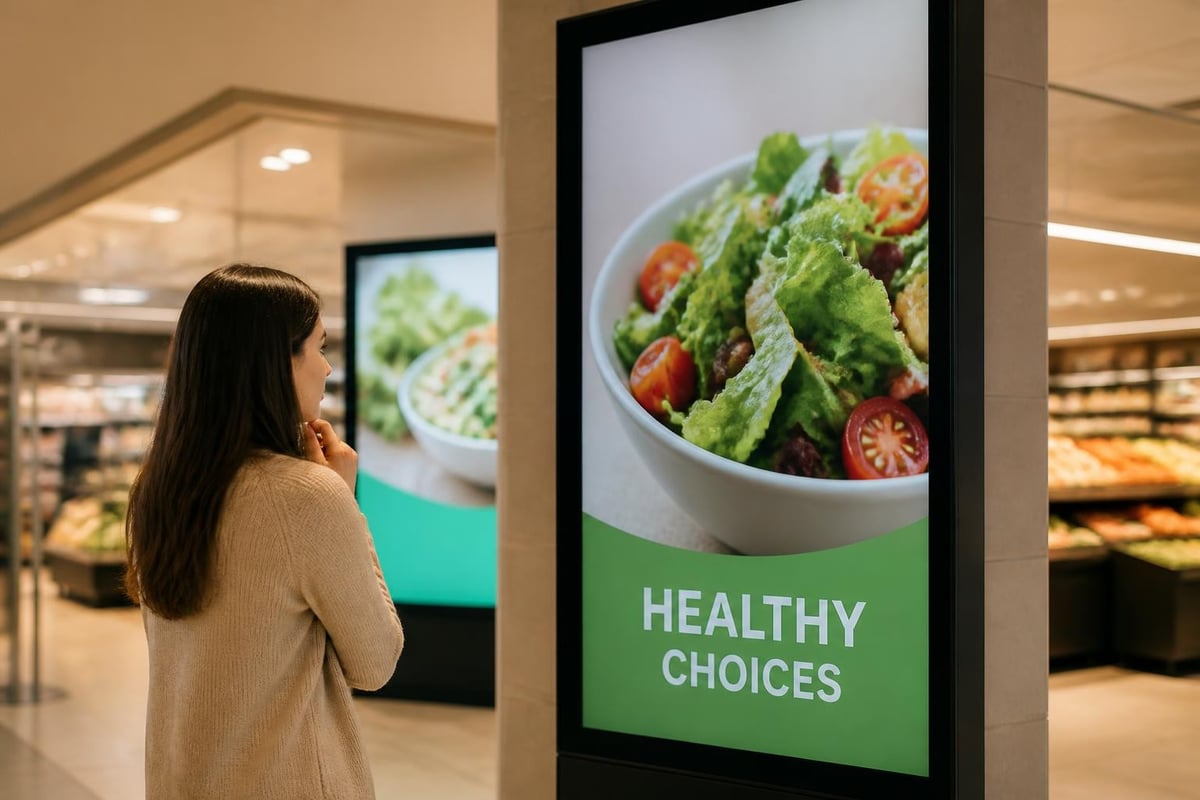
Effective instore digital signage deployment requires thoughtful consideration of customer flow patterns and decision-making moments. Different zones within a retail environment serve distinct purposes and demand tailored content strategies.
Entry and Decompression Zones
The first few metres inside your entrance create critical first impressions. Digital displays in this zone should welcome customers, communicate current promotions, and orient shoppers to store layout. Content here works best when bold, simple, and immediately understandable within 2-3 seconds of viewing.
Many retailers integrate menu boards in food service areas whilst using larger format displays for general wayfinding and promotional messaging near entrances.
Product Category Displays
Within specific departments or product categories, instore digital signage serves educational and promotional functions simultaneously. Screens positioned near high-margin products can display:
- Product demonstration videos
- Customer testimonials and reviews
- Comparative specifications
- Limited-time offers and bundling suggestions
- Cross-selling recommendations
This contextual relevance makes digital signage particularly effective compared to generic overhead displays that lack product adjacency.
Queue and Checkout Areas
Captive audiences in queue areas present unique opportunities for instore digital signage. Customers waiting 3-5 minutes are receptive to entertainment, brand storytelling, and last-minute impulse purchase suggestions. Content rotation should be carefully timed to avoid repetition for customers who may wait longer during peak periods.
Content Strategy and Dynamic Messaging
The true power of instore digital signage lies not in the hardware but in the content strategy driving it. Static content defeats the purpose of digital deployment; successful implementations leverage the medium's flexibility.
Dayparting and Audience Targeting
Sophisticated content management systems enable dayparting, adjusting messaging based on time of day, day of week, or season. A coffee shop might promote iced beverages during afternoon heat whilst highlighting hot drinks during morning commutes.
Retail personalization at scale increasingly relies on digital touchpoints like instore signage to deliver relevant experiences that drive revenue. Retailers are moving beyond simple demographic targeting to integrate real-time data feeds including inventory levels, weather conditions, and local events.
Content Update Frequency
One common pitfall involves updating digital signage content too infrequently, essentially creating expensive static signs. Best practices suggest:
- Promotional content: Update weekly or bi-weekly aligned with promotional calendars
- Seasonal campaigns: Refresh monthly or with seasonal transitions
- Product demonstrations: Rotate every 2-4 weeks to maintain interest
- Real-time information: Update continuously (stock availability, queue times, social media feeds)
- Brand storytelling: Refresh quarterly to prevent message fatigue

Technical Infrastructure and Hardware Selection
Selecting appropriate hardware for instore digital signage involves balancing budget constraints against performance requirements, environmental conditions, and longevity expectations.
Display Technologies and Specifications
| Display Type | Best Use Cases | Typical Lifespan | Brightness (nits) |
|---|---|---|---|
| LCD Commercial | Indoor, controlled lighting | 50,000-70,000 hours | 350-700 |
| LED Direct View | Large format, high ambient light | 100,000+ hours | 2,000-5,000 |
| OLED | Premium installations, colour accuracy | 30,000-50,000 hours | 400-800 |
| Projection | Very large displays, temporary | 10,000-20,000 hours (lamp) | Varies |
Commercial-grade displays differ substantially from consumer televisions, featuring enhanced cooling systems, extended operating hours ratings, and often including built-in content management capabilities.
For businesses requiring illuminated signage solutions beyond digital screens, lightbox signage provides reliable, cost-effective alternatives for static messaging that complements digital deployments.
Media Players and Content Management
The media player powering your instore digital signage determines content capabilities, update mechanisms, and long-term scalability. Options range from basic USB-driven players costing under £100 to enterprise-grade systems with cloud management, real-time analytics, and AI-driven content optimization.
Cloud-based content management systems (CMS) enable centralized control across multiple locations, crucial for retail chains maintaining brand consistency whilst allowing local customization. Features to prioritize include:
- Remote content scheduling and deployment
- User role management and approval workflows
- Proof-of-play reporting for advertising validation
- Emergency messaging override capabilities
- Bandwidth optimization for locations with limited connectivity
Security Considerations for Digital Signage Networks
As instore digital signage increasingly connects to corporate networks and the internet, security vulnerabilities multiply. Networked displays represent potential entry points for malicious actors seeking to access broader IT infrastructure or display inappropriate content.
The NIST guidance for IoT device cybersecurity provides authoritative standards for securing connected devices, whilst the HKCERT digital signage security guidelines offer practical, focused recommendations specific to retail and public space deployments.
Essential Security Measures
Implementing robust security for instore digital signage requires multi-layered approaches:
- Network segmentation: Isolate digital signage on dedicated VLANs separated from critical business systems
- Regular firmware updates: Establish schedules for patching media players and displays
- Strong authentication: Eliminate default passwords and implement multi-factor authentication for CMS access
- Content verification: Require approval workflows preventing unauthorized message publication
- Physical security: Secure media players against tampering and theft in public-facing installations
Retailers managing multiple signage solutions including both digital and traditional formats should develop comprehensive security policies covering all customer-facing communication channels.
Integration with Broader Marketing Ecosystems
Standalone instore digital signage delivers value, but integration with broader marketing technology stacks multiplies effectiveness. Modern implementations increasingly connect signage networks with inventory management systems, customer relationship platforms, and marketing automation tools.
Omnichannel Consistency
Customers interact with brands across multiple touchpoints before, during, and after store visits. Instore digital signage should reinforce rather than contradict messaging from:
- Social media campaigns
- Email marketing initiatives
- Mobile app notifications
- Website promotional banners
- Paid advertising creative
This consistency strengthens brand recall and prevents the confusion that arises when customers encounter conflicting messages across channels.
Real-Time Data Integration
Progressive retailers leverage instore digital signage as dynamic interfaces to back-end systems. A fashion retailer might display Instagram feeds showcasing customers wearing current stock, whilst a grocery chain could highlight recipes using ingredients currently on promotion. Sports equipment stores can show live scores and upcoming events relevant to merchandise categories.
Industry perspectives on smart retail merchandising highlight how digital signage, smart shelving, and experiential displays converge to create immersive shopping environments that blur traditional boundaries between physical and digital retail.
Programmatic and Retail Media Opportunities
Instore digital signage increasingly serves as inventory for retail media networks, allowing brands to purchase advertising space much like they would digital display advertising online. This evolution creates new revenue streams for retailers whilst providing brands direct access to high-intent shoppers.
The IAB's comprehensive playbook on digital out-of-home and in-store retail media details best practices for measurement, inventory management, and addressability in this growing sector.
Measurement Challenges and Solutions
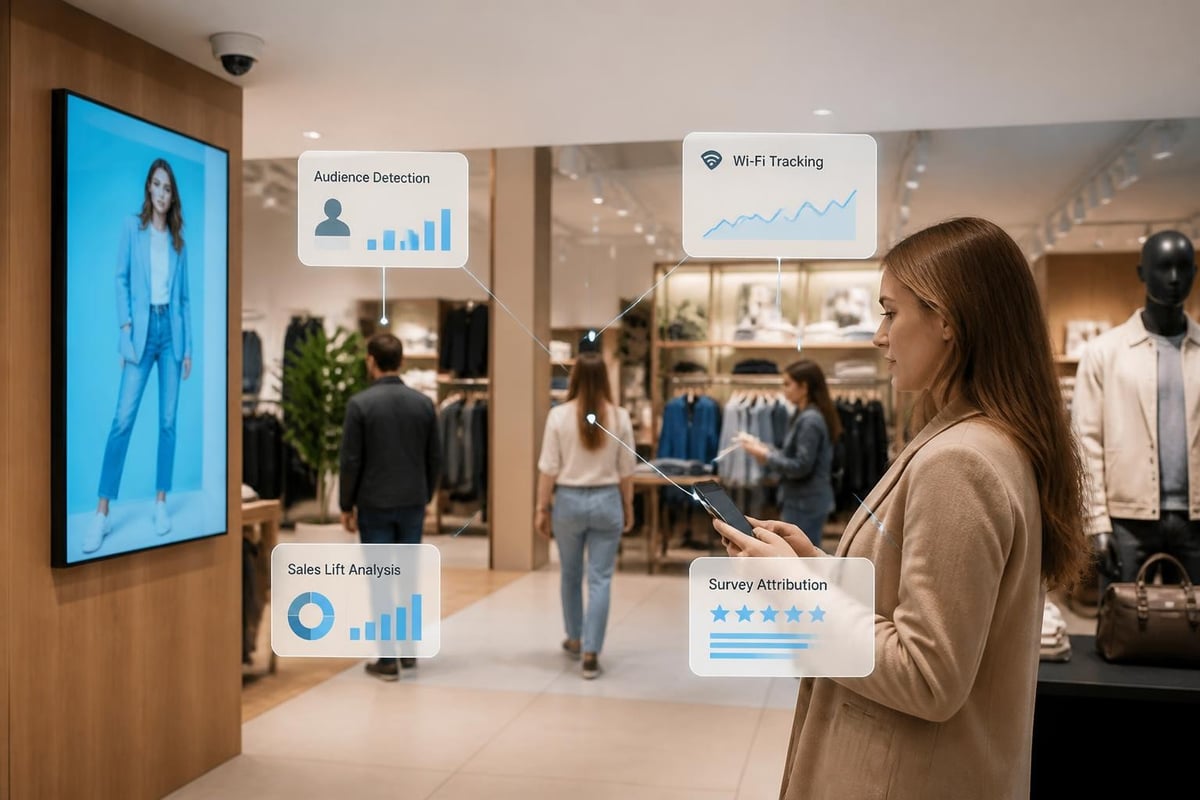
Unlike digital advertising where impressions and clicks are easily tracked, instore digital signage measurement requires sophisticated approaches. Current methodologies include:
- Camera-based audience measurement: Anonymous computer vision systems count viewers and estimate demographics
- Bluetooth/Wi-Fi detection: Tracking device proximity and dwell time near displays
- Sales correlation analysis: Comparing transaction data during campaign periods versus control periods
- Survey-based attribution: Post-purchase surveys asking about message recall and influence
The IAB research on in-store retail media measurement examines current utilization patterns and identifies measurement gaps requiring industry attention.
Regulatory Compliance and Accessibility
Deploying instore digital signage requires attention to regulatory frameworks governing advertising, data privacy, and accessibility. Requirements vary by jurisdiction but share common themes around transparency, consent, and inclusive design.
Privacy and Data Protection
When digital signage incorporates cameras, sensors, or other data collection mechanisms, compliance with GDPR, POPIA, and similar privacy regulations becomes essential. Key requirements include:
- Clear signage informing customers about data collection
- Legitimate interest or consent bases for processing
- Data minimization and purpose limitation
- Secure storage and defined retention periods
- Rights to access, correction, and deletion
Retailers should implement privacy-by-design principles from initial planning stages rather than retrofitting compliance measures.
Accessibility Considerations
Inclusive instore digital signage ensures all customers can access information regardless of visual, auditory, or cognitive abilities. Design considerations include:
- Sufficient text size and contrast ratios
- Audio descriptions for visual content where appropriate
- Closed captions for video content
- Positioning at accessible heights
- Alternative information channels for those unable to view screens
Retailers operating across European markets should familiarize themselves with IAB Europe's in-store knowledge hub, which includes resources addressing regional regulatory requirements and industry standards.
Maintenance and Operational Considerations
Long-term success with instore digital signage depends on robust maintenance programs and realistic operational planning. The initial installation represents only the beginning of the total cost of ownership.
Preventive Maintenance Schedules
Commercial displays operating 12-18 hours daily in retail environments require regular maintenance:
| Maintenance Task | Frequency | Estimated Time |
|---|---|---|
| Screen cleaning | Weekly | 5-10 min/screen |
| Ventilation inspection | Monthly | 15 min/screen |
| Cable and mount check | Quarterly | 20 min/screen |
| Software updates | Monthly | 30-60 min total |
| Full system audit | Annually | 2-4 hours total |
Establishing maintenance contracts with qualified providers often proves more cost-effective than managing tasks internally, particularly for multi-location deployments.
Content Production Resources
The operational burden of content creation frequently exceeds initial estimates. A network of 20 screens updating weekly requires substantial creative resources. Retailers should budget for:
- Graphic design capacity (internal or agency)
- Video production for demonstration content
- Photography of products and store environments
- Copywriting for promotional messages
- Quality assurance and proofing workflows
Templates and design systems reduce production time whilst maintaining brand consistency across content variations.
Future Trends Shaping Instore Digital Signage
The instore digital signage landscape continues evolving rapidly, driven by technological advancement and changing consumer expectations. Forward-looking retailers should monitor several emerging trends.
Artificial Intelligence and Personalization
AI-powered systems increasingly enable real-time content optimization based on audience characteristics detected through computer vision. A display might show luxury product messaging when it detects designer handbags or high-end watches, then switch to value-focused content when detecting price-conscious shopping behaviours.
Whilst privacy concerns and regulatory frameworks will shape how aggressively retailers deploy such capabilities, the technical foundations already exist for highly personalized instore digital signage experiences.
Sustainability and Energy Efficiency
Environmental consciousness influences both consumer preferences and corporate responsibility commitments. Modern displays consume substantially less energy than previous generations, whilst scheduling systems can dim or power down screens during low-traffic periods.
Retailers increasingly communicate their sustainability commitments through instore digital signage itself, creating self-reinforcing messages about environmental stewardship supported by efficient technology choices.
Interactive and Touchless Experiences
Touch-enabled displays have been common in retail for years, but hygiene concerns accelerated interest in touchless interaction methods. Gesture recognition, QR codes triggering mobile device interactions, and voice-activated systems enable customer engagement without physical contact.
These interactive capabilities transform instore digital signage from passive broadcast medium to active customer service tool, answering questions, providing detailed product information, and facilitating self-service transactions.
Instore digital signage represents a strategic investment that enhances customer experiences, streamlines operations, and creates measurable business value when implemented thoughtfully. Success requires balancing technical infrastructure, compelling content strategy, security considerations, and ongoing operational commitment. Whether you're launching your first digital display or expanding an existing network, Signshoponline offers comprehensive solutions ranging from digital signage systems to complementary traditional formats like banners and channel letters, ensuring your retail environment communicates effectively across every customer touchpoint.


