


Light boxes have become indispensable tools for businesses seeking to maximise visibility and create lasting impressions in competitive commercial environments. These illuminated display systems combine high-quality graphics with strategic lighting to deliver messages that capture attention day and night. From retail storefronts to exhibition stands, light boxes serve diverse applications whilst offering energy efficiency and design flexibility. Understanding the technology, construction methods, and strategic deployment of light boxes enables businesses to make informed decisions that enhance brand presence and drive customer engagement throughout 2026 and beyond.
Understanding Light Box Technology and Construction
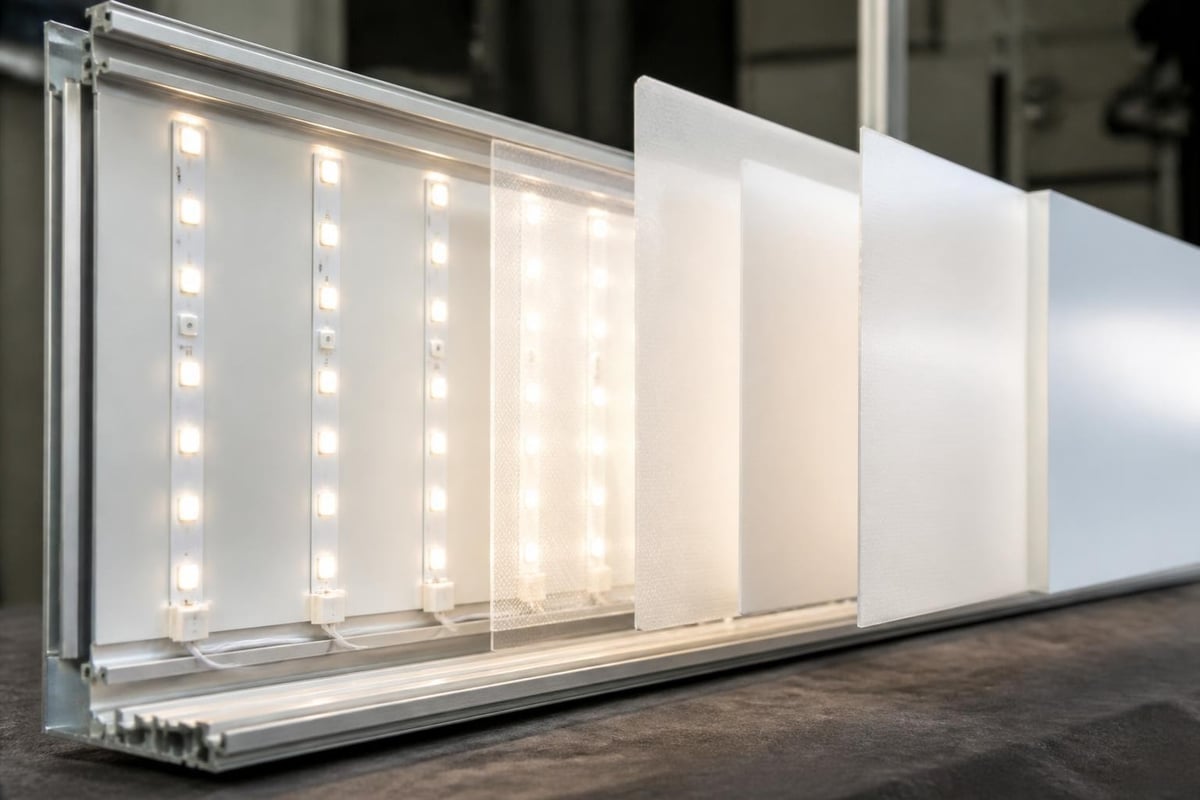
Light boxes operate on a straightforward yet sophisticated principle: internal illumination sources project light through translucent graphics, creating uniformly lit displays that stand out in any environment. The fundamental components include a housing frame, light sources (traditionally fluorescent tubes, now predominantly LEDs), diffuser panels, and front-facing graphic substrates designed for light transmission.
Core Components and Materials
Modern light boxes utilise aluminium extrusions or fabricated steel frames that provide structural integrity whilst maintaining relatively lightweight profiles. The frame depth typically ranges from 75mm to 200mm, depending on size requirements and illumination needs. Internal reflective liners, often white powder-coated surfaces or dedicated reflective films, maximise light distribution efficiency by bouncing photons towards the display face.
Key material specifications include:
- Frame materials: Aluminium (lightweight, corrosion-resistant), powder-coated steel (economy option), or stainless steel (premium applications)
- Diffuser substrates: Opal acrylic (2-5mm thickness), polycarbonate sheets, or fabric tension systems
- Graphic media: Backlit films, translucent vinyls, or printed textiles designed for light transmission
- Light sources: LED strips, LED modules, or legacy fluorescent tubes (rapidly being phased out)
The shift towards LED technology has revolutionised light box performance. LEDs consume approximately 75% less energy than fluorescent alternatives whilst delivering superior colour rendering and extended operational lifespans exceeding 50,000 hours. This transformation aligns with both sustainability objectives and total cost-of-ownership considerations for businesses deploying multiple units.
Types of Light Boxes for Commercial Applications
The light box category encompasses diverse formats, each engineered for specific applications and installation contexts. Selecting the appropriate type ensures optimal performance within budgetary and spatial constraints.
Mae-West Profile Light Boxes
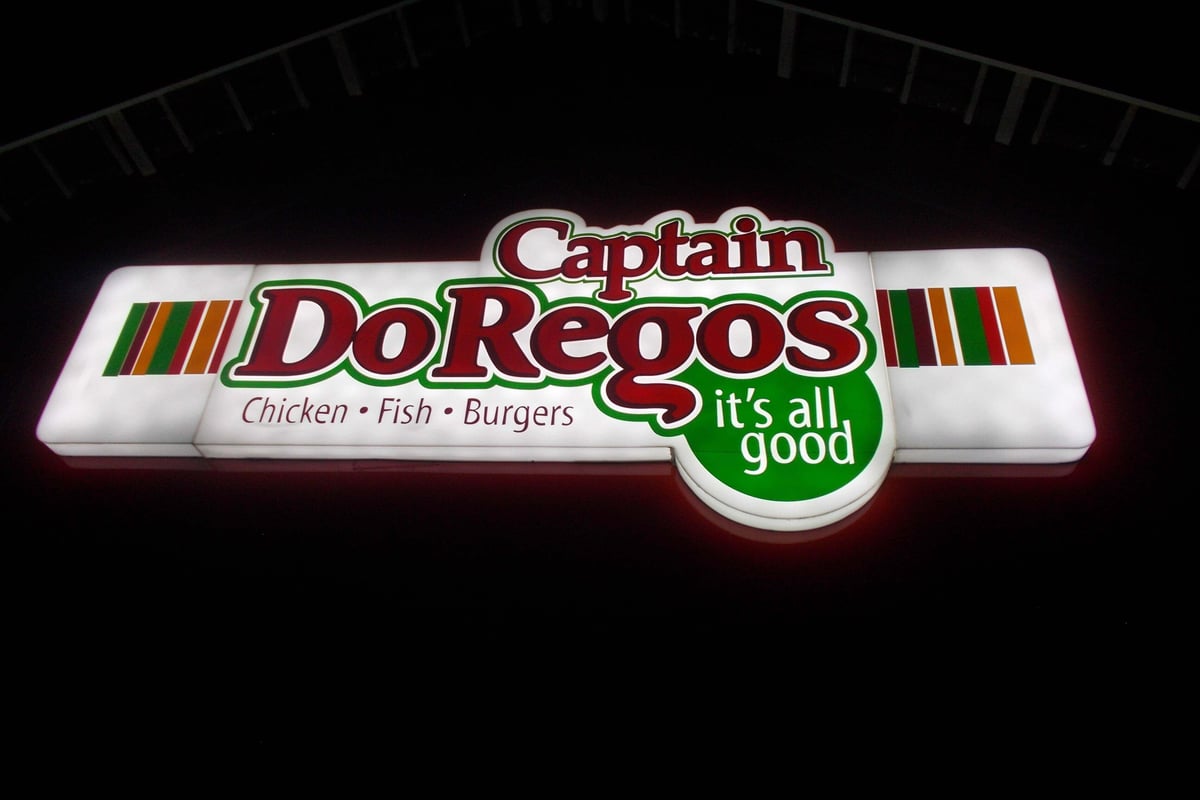
Mae-West light boxes feature distinctive curved profiles that create visual depth and premium aesthetics. The convex face adds dimensional interest whilst improving viewing angles and reducing glare. These units excel in retail environments, reception areas, and locations where design sophistication matters. Construction typically involves thermoformed acrylic faces mounted to rigid aluminium frames, with graphics either direct-printed onto the acrylic or applied as translucent vinyl overlays.
Flat-Face Acrylic Return Systems
Flat-face designs with acrylic returns deliver clean, contemporary appearances suited to corporate environments and modern retail spaces. The graphic face sits flush within the frame, creating sleek profiles that integrate seamlessly with architectural elements. Lightbox Signage offered by specialist manufacturers typically provides options between Mae-West curves and flat acrylic returns, allowing businesses to match their brand aesthetic precisely.
| Light Box Type | Typical Applications | Profile Depth | Installation Complexity |
|---|---|---|---|
| Mae-West | Retail, hospitality, high-traffic | 100-150mm | Moderate |
| Flat-face acrylic | Corporate, contemporary retail | 75-120mm | Moderate |
| Fabric tension | Exhibitions, temporary displays | 80-100mm | Low |
| Edge-lit panels | Menu boards, directional signs | 15-40mm | Low to moderate |
| Modular systems | Large-format installations | Varies | High |
Edge-Lit Solutions
Edge-lit light boxes employ light-guide technology where LEDs positioned along panel edges distribute illumination across thin acrylic sheets through total internal reflection and laser-etched patterns. These ultra-slim profiles (typically 15-40mm) suit applications with space constraints, such as menu boards in restaurants or wayfinding signs in corporate corridors. The technology detailed in ACRYLITE's technical documentation demonstrates the optical properties required for uniform edge-lit performance.
Design Considerations and Graphic Production
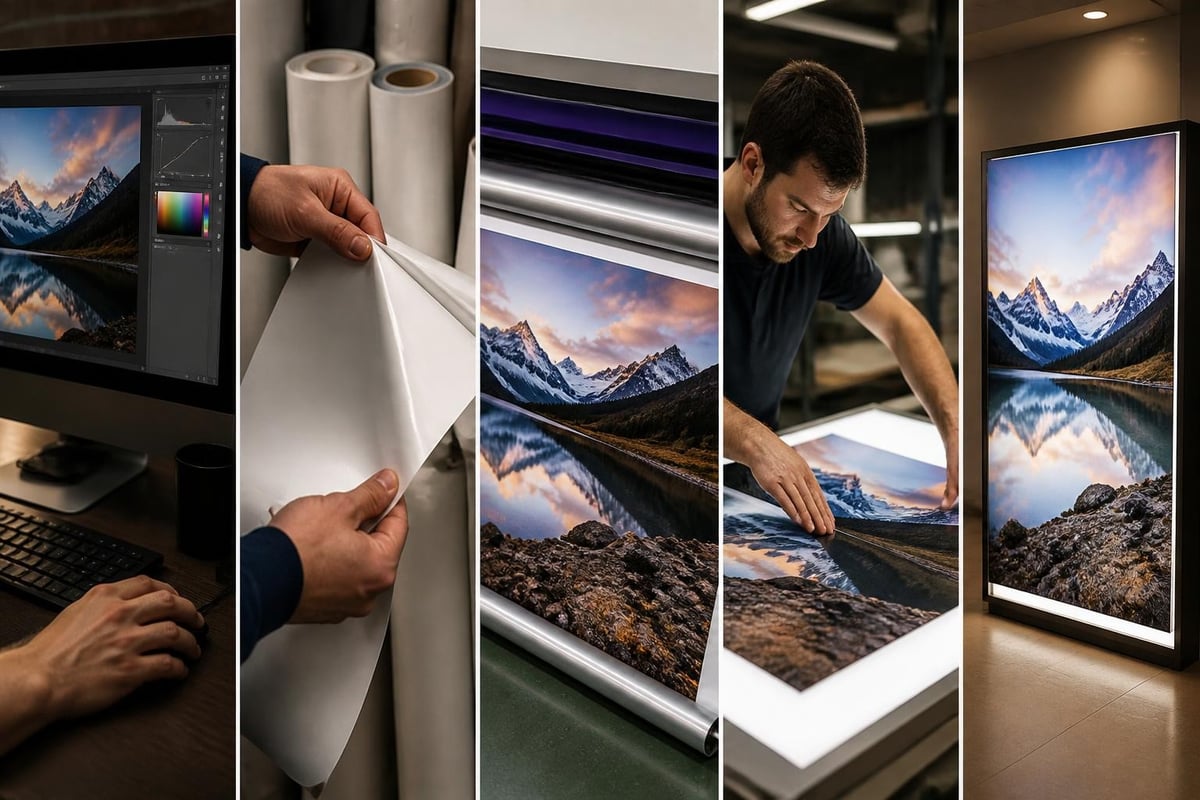
Successful light box implementation demands careful attention to graphic design principles that differ substantially from conventional print applications. Backlit graphics require specific considerations regarding colour saturation, contrast ratios, and material selection to achieve optimal visual impact when illuminated.
Colour Management for Backlighting
Colours appear differently when viewed in transmission versus reflection. Backlit graphics typically require adjustments to achieve desired perceived colours when illuminated. Lighter tones and higher saturation levels often work best, as illumination naturally enhances vibrancy. Conversely, very dark areas may appear muddy or allow light bleed-through if ink coverage proves insufficient.
Design best practices include:
- Increase contrast: Ensure sufficient differentiation between elements to maintain readability under illumination
- Adjust colour profiles: Use backlit-specific colour profiles that account for transmission characteristics
- Test before production: Create small-scale illuminated samples to verify colour accuracy and coverage
- Consider viewing distances: Larger installations viewed from distance can utilise bolder graphics than close-proximity applications
The 3M instruction bulletin on backlit signage production provides comprehensive guidance on material selection, lamination techniques, and assembly procedures that ensure professional results and longevity.
Material Selection and Durability
Backlit graphic substrates must withstand continuous exposure to heat generated by light sources whilst maintaining colour fidelity over extended periods. Modern LED systems generate less heat than legacy fluorescent tubes, reducing thermal stress on graphics. However, UV stability remains critical for light boxes installed in locations receiving direct sunlight.
The ISO technical specification covering light stability outlines testing methodologies that help manufacturers predict graphic lifespan under various exposure conditions. Premium backlit films incorporate UV inhibitors and stabilisers that extend fade resistance beyond five years under continuous illumination and moderate sunlight exposure.
Installation Requirements and Electrical Compliance
Professional installation of light boxes encompasses structural mounting considerations, electrical connections, and regulatory compliance. These factors directly impact safety, performance, and longevity.
Mounting Methods and Structural Integration
Light boxes attach to walls, suspend from ceilings, integrate into facades, or mount on freestanding structures. Each application demands appropriate fixings rated for the unit's weight plus safety factors accounting for wind loading in external installations. Wall-mounted units typically employ concealed brackets or French cleat systems that distribute loads across multiple fixing points.
Standard installation approaches:
- Direct wall mount: Brackets fixed to masonry, timber studs, or steel framework
- Suspended ceiling integration: Recessed units that replace standard ceiling tiles
- Facade projection: Cantilevered mounting with structural engineering verification
- Freestanding: Ground-fixed posts or weighted bases for portable applications
External installations require weatherproofing measures including sealed housings, drainage channels, and appropriate IP (Ingress Protection) ratings. IP65-rated enclosures provide adequate protection against dust ingress and water jets for most outdoor applications in the UK climate.
Electrical Standards and Certification
All electrically powered light boxes must comply with relevant safety standards and building regulations. The UL 48 certification program provides internationally recognised safety testing for electric signs, whilst UK installations must adhere to BS 7671 wiring regulations and potentially require certification by qualified electricians.
Key electrical considerations include proper earthing, appropriate cable ratings for LED driver currents, accessibility for maintenance, and incorporation of emergency disconnect switches where required by local authorities. Many modern LED light boxes operate on low-voltage DC systems (12V or 24V), reducing shock hazards whilst simplifying installation compared to mains-voltage fluorescent predecessors.
Energy Efficiency and Operational Economics
The transition to LED illumination has fundamentally transformed the economic proposition of light boxes. Businesses previously deterred by operational costs now find illuminated signage financially viable for extended operating hours.
Comparative Energy Consumption
A typical 2000mm × 1000mm fluorescent light box consuming 160 watts operates 12 hours daily at an annual electricity cost of approximately £95 (based on commercial electricity rates of 30p/kWh). An equivalent LED unit drawing 40 watts reduces annual consumption to £24-a 75% reduction that compounds over multi-year operational periods.
| Light Source | Power Draw | Daily Cost (12h) | Annual Cost | Lamp Replacement Cycle |
|---|---|---|---|---|
| Fluorescent (T8) | 160W | £0.58 | £210 | 12-18 months |
| Fluorescent (T5) | 120W | £0.43 | £158 | 18-24 months |
| LED (standard) | 40W | £0.14 | £52 | 5-7 years |
| LED (premium) | 35W | £0.13 | £47 | 7-10 years |
The Department of Energy's SSL programme research documents real-world energy savings and performance improvements achieved through LED adoption across various commercial lighting applications, including backlit signage systems.
Maintenance Requirements and Lifecycle Costs
LED light boxes dramatically reduce maintenance obligations. Traditional fluorescent systems require lamp replacements every 12-24 months, involving labour costs, access equipment hire, and disruption to business operations. LED modules rated for 50,000+ hours operate 12 hours daily for over 11 years before requiring replacement.
Maintenance intervals should include graphic inspection for fading or damage, housing cleaning to maintain brightness, and electrical connection verification. Establishing scheduled maintenance prevents unexpected failures whilst maximising return on investment. For businesses operating multiple light boxes across retail chains or franchise networks, centralized maintenance programmes ensure consistent brand presentation and prevent the patchwork appearance of partially functioning units.
Strategic Placement and Visual Impact Optimisation
Effective deployment of light boxes requires strategic thinking beyond mere visibility. Optimal placement considers sight lines, ambient lighting conditions, competitor signage, and customer journey patterns.
Site Analysis and Positioning
Conducting thorough site analysis identifies prime locations where light boxes achieve maximum impact. High-traffic pedestrian zones, decision points in customer journeys, and areas with limited natural lighting all represent priority locations. External light boxes positioned perpendicular to traffic flow capture attention from approaching customers earlier than parallel orientations.
Placement considerations include:
- Viewing angles: Position units where target audiences naturally look
- Ambient light competition: Light boxes excel in low-light conditions but require higher brightness in daylight-flooded environments
- Regulatory compliance: Verify planning permissions and signage bylaws before installation
- Accessibility: Ensure maintenance access without disrupting operations
Integration with broader signage strategies creates cohesive brand experiences. Coordinating light boxes with dimensional lettering, directional signs, and other wayfinding elements delivers comprehensive communication systems that guide customers whilst reinforcing brand identity.
Regulatory Compliance and Safety Standards
Professional light box deployment demands adherence to multiple regulatory frameworks governing electrical safety, structural integrity, and visual amenity. Non-compliance risks enforcement action, removal orders, and potential liability in accident scenarios.
Planning and Building Control Requirements
Light boxes qualifying as advertisements typically require planning permission or advertisement consent, particularly for external installations visible from public highways. Local planning authorities maintain specific policies regarding illuminated signage in conservation areas, residential zones, and areas of special character. Conservation areas often impose restrictions on illumination intensity, operating hours, and overall signage dimensions.
Building control approval may apply to structurally integrated installations or units exceeding certain weights that could pose collapse risks. Consultation with local authorities during planning stages prevents costly retrofits or removal requirements.
Electrical and Fire Safety Certification
The UL solutions programme for electric sign manufacturers outlines testing and certification pathways that ensure light boxes meet safety standards for electrical components, fire resistance, and operational reliability. While UL certification originates in North America, the principles inform best practices applicable to UK installations governed by BS EN standards.
Fire safety considerations include using materials with appropriate flame-spread ratings, ensuring electrical components cannot ignite surrounding materials under fault conditions, and maintaining clearances from combustible building elements. Emergency exit routes and fire assembly points must not be obstructed by light box installations.
Applications Across Industry Sectors
Light boxes serve remarkably diverse functions across commercial sectors, each leveraging illumination to solve specific communication challenges.
Retail and Hospitality Environments
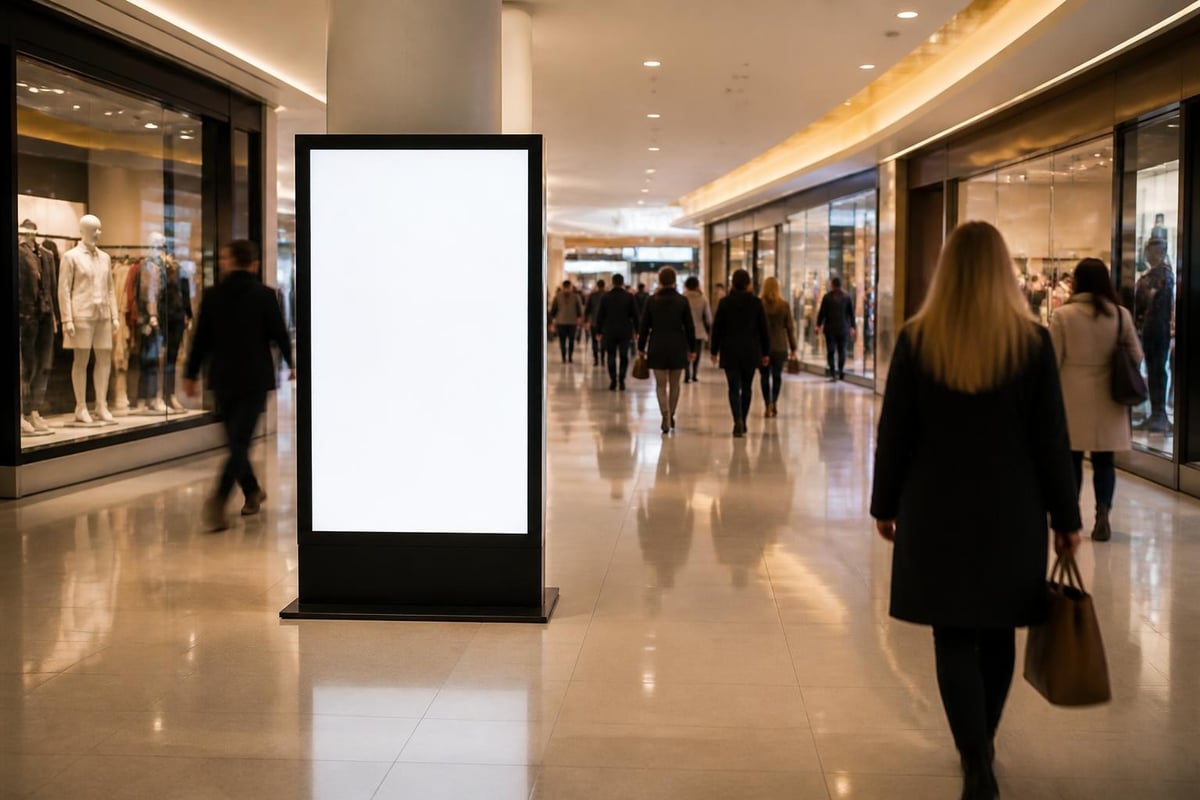
Retail applications dominate light box deployments, where illuminated brand logos, promotional messaging, and product showcases create compelling visual merchandising. High-street retailers utilise facade-mounted light boxes that remain visible during evening trading hours, extending brand exposure beyond daylight periods. Shopping centres employ large-format light boxes for directional signage and tenant advertising that maintains legibility across expansive, artificially lit concourses.
Hospitality venues deploy light boxes for menu displays, brand identification, and wayfinding in environments where ambient lighting varies throughout operating hours. Restaurants particularly value menu boards that remain clearly legible during evening service whilst creating inviting ambience through strategic backlighting.
Exhibition and Events Sector
Portable light boxes have revolutionised exhibition stand design, offering easy assembly, lightweight construction, and powerful visual impact. Fabric tension systems allow graphics to be removed, laundered, and replaced cost-effectively between events. The same frame accommodates multiple graphic sets, enabling exhibitors to customise messaging for different trade shows without purchasing entirely new display systems.
Event organisers employ modular light box systems for sponsor recognition, wayfinding, and creating defined spaces within larger venues. The combination of portability and professional appearance makes light boxes valuable assets that deliver return on investment across multiple deployments.
Corporate and Institutional Settings
Corporate environments utilise light boxes for brand reinforcement in reception areas, conference facilities, and employee spaces. Backlit graphics featuring company values, achievement milestones, or inspirational messaging create engaging workplace environments that support culture-building objectives. The Getty Conservation Institute's guidance on LED lighting proves particularly relevant for institutions displaying light-sensitive materials or historical artefacts, where controlled spectrum lighting protects exhibits whilst enabling visibility.
Healthcare facilities deploy light boxes for wayfinding in complex building layouts where clear directional information reduces patient stress and improves operational efficiency. The 24-hour nature of healthcare environments makes energy-efficient LED light boxes particularly cost-effective compared to alternatives requiring frequent lamp replacements.
Future Developments and Emerging Technologies
The light box category continues evolving through technological advancement and changing market expectations. Understanding emerging trends helps businesses future-proof signage investments.
Smart Integration and Dynamic Content
Digital integration represents the frontier of light box evolution. Hybrid systems combine traditional backlit graphics with embedded LED video screens or dynamic lighting systems that change colours, intensity, or messaging based on time, weather, or promotional calendars. These "smart light boxes" bridge the gap between static backlit displays and full digital signage solutions.
Sensor integration enables light boxes to adjust brightness based on ambient conditions, maximising visibility whilst minimising energy consumption. Motion sensors can trigger illumination only when potential customers approach, delivering dramatic energy savings in locations with intermittent foot traffic.
Sustainable Materials and Circular Economy Approaches
Environmental consciousness drives demand for light boxes manufactured from recycled materials and designed for end-of-life disassembly. Modular construction enables component replacement rather than entire unit disposal when upgrading or refreshing graphics. Manufacturers increasingly offer take-back programmes where retired light boxes undergo refurbishment for resale or responsible recycling of aluminium, acrylic, and electronic components.
Bio-based graphic substrates and water-based inks reduce environmental impacts of production whilst maintaining performance characteristics required for backlit applications. These developments align with corporate sustainability commitments and increasingly stringent environmental regulations expected throughout the remainder of the 2020s.
Customisation and Rapid Production
Digital manufacturing techniques including CNC routing, laser cutting, and direct-to-substrate printing enable economical production of bespoke light boxes in smaller quantities. Businesses no longer need to order standardised sizes or commit to large minimum quantities. Custom profiles, unusual shapes, and integrated architectural elements become financially viable, allowing light boxes to complement specific design visions rather than dictating them.
Rapid prototyping using 3D printing for custom components and brackets accelerates development cycles, enabling businesses to visualise installations accurately before committing to full production. This iterative approach reduces errors and ensures final installations meet expectations.
Maintenance Best Practices and Longevity Strategies
Maximising light box lifespan and maintaining optimal performance requires proactive maintenance programmes rather than reactive repairs when failures occur.
Scheduled Inspection Protocols
Establishing quarterly inspection schedules identifies emerging issues before they compromise performance. Inspection checklists should verify graphic condition (fading, delamination, damage), illumination uniformity (failed LED modules or drivers), housing integrity (cracks, corrosion, seal degradation), and electrical safety (loose connections, damaged cables, moisture ingress).
Maintenance schedule framework:
- Monthly: Visual inspection for obvious damage or illumination failures
- Quarterly: Close inspection of graphics, cleaning of diffusers, electrical connection verification
- Annually: Comprehensive assessment including removal of access panels, driver testing, and structural mounting verification
- Bi-annually: Professional deep cleaning and performance benchmarking against installation specifications
Documentation of inspections creates performance histories that inform replacement decisions and identify recurring issues requiring design modifications or upgraded components.
Cleaning and Graphic Preservation
Regular cleaning maintains brightness and professional appearance. External light boxes accumulate atmospheric pollutants, bird droppings, and weather-related debris that diminish light transmission. Internal surfaces gather dust that reduces reflectivity and creates hot spots where accumulated particles absorb heat near LED modules.
Cleaning protocols should employ non-abrasive microfibre cloths and mild detergents formulated for acrylic or polycarbonate substrates. Aggressive chemicals, paper towels, or abrasive pads scratch surfaces, creating light diffusion that reduces sharpness and creates hazy appearances. Protective coatings applied during manufacturing require compatible cleaning products to avoid degradation.
Component Replacement and Upgrade Pathways
Even premium LED modules eventually require replacement as luminous efficiency gradually declines over operational hours. Planning component replacement before complete failure prevents extended dark periods that damage brand perception. Maintaining spare LED drivers and modules for critical installations enables rapid repairs when unexpected failures occur.
Technology advancement creates opportunities to upgrade light boxes with improved efficiency components or enhanced features without replacing entire units. Retrofitting legacy fluorescent light boxes with LED modules delivers immediate energy savings whilst extending serviceable life. This approach particularly suits quality frames with remaining structural integrity where graphic refreshment coincides with lighting system upgrades.
Light boxes remain powerful tools for businesses seeking visibility, brand reinforcement, and customer engagement through strategic illumination of key messaging. The technology's evolution towards LED efficiency, combined with advances in graphic production and customisation capabilities, ensures light boxes continue delivering compelling return on investment across diverse commercial applications. Whether you require illuminated facade signage, exhibition displays, or integrated wayfinding solutions, Signshoponline provides expert guidance and manufacturing excellence that transforms your vision into impactful reality. Contact our team to discuss how custom light box solutions can elevate your brand presence throughout 2026 and beyond.


