


Safety signs serve as critical communication tools in workplaces, public spaces, and industrial environments across the globe. These visual indicators provide instant, universal warnings and instructions that protect lives, prevent injuries, and ensure regulatory compliance. Whether alerting workers to chemical hazards, directing evacuees to emergency exits, or mandating the use of personal protective equipment, safety signs form an essential layer of defence in any comprehensive health and safety strategy. Understanding their design, purpose, and proper implementation enables organisations to create safer environments whilst meeting legal obligations.
The Fundamental Purpose of Safety Signs
Safety signs communicate vital information quickly and effectively, transcending language barriers through standardised symbols and colours. Their primary function centres on accident prevention by alerting people to potential dangers before they encounter them. In high-risk environments such as manufacturing facilities, construction sites, or chemical plants, these visual warnings can mean the difference between a normal workday and a catastrophic incident.
The effectiveness of safety signs relies on immediate recognition and comprehension. Unlike written instructions or verbal warnings, properly designed safety signs deliver their message instantly through colour coding, symbolic imagery, and concise text. This speed of communication proves invaluable in emergency situations where seconds matter.
Regulatory Framework and Compliance
Jurisdictions worldwide mandate safety signage through comprehensive legislation and standards. In the United Kingdom, the Health and Safety (Safety Signs and Signals) Regulations establish clear requirements for employers to provide safety signs where risks cannot be adequately controlled through other means. These regulations align with European Directive 92/58/EEC, creating consistency across member states.
Similarly, the United States employs the Manual on Uniform Traffic Control Devices for roadway safety signs, whilst workplace signage follows OSHA standards. Fire safety signage must adhere to guidelines from organisations such as the NFPA, ensuring emergency egress routes and fire protection equipment remain clearly marked.
Key regulatory requirements typically include:
- Placement of signs where hazards exist
- Maintenance of sign visibility and legibility
- Use of standardised colours and symbols
- Provision of supplementary signs where necessary
- Regular inspection and replacement schedules
Categories and Classification Systems
Safety signs fall into distinct categories, each serving specific communication purposes within the overall safety framework. Understanding these classifications helps organisations select appropriate signage for various hazards and situations.
Prohibition Signs
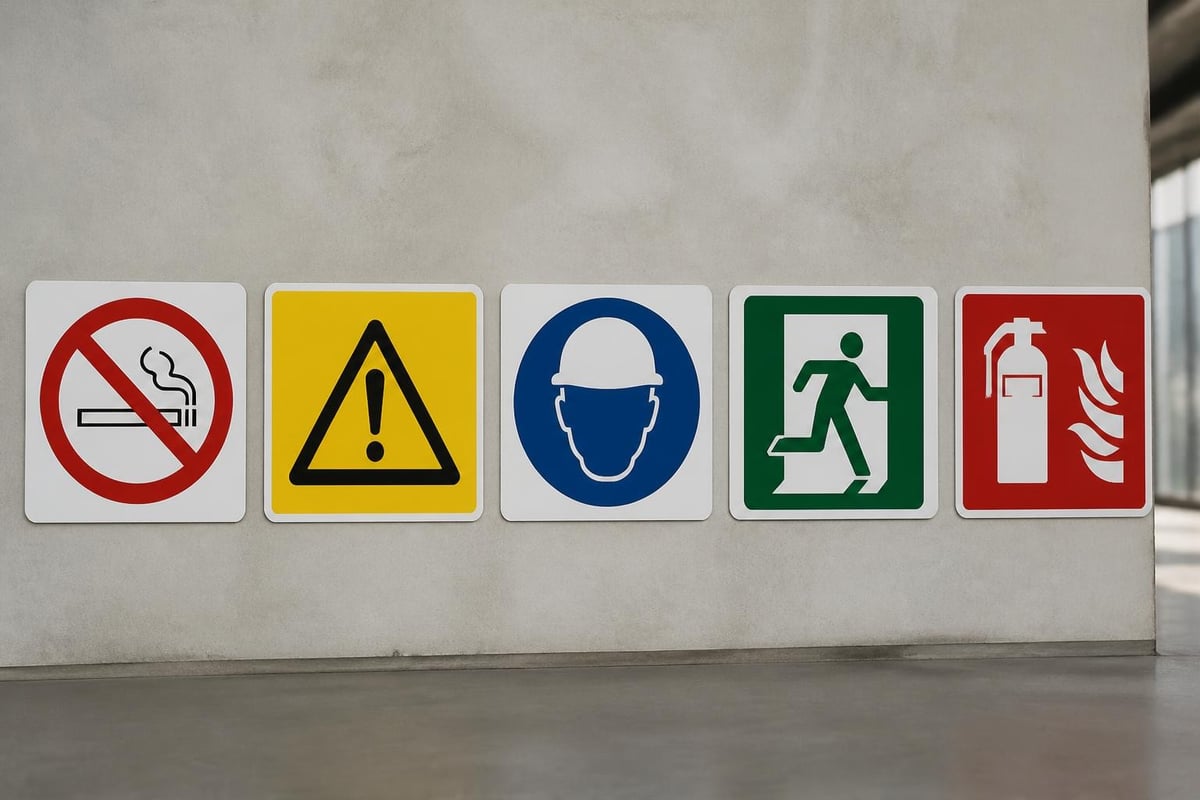
These circular signs with red borders and diagonal bars indicate actions that must not be taken. Common examples include "No Smoking," "No Unauthorised Access," and "Do Not Use Lift in Fire." The red colour immediately signals restriction, making the prohibition clear even from a distance.
Warning Signs
Triangular signs with yellow backgrounds alert individuals to potential hazards ahead. These include warnings for slippery surfaces, electrical dangers, toxic substances, overhead loads, and numerous other risks. The distinctive triangular shape differentiates warnings from other sign categories.
Mandatory Signs
Round blue signs indicate actions that must be taken in specific areas. These commonly require the use of personal protective equipment such as hard hats, safety goggles, hearing protection, or high-visibility clothing. Compliance with mandatory signs directly impacts worker safety in hazardous zones.
Emergency Escape and First Aid Signs
Green signs with white symbols direct people to emergency exits, assembly points, first aid stations, and emergency equipment. Their distinctive colour coding helps evacuees navigate safely during emergencies when visibility may be compromised by smoke or power failures.
Fire Equipment Signs
Red rectangular signs identify the locations of fire extinguishers, fire alarm call points, hoses, and other firefighting equipment. Quick identification of these resources proves critical during fire emergencies.
| Sign Category | Shape | Colour Scheme | Primary Function |
|---|---|---|---|
| Prohibition | Circle with diagonal bar | Red border, white background | Stop dangerous actions |
| Warning | Triangle | Yellow background, black border | Alert to hazards |
| Mandatory | Circle | Blue background, white symbol | Require specific actions |
| Emergency | Rectangle/Square | Green background, white symbol | Guide to safety |
| Fire Equipment | Rectangle/Square | Red background, white symbol | Locate firefighting tools |
Design Principles for Maximum Effectiveness
Effective safety signs balance visibility, legibility, and comprehension. Poor design compromises their protective function, potentially rendering them useless when needed most. Several key principles govern the creation of impactful safety signage.
Contrast and colour selection form the foundation of visible signage. The W3C guidance on colour and contrast provides valuable principles for ensuring signs remain legible under various lighting conditions. High contrast between background and foreground elements ensures readability from required viewing distances.
Symbol clarity ensures universal understanding regardless of literacy levels or language proficiency. International standards such as ISO 7010 provide libraries of tested, recognised symbols that convey meaning without relying on text. These pictograms undergo rigorous testing to verify comprehension across diverse populations.
Size and Placement Considerations
Sign dimensions must correspond to viewing distances and environmental conditions. Larger signs serve areas where workers operate at greater distances, whilst smaller signs suffice for close-proximity hazards. The U.S. Access Board standards provide detailed guidance on mounting heights, character sizes, and tactile requirements for accessible signage.
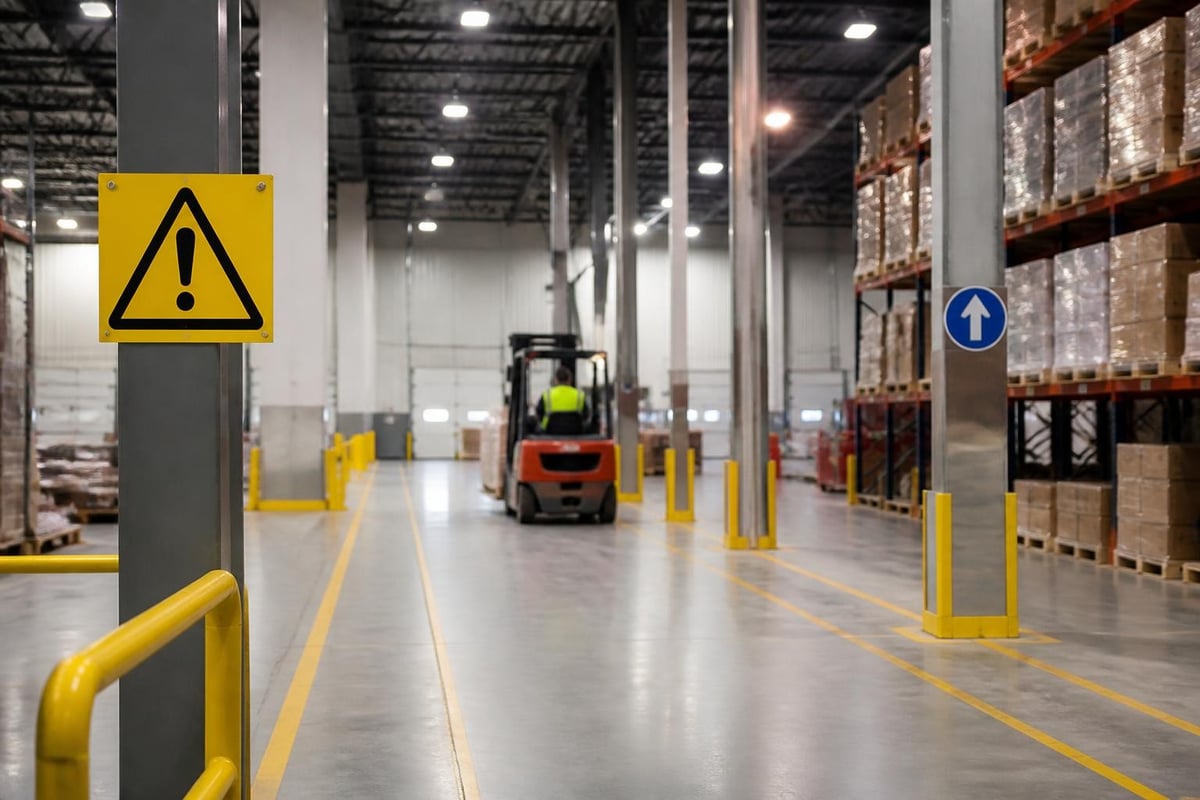
Strategic placement positions signs where they're most likely to be seen before individuals encounter hazards. This often means installing signs at decision points, entrances to hazardous areas, or along approach routes. Multiple signs may be necessary in large facilities to ensure visibility from various angles.
- Calculate viewing distance requirements
- Select appropriate sign dimensions
- Determine optimal mounting height
- Assess lighting conditions
- Install at natural sight lines
- Verify visibility from all approach angles
Material Selection and Durability
The longevity and reliability of safety signs depend heavily on material choices suited to their operating environment. Indoor signs face different challenges than outdoor installations, whilst signs in corrosive environments require specialised construction.
Rigid materials such as aluminium, ACM (aluminium composite material), and PVC provide excellent durability for permanent installations. Aluminium resists corrosion and maintains structural integrity in outdoor applications. For illuminated applications, Lightbox Signage offers excellent visibility in low-light conditions, ensuring safety messages remain clear around the clock, particularly valuable for emergency exit signs and hazard warnings in warehouses or facilities operating multiple shifts.
Flexible materials including vinyl and adhesive films suit temporary applications or curved surfaces. Self-adhesive safety signs apply easily to equipment, vehicles, or irregular surfaces. However, these materials typically have shorter lifespans than rigid alternatives.
Photoluminescent materials absorb ambient light and glow in darkness, providing visibility during power failures. These prove essential for emergency exit signs and evacuation route marking, maintaining visibility precisely when conventional signs might become invisible.
Environmental Resistance Requirements
Different environments demand specific material properties:
- Chemical resistance for facilities handling corrosive substances
- UV stability for outdoor signs exposed to sunlight
- Temperature tolerance for cold storage or high-heat areas
- Impact resistance for high-traffic zones or areas with mobile equipment
- Water resistance for outdoor or wet process areas
Implementation and Maintenance Strategies
Installing safety signs represents just the beginning of an effective signage programme. Ongoing maintenance, regular audits, and systematic updates ensure signs continue fulfilling their protective function throughout their service life.
Site Assessment and Audit Processes
Comprehensive risk assessments identify where safety signs are required. This systematic evaluation examines all workplace areas, processes, and potential hazards to determine appropriate signage needs. The assessment should involve safety officers, supervisors, and workers familiar with day-to-day operations.
Documentation records sign locations, types, installation dates, and maintenance schedules. This inventory enables systematic inspection and ensures no areas lack necessary safety signage. Digital mapping tools can create visual records of sign placement across facilities.
Inspection and Replacement Schedules
Regular inspections identify damaged, faded, or obscured signs requiring attention. Quarterly inspections typically suffice for indoor signs, whilst outdoor or harsh-environment signs may need monthly checks. Inspection criteria should include:
- Visibility and legibility from required distances
- Physical condition (cracks, tears, corrosion)
- Colour retention and contrast
- Secure mounting
- Absence of obstructions
Prompt replacement of compromised signs maintains continuous protection. Establishing relationships with reliable suppliers ensures quick access to replacement signage when needed.
Training and Cultural Integration
Safety signs only work when people notice, understand, and act upon them. Integrating safety signage into broader health and safety training programmes ensures employees recognise and respect these visual warnings.
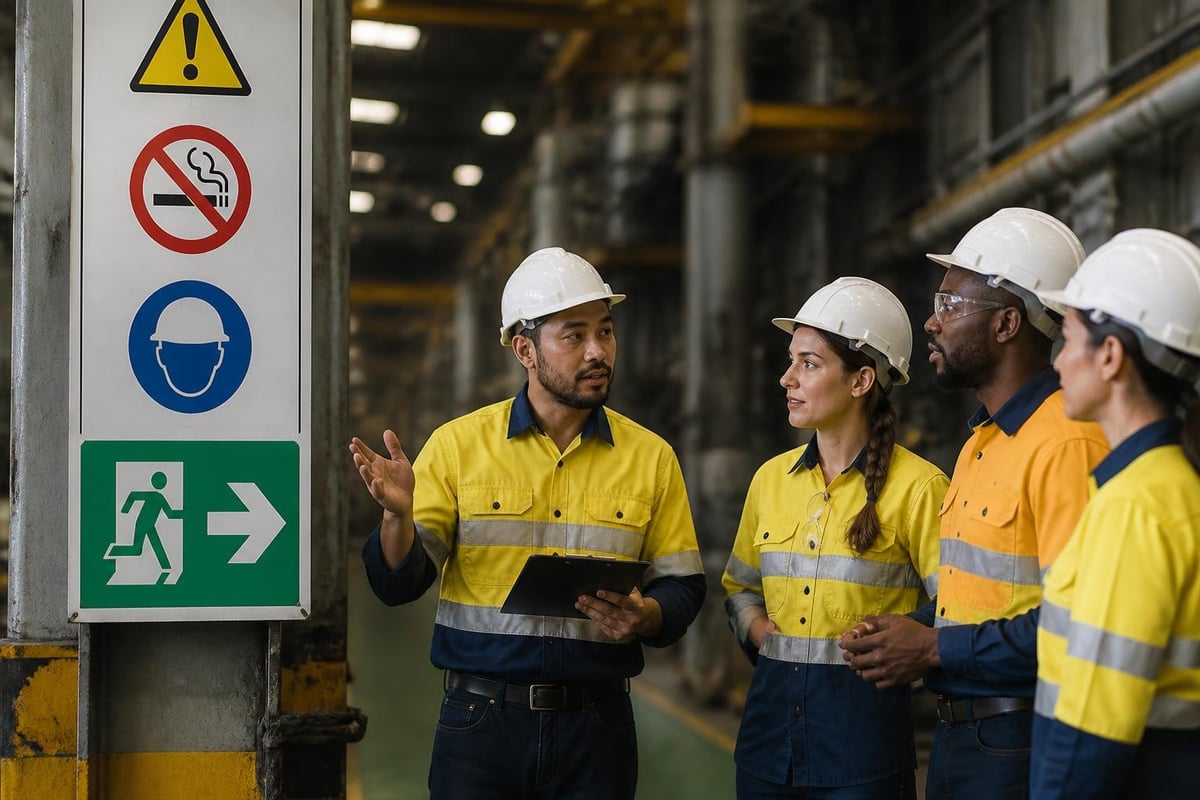
Induction training should familiarise new employees with the facility's safety sign system, explaining the meaning of different colours, shapes, and symbols. Walking tours that point out actual signs in context reinforce classroom instruction.
Refresher programmes maintain awareness and introduce employees to new signage as facilities evolve. These sessions can address sign compliance issues observed during audits or following near-miss incidents.
Building a Safety-Conscious Culture
Beyond formal training, organisations must foster cultures where safety signs receive attention and respect. This involves:
- Leadership demonstrating compliance with safety signs
- Encouraging workers to report damaged or missing signs
- Recognising teams that maintain excellent safety signage
- Investigating incidents where sign disregard contributed to accidents
- Involving employees in safety sign placement decisions
When workers understand that safety signs protect them personally, compliance increases naturally.
Specialised Applications and Industry-Specific Requirements
Different industries face unique hazards requiring specialised safety signage approaches. Understanding sector-specific requirements ensures compliance and optimal protection.
Construction and Industrial Sites
Construction environments present constantly changing hazards as projects progress. Safety signs must adapt accordingly, with temporary signage marking new excavations, overhead work zones, or equipment operations. High-visibility signs in fluorescent colours help workers notice warnings amidst visual clutter.
Heavy machinery requires multiple safety signs indicating operating hazards, required clearances, and mandatory PPE. Vehicle routes need clear marking to separate pedestrian and mobile equipment zones.
Chemical and Laboratory Environments
Facilities handling hazardous substances require detailed chemical safety signs displaying hazard classifications, required precautions, and emergency procedures. European Commission guidelines provide comprehensive frameworks for chemical hazard communication through signage.
NFPA diamond labels communicate fire, reactivity, and health hazards through numerical ratings and colour coding. Emergency shower and eyewash station signs must be highly visible from any point where chemical exposure might occur.
Healthcare and Public Facilities
Medical facilities require signs for biological hazards, radiation areas, oxygen storage, and medical gas systems. Wayfinding signage helps visitors navigate whilst emergency signage guides evacuations.
Accessibility requirements demand particular attention in public-facing facilities. Tactile signs with braille enable visually impaired individuals to identify rooms and facilities independently.
Technology Integration and Modern Innovations
Digital technology increasingly enhances traditional safety signage capabilities. Electronic displays provide dynamic messaging that adapts to current conditions, displaying different warnings based on operational status or detected hazards.
LED safety signs offer superior visibility and lower energy consumption than conventional illuminated signs. Their brightness ensures visibility even in bright ambient light, whilst programmable features enable flashing alerts during emergencies.
Photoluminescent advances have improved glow duration and brightness, making modern materials far more effective than earlier generations. These passive systems require no power, making them ideal for emergency applications where electrical failure might occur.
Smart signage systems integrate with building management and safety systems, automatically displaying relevant warnings when sensors detect smoke, gas leaks, or other hazards. These intelligent signs can also log acknowledgements or track compliance in controlled-access areas.
Digital Signage for Safety Communication
Large-format digital displays supplement physical safety signs with detailed safety messages, training reminders, and real-time hazard updates. These screens can display safety metrics, incident-free day counters, and recognition for safe behaviours, reinforcing safety culture continuously.
Integration with emergency alert systems enables instant facility-wide notifications during crises, guiding appropriate responses through visual and textual instructions.
| Traditional Safety Signs | Digital/Smart Safety Signs |
|---|---|
| Static, permanent messaging | Dynamic, adaptive content |
| No power requirements | Requires electrical infrastructure |
| Lower initial cost | Higher initial investment |
| Universal recognition | May require familiarisation |
| Proven reliability | Dependent on system uptime |
| Limited information capacity | Extensive detail possible |
Global Standards and International Harmonisation
As businesses operate across borders, harmonised safety signage standards facilitate consistent protection and reduce confusion. International organisations work continuously to align safety sign specifications worldwide.
ISO 7010 establishes registered safety signs recognised globally, providing consistent symbols for common hazards and requirements. Adopting ISO-compliant signs ensures workers familiar with these standards recognise hazards regardless of location.
Colour standardisation through ISO 3864 creates universal associations between colours and safety meanings. Red consistently indicates prohibition or fire equipment, yellow signals caution, blue mandates action, and green directs to safety or emergency resources.
Regional variations still exist, particularly regarding text language and specific regulatory requirements. Multinational organisations must navigate these differences whilst maintaining maximum consistency across locations.
Safety signs represent a fundamental element of workplace protection, communicating critical information that prevents accidents and saves lives. From selecting appropriate categories and materials to implementing comprehensive maintenance programmes, every aspect of safety signage demands careful attention. Whether you're establishing safety signage for a new facility, updating existing signs, or seeking innovative solutions for complex environments, Signshoponline provides the expertise and product range to meet your safety communication needs effectively.


