

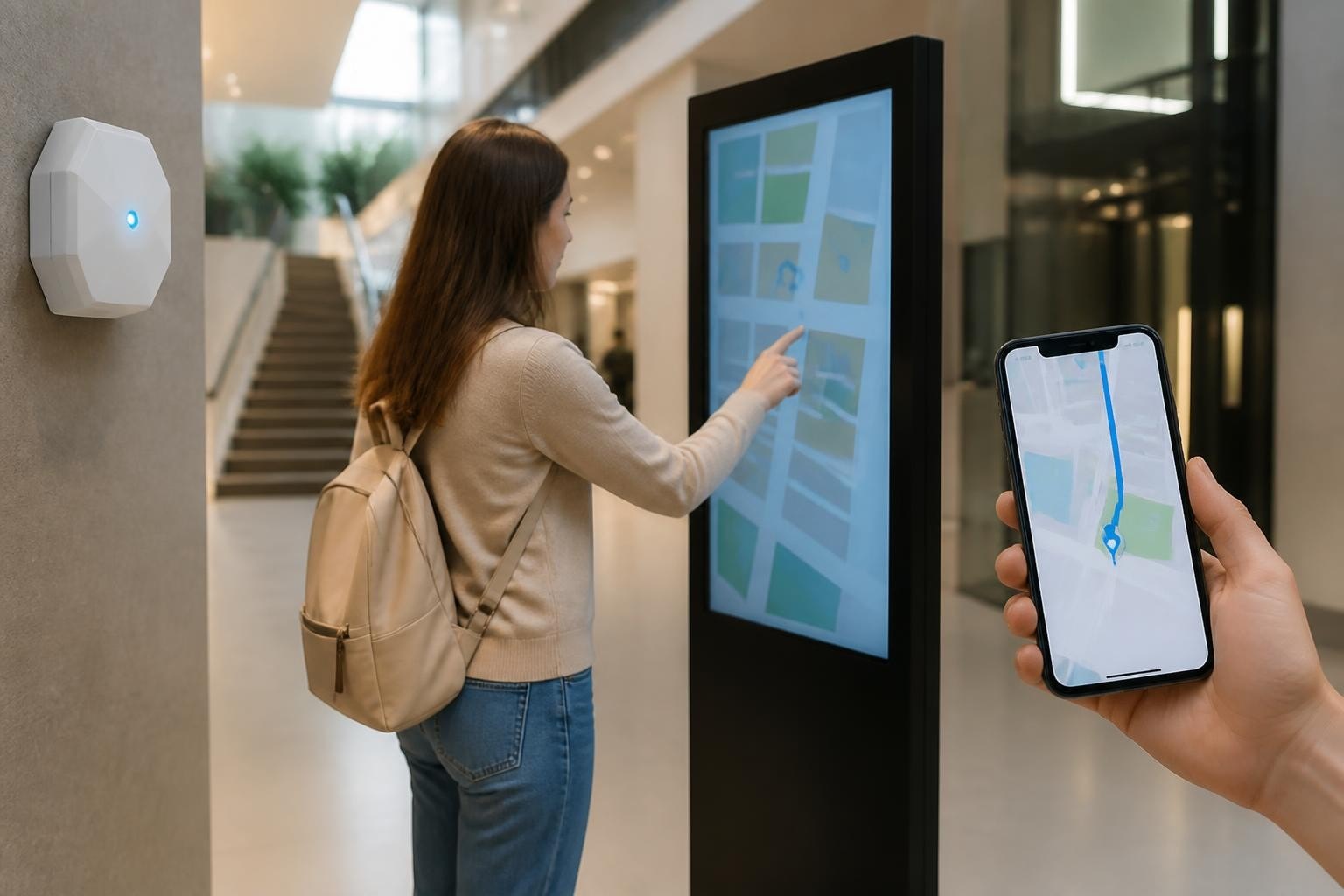
Modern facilities face a persistent challenge: helping visitors navigate increasingly complex environments efficiently and independently. Wayfinding digital solutions have emerged as the answer, transforming static directional signage into dynamic, intelligent navigation systems that respond to user needs in real time. From hospitals and universities to shopping centres and corporate campuses, digital wayfinding technology combines interactive displays, mobile applications, and location-based services to create seamless navigation experiences that reduce confusion, improve satisfaction, and enhance operational efficiency.
Understanding Wayfinding Digital Technology
Wayfinding digital encompasses any electronic system designed to help people orient themselves and navigate through physical spaces. Unlike traditional printed directional signs, these solutions leverage screens, sensors, and software to deliver personalised, context-aware guidance.
The core components of a wayfinding digital system typically include interactive kiosks, mobile applications, digital displays, and supporting infrastructure such as beacons or Wi-Fi positioning. These elements work in concert to provide visitors with multiple touchpoints for receiving navigation assistance throughout their journey.
Key Technologies Powering Digital Wayfinding
Several technological foundations enable effective wayfinding digital implementations:
- Interactive touchscreen kiosks serve as central information hubs where visitors search destinations and receive visual directions
- Mobile applications extend navigation to users' personal devices, offering turn-by-turn guidance and notifications
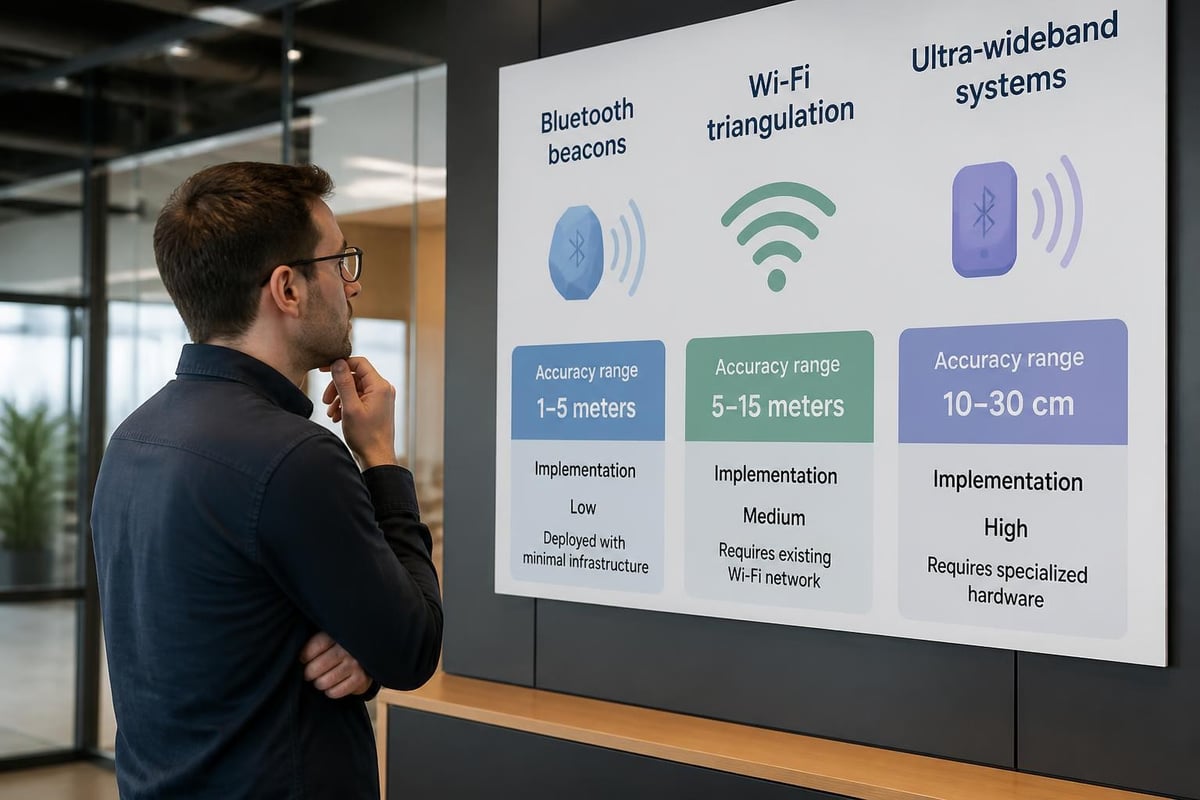
- Bluetooth Low Energy (BLE) beacons enable precise indoor positioning for location-aware features
- Wi-Fi positioning systems provide broader coverage for approximate location tracking
- Cloud-based content management allows real-time updates to maps, directories, and routing information
Recent research has shown significant advances in positioning accuracy. According to a comprehensive survey on Bluetooth indoor localisation, modern BLE implementations can achieve positional accuracy within one to three metres, making them highly suitable for guiding visitors through corridors and multi-floor buildings.
Benefits of Implementing Wayfinding Digital Solutions
Organisations that deploy wayfinding digital systems report measurable improvements across multiple dimensions. Enhanced visitor experience stands as the most immediate benefit, with reduced frustration and time spent searching for destinations.
Operational and Business Advantages
| Benefit Category | Specific Advantages | Measurable Outcomes |
|---|---|---|
| Visitor Experience | Reduced confusion, faster navigation, increased confidence | 30-50% reduction in "lost" visitor enquiries |
| Staff Efficiency | Fewer directional questions, redeployed resources | 20-40% decrease in wayfinding-related staff interactions |
| Accessibility | Multi-language support, visual/audio options, adaptive routing | Compliance with accessibility standards, broader audience reach |
| Revenue Opportunity | Promotional content, tenant directories, advertising space | Additional revenue streams from digital displays |
Healthcare facilities particularly benefit from wayfinding digital technology. A recent study on IoT-based wayfinding for hospital visitors demonstrated that digital navigation systems reduced patient stress levels and improved appointment punctuality whilst simultaneously decreasing the workload on reception staff.
The dynamic nature of digital systems offers another significant advantage: instant updates. When departments relocate, events change venues, or temporary closures occur, administrators can update the entire wayfinding digital network within minutes rather than waiting weeks for new printed signs.
Planning Your Wayfinding Digital Deployment
Successful implementation begins with thorough planning and stakeholder engagement. Understanding user journeys, identifying pain points, and mapping traffic patterns form the foundation of an effective strategy.
Essential Planning Steps
- Conduct a wayfinding audit to identify where visitors currently struggle with navigation
- Map user personas and journeys to understand different navigation needs and preferences
- Assess technical infrastructure including network capacity, power availability, and mounting locations
- Define content structure for directories, maps, and routing algorithms
- Establish governance processes for maintaining accuracy and updating information
The IEEE Technology Navigator overview on Indoor Positioning Systems provides valuable technical context for evaluating different positioning technologies based on accuracy requirements, budget constraints, and environmental factors.
Budget considerations must balance initial capital investment against long-term operational costs. High-quality interactive kiosks, robust content management platforms, and professional installation represent significant upfront expenses, but the reduction in printed signage updates and staff time typically delivers return on investment within two to three years.

Design Principles for Effective Digital Wayfinding
User interface design makes or breaks the wayfinding digital experience. Visitors of all ages and technical abilities must be able to use the system intuitively, without instruction or assistance.
Core Design Requirements
Clear visual hierarchy guides users through the search and routing process naturally. Starting with a simple search or browse interface, the system should present options logically, confirm selections unambiguously, and display routes with unmistakable visual cues.
Typography and contrast deserve particular attention. The U.S. Access Board's Guide to the ADA Standards for signage provides detailed specifications for text height, spacing, and colour contrast that ensure legibility for visitors with visual impairments. Whilst these standards were written for physical signs, their principles apply equally to digital displays.
Colour coding serves as a powerful wayfinding tool when implemented consistently. Assigning distinct colours to building wings, departments, or zones helps visitors orient themselves and recognise landmarks. However, designers must never rely on colour alone, as approximately 8% of males and 0.5% of females experience colour vision deficiency.
Multi-language support extends accessibility to international visitors and diverse communities. Leading wayfinding digital systems detect user language preferences automatically or offer prominent language selection at the initial screen.
Integration with Mobile Devices and Applications
The smartphone in every visitor's pocket represents both an opportunity and an expectation. Modern wayfinding digital strategies extend beyond fixed kiosks to deliver navigation through personal devices.
Mobile Wayfinding Approaches
Dedicated mobile applications offer the richest feature set, including:
- Turn-by-turn navigation with vibration or audio cues
- Personalised routing based on accessibility needs or preferences
- Integration with calendars to auto-navigate to appointments
- Offline map caching for environments with poor connectivity
- Push notifications for updates, delays, or relevant information
Web-based progressive applications provide similar functionality without requiring app installation, reducing barriers to adoption whilst maintaining much of the native app experience.
QR codes bridge physical and digital navigation by allowing visitors to scan codes on traditional signage to receive mobile directions. This hybrid approach combines the visibility of physical signs with the intelligence of wayfinding digital technology.
The W3C WAI supplemental guidance on supporting wayfinding offers detailed patterns for ensuring digital wayfinding interfaces work effectively with screen readers, voice control, and other assistive technologies, making navigation accessible to visitors with disabilities.
Content Management and Maintenance
Behind every effective wayfinding digital system lies a robust content management infrastructure. Map accuracy, directory currency, and route optimisation require ongoing attention and systematic processes.
Critical Content Elements
| Content Type | Update Frequency | Primary Challenges |
|---|---|---|
| Floor plans and maps | Quarterly or after renovations | Maintaining accuracy across multiple floors and buildings |
| Directories (people, departments, services) | Weekly or daily | Coordinating with HR systems and space management databases |
| Points of interest (cafés, toilets, exits) | Monthly | Verifying operational status and temporary closures |
| Routing logic | As needed | Accounting for accessibility requirements and construction |
| Promotional content | Daily to weekly | Balancing helpful information with revenue opportunities |
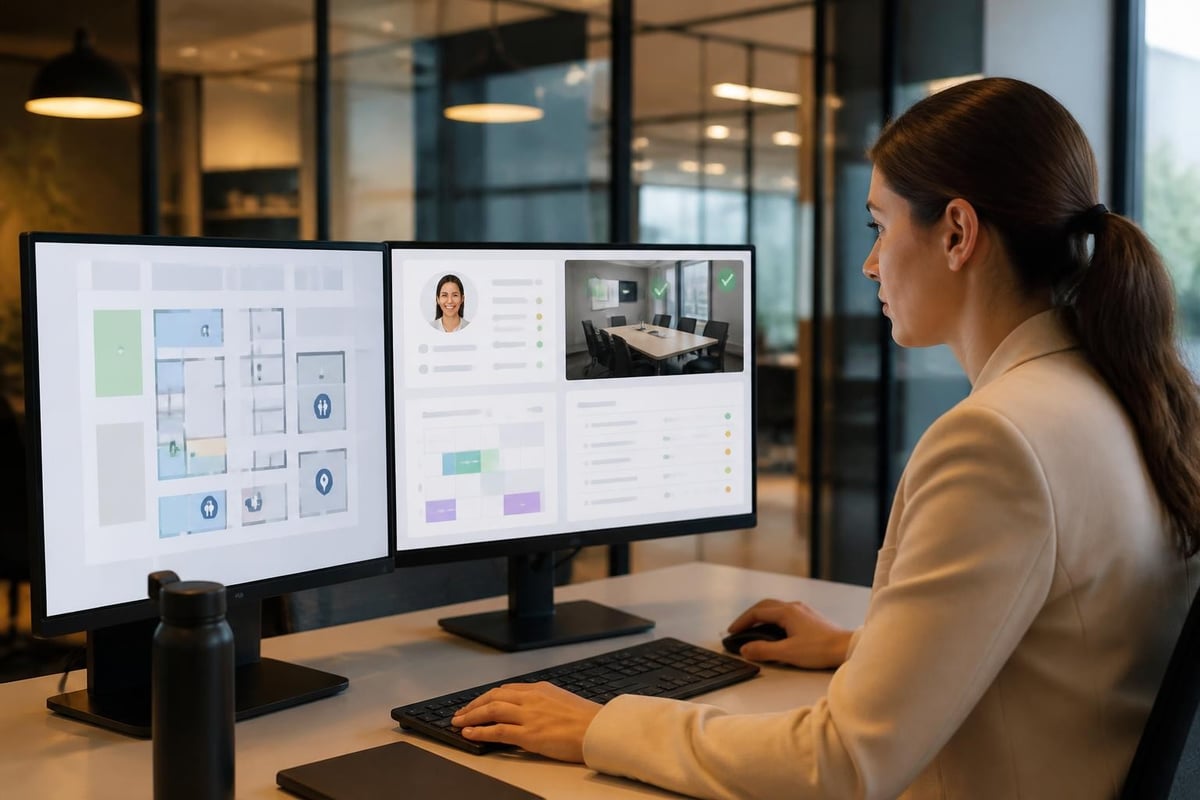
Integration with existing systems streamlines content management significantly. Connecting the wayfinding digital platform to room booking systems, employee directories, and facility management databases ensures information updates automatically rather than requiring manual intervention.
For organisations implementing indoor GIS systems through platforms like Esri ArcGIS Indoors, the content management capabilities extend beyond wayfinding to encompass space planning, asset tracking, and occupancy analysis, creating additional value from the spatial data infrastructure.
Technical Considerations and Infrastructure
The technical foundation supporting wayfinding digital solutions requires careful specification to ensure reliability, performance, and scalability.
Network infrastructure stands as the most critical dependency. Interactive kiosks and digital displays require consistent, high-bandwidth connectivity to deliver responsive experiences and real-time content updates. Wi-Fi networks must provide comprehensive coverage, particularly in areas where visitors will use mobile wayfinding applications.
Hardware Selection Criteria
Commercial-grade touchscreen kiosks designed for public environments withstand heavy use and resist vandalism far better than consumer displays. Key specifications include:
- Screen size and resolution: 32-55 inches with minimum 1920×1080 resolution for kiosks; 43-75 inches for passive digital directories
- Touch technology: Projected capacitive touch for responsiveness and durability
- Brightness: Minimum 350 cd/m² for indoor environments, 2,500+ cd/m² for areas with direct sunlight
- Operating temperature: Extended range for locations near entrances or with variable climate control
- Mounting and accessibility: ADA-compliant height and reach ranges, secure mounting systems
Power over Ethernet (PoE) capabilities simplify installation by delivering both network connectivity and electrical power through a single cable, reducing infrastructure costs and improving reliability.
For developers building custom wayfinding applications, Mapbox's indoor mapping documentation provides comprehensive technical guidance on implementing floor selectors, 3D building visualisation, and routing APIs that create sophisticated indoor navigation experiences.
Measuring Success and Optimising Performance
Data-driven optimisation transforms good wayfinding digital systems into exceptional ones. Analytics platforms capture user interactions, revealing usage patterns and improvement opportunities.
Key Performance Indicators
- Search success rate: Percentage of searches that result in route display
- Average interaction time: How long visitors spend finding their destination
- Popular destinations: Most frequently searched locations
- Abandonment rate: Sessions ended without completing navigation
- User satisfaction scores: Direct feedback through post-interaction surveys
Heat mapping shows which kiosk locations receive the most traffic, informing decisions about additional deployment sites. Path analysis reveals common navigation patterns, highlighting where visitors struggle or take inefficient routes.
A/B testing different interface designs, search algorithms, or map visualisations enables evidence-based refinement. Small improvements in search relevance or route clarity compound into significantly better user experiences.
Advanced implementations leverage machine learning to improve search accuracy and routing intelligence over time. Recent research on Wi-Fi and machine learning for indoor positioning demonstrates how algorithms can adapt to environmental changes and user behaviour patterns to maintain high positioning accuracy.
Integration with Physical Signage
Wayfinding digital technology doesn't replace traditional signage entirely; rather, it works best as part of an integrated navigation ecosystem. Physical signs provide passive guidance that requires no interaction, whilst digital systems offer detailed, personalised routing for complex journeys.
Strategically placed fabricated 3D signage creates visual landmarks that reinforce digital directions, helping visitors confirm they're on the correct path. Illuminated channel letters identifying departments or zones become reference points that digital systems can incorporate into verbal or written directions.

Consistency between physical and digital wayfinding elements strengthens the overall navigation system. Colour schemes, terminology, zone designations, and iconography should align across all touchpoints, creating a cohesive language that visitors quickly learn and trust.
Transitional signage at key decision points complements wayfinding digital solutions by catching the attention of visitors who might not have interacted with a kiosk or mobile app. Simple directional signs with arrow graphics and distance indicators guide people toward major destinations whilst digital systems handle the complexity of routing to specific rooms or offices.
Industry-Specific Applications
Different sectors face unique wayfinding challenges that shape how they implement digital solutions.
Healthcare Environments
Hospitals and medical centres contend with stressed, unfamiliar visitors navigating time-sensitive appointments. Wayfinding digital systems in healthcare settings prioritise:
- Direct integration with appointment scheduling systems for personalised greeting and auto-routing
- Multilingual support for diverse patient populations
- Accessible interfaces for elderly users and those with disabilities
- Clear visual differentiation between emergency, outpatient, and administrative areas
- Real-time updates for department relocations or temporary closures
Educational Institutions
Universities and large schools serve populations that change substantially each academic year. Campus wayfinding digital deployments focus on:
- Event-driven routing to lectures, examinations, and social activities
- Integration with timetabling systems and student portals
- Outdoor-to-indoor navigation covering entire campuses
- Accommodation finding for visiting parents and prospective students
- Seasonal variations for term-time versus holiday periods
Retail and Hospitality
Shopping centres, airports, and entertainment venues use wayfinding digital technology to enhance the customer experience whilst creating revenue opportunities:
- Tenant directories with promotional content and offers
- Queue time estimates and capacity management
- Parking space finding and vehicle location recall
- Dwell time optimisation to maximise customer engagement
- Analytics on traffic patterns to inform leasing decisions
Each sector's specific requirements influence technology selection, interface design, and content strategy, but the fundamental principles of clear communication, consistent information, and accessible design apply universally.
Future Trends in Wayfinding Digital Technology
The wayfinding digital landscape continues evolving rapidly as new technologies mature and user expectations shift.
Augmented reality (AR) navigation represents the next frontier, overlaying directional arrows and destination markers onto the real-world view through smartphone cameras. Whilst still emerging, AR wayfinding offers unprecedented clarity by showing exactly where to turn and which door to enter.
Voice-activated wayfinding interfaces respond to the growing comfort with voice assistants and offer hands-free operation valuable for visitors carrying luggage, pushing wheelchairs, or managing children. Natural language processing enables conversational search: "Where's the nearest coffee shop?" rather than navigating categorical menus.
Predictive wayfinding anticipates user needs based on context. Calendar integration might automatically display directions to your next appointment five minutes before it starts. Behavioural patterns could trigger helpful suggestions: visitors who searched for the café might receive a notification about the gift shop on their route.
Ultra-wideband (UWB) positioning technology promises centimetre-level accuracy, enabling precise turn-by-turn guidance through complex multi-corridor environments. As more smartphones incorporate UWB chips, this technology will become increasingly accessible for mass deployment.
Personalisation engines will tailor the entire wayfinding experience to individual preferences and accessibility requirements, storing mobility aids, language preferences, and routing priorities to deliver customised guidance automatically.
Accessibility and Inclusive Design
Creating wayfinding digital solutions that serve all users regardless of ability represents both an ethical imperative and, in many jurisdictions, a legal requirement.
Universal Design Principles
Inclusive wayfinding extends beyond minimum compliance to embrace universal design thinking:
- Multiple sensory channels: Visual, audio, and tactile output options accommodate different abilities
- Adjustable interfaces: Font sizes, contrast levels, and interaction speeds that users can customise
- Simple language: Clear, concise instructions at appropriate reading levels
- Consistent operation: Predictable interaction patterns across all touchpoints
- Alternative routing: Options for wheelchair users, those avoiding stairs, or requiring accessible facilities
Audio output with directional headphone support enables blind and low-vision visitors to navigate independently. Haptic feedback on touchscreens confirms selections for users who struggle with fine motor control.
Screen reader compatibility requires proper semantic HTML structure, descriptive alternative text for images and icons, and logical tab order throughout the interface. Testing with actual assistive technology users identifies usability barriers that developers might overlook.
The cognitive load imposed by wayfinding systems deserves particular attention. Visitors experiencing stress, illness, or unfamiliarity with technology need interfaces that reduce rather than increase mental burden. Progressive disclosure of information, clear visual hierarchy, and prominent "start over" options support users who become confused or make mistakes.
Procurement and Vendor Selection
Choosing the right wayfinding digital solution provider significantly impacts long-term success and satisfaction.
Evaluation Criteria
| Factor | Key Considerations | Questions to Ask |
|---|---|---|
| Platform Capabilities | Feature completeness, scalability, extensibility | Does it support multi-building campuses? Can it integrate with our existing systems? |
| User Experience | Interface quality, accessibility, mobile support | Can we see user testing results? What accessibility certifications does it have? |
| Content Management | Ease of updates, workflow tools, API access | How quickly can we update directories? Can department managers update their own areas? |
| Support and Training | Documentation, training programmes, ongoing assistance | What training is included? What are response times for technical issues? |
| Total Cost of Ownership | Licensing, hardware, installation, maintenance | What are the annual licensing costs? Are map updates included or additional? |
Request demonstrations with your own facility maps and directory data to evaluate how well the solution handles your specific complexity. Generic demos with simple building layouts may not reveal limitations that become apparent in your environment.
Reference customers operating similar facilities provide invaluable insights into real-world performance, support quality, and hidden costs or challenges. Ask specifically about update processes, user acceptance, and what they would change if implementing again.
Wayfinding digital technology has evolved from a luxury to an essential component of modern facility management, delivering measurable benefits in visitor satisfaction, operational efficiency, and accessibility compliance. Whether you're planning your first digital wayfinding deployment or upgrading existing systems, Signshoponline offers comprehensive signage solutions including digital displays, interactive kiosks, and complementary physical wayfinding elements that work together to create seamless navigation experiences tailored to your specific environment and user needs.


