


Roadsigns form the backbone of modern traffic management systems, serving as silent guardians that guide millions of drivers, cyclists, and pedestrians safely through complex road networks every day. These carefully designed visual communication tools transcend language barriers, delivering critical information in split seconds through universally recognised symbols, colours, and shapes. Understanding the intricate world of roadsigns reveals not only their essential role in preventing accidents and managing traffic flow but also the sophisticated design principles and international standards that govern their creation and deployment.
The Essential Role of Roadsigns in Modern Transportation
Roadsigns represent one of humanity's most successful attempts at creating a universal visual language. Every second, drivers encounter multiple signs that require immediate interpretation and response, from regulatory commands to warning alerts and directional guidance.
The effectiveness of roadsigns lies in their ability to communicate complex information instantly. A driver travelling at 100 kilometres per hour covers approximately 28 metres per second, leaving mere moments to process visual information, make decisions, and execute appropriate actions. This time constraint drives the fundamental design philosophy behind all traffic signage: clarity, consistency, and immediate recognition.
Research documented in the Manual on Uniform Traffic Control Devices demonstrates that standardised roadsigns reduce accident rates significantly by eliminating ambiguity and creating predictable road environments. When drivers know exactly what to expect from specific sign shapes, colours, and symbols, they can respond more quickly and appropriately to changing road conditions.

Categories of Traffic Signage
Modern road networks employ several distinct categories of roadsigns, each serving specific communication purposes:
- Regulatory signs enforce traffic laws and inform road users of legal requirements
- Warning signs alert drivers to potential hazards or changes in road conditions ahead
- Guide signs provide directional information, distance markers, and route identification
- Temporary signs communicate construction zones, detours, and short-term road changes
- Informational signs offer services, facilities, and general road-related information
Understanding these categories helps both drivers and sign manufacturers appreciate the complexity of comprehensive traffic management systems. Each category follows distinct design conventions that enable rapid visual categorisation even before the specific message is processed.
International Standards and Design Principles
The Vienna Convention on Road Signs and Signals established in 1968 created a framework for international standardisation of roadsigns. This treaty aimed to facilitate international road traffic by establishing uniform sign systems across participating nations.
Shape and Colour Conventions
Roadsigns utilise geometric shapes as the first level of communication, allowing drivers to categorise sign types before reading specific content. The shape convention includes:
| Shape | Primary Use | Examples |
|---|---|---|
| Circle | Regulatory commands | Speed limits, prohibitions |
| Triangle | Warnings | Hazards, intersections |
| Rectangle | Information/guidance | Directional signs, services |
| Octagon | Mandatory stop | Stop signs (specific regulation) |
| Diamond | Warning (some regions) | Hazard alerts, construction |
Colour psychology plays an equally critical role in roadsigns design. Red universally signals prohibition or danger, requiring immediate attention. Yellow or amber indicates caution and potential hazards ahead. Blue typically denotes mandatory instructions or informational content, whilst green guides drivers towards destinations and directions.
The combination of shape and colour creates redundant communication channels. Even if visibility conditions impair colour perception, shape recognition provides critical information, and vice versa.
Retroreflectivity and Visibility Standards
Perhaps no aspect of roadsigns proves more critical than their visibility under varying conditions. Modern traffic management demands that signs remain legible during darkness, adverse weather, and challenging lighting situations.
Retroreflective materials have revolutionised road safety by returning light directly towards its source. When vehicle headlights illuminate properly designed roadsigns, the reflected light travels back along nearly the same path, making signs appear to glow in the darkness. This phenomenon significantly extends reaction time and improves night-time road safety.
Standards for retroreflectivity establish minimum performance requirements measured in candelas per lux per square metre (cd/lx/m²). These specifications ensure that signs maintain adequate visibility throughout their service life. Regular inspections and replacement schedules based on retroreflectivity measurements help maintain optimal sign performance.
Environmental Considerations
Roadsigns face relentless environmental challenges:
- Ultraviolet radiation degrades materials and fades colours over time
- Temperature fluctuations cause expansion, contraction, and material stress
- Moisture and precipitation promote corrosion and delamination
- Wind loading creates structural stress on mounting systems
- Vandalism and impact damage sign faces and supports
Material selection must account for all these factors whilst maintaining cost-effectiveness and longevity. Modern roadsigns typically employ aluminium substrates with specialised coatings and retroreflective sheeting designed for extended outdoor exposure.

Digital and Dynamic Signage Solutions
The integration of technology has transformed static roadsigns into dynamic communication platforms. Variable message signs (VMS) and digital displays enable real-time updates responding to changing traffic conditions, weather events, and emergency situations.
According to research on colour-changeable variable message signs, dynamic signage offers significant advantages in managing traffic flow and communicating time-sensitive information. These systems can display speed advisories, lane closures, accident warnings, and alternative route suggestions based on current conditions.
Digital roadsigns utilise LED technology to create bright, programmable displays visible in direct sunlight. Advanced systems connect to traffic management centres, receiving real-time data from sensors, cameras, and other monitoring equipment throughout the road network.
The evolution from static to dynamic signage presents both opportunities and challenges. While digital systems offer unprecedented flexibility, they also require robust power supplies, sophisticated control systems, and regular maintenance. Lightbox signage technology represents an intermediate solution, providing illuminated visibility enhancement whilst maintaining static messaging for consistent, predictable communication in commercial and industrial applications.
Human Factors and Cognitive Processing
Effective roadsigns design requires deep understanding of human perception, attention, and decision-making processes. Drivers operate in complex, information-rich environments where cognitive load must be carefully managed to prevent overload and maintain safety.
Research documented in NCHRP reports on signage human factors reveals critical insights about sign placement, message length, and information hierarchy. Key findings include:
- Drivers require 0.5 to 2.0 seconds to detect, recognise, and read a road sign
- Message length should not exceed what can be processed in available viewing time
- Sign placement must account for sight distance, approach speed, and decision points
- Multiple signs in close proximity create competition for attention and reduce effectiveness
Legibility and Typography
Font selection dramatically impacts roadsigns readability. Specialised typefaces designed specifically for traffic applications maximise legibility at distance and speed. Character height, stroke width, spacing, and contrast all contribute to reading performance under challenging conditions.
The relationship between viewing distance, character height, and legibility follows established formulas that guide sign sizing. Generally, minimum letter height in millimetres equals viewing distance in metres divided by a visibility factor ranging from 25 to 40, depending on sign type and importance.
Placement and Mounting Strategies
Strategic placement determines whether roadsigns successfully communicate their intended messages. Positioning requires consideration of numerous factors:
| Factor | Consideration | Impact on Placement |
|---|---|---|
| Sight distance | Required viewing time | Distance before decision point |
| Lateral offset | Clear zone requirements | Distance from travel lane |
| Mounting height | Visibility, vandalism | Vertical position above roadway |
| Orientation | Sun glare, headlight angles | Sign face angle |
| Background | Visual clutter, contrast | Mounting location selection |
Mounting systems must withstand wind loads whilst maintaining precise orientation. Breakaway supports in certain applications protect vehicle occupants during impacts, whilst robust foundations prevent rotation and settlement over time. Directional signs in commercial environments apply similar principles, guiding customers through car parks and facility entrances with strategic placement and clear visibility.
Maintenance and Lifecycle Management
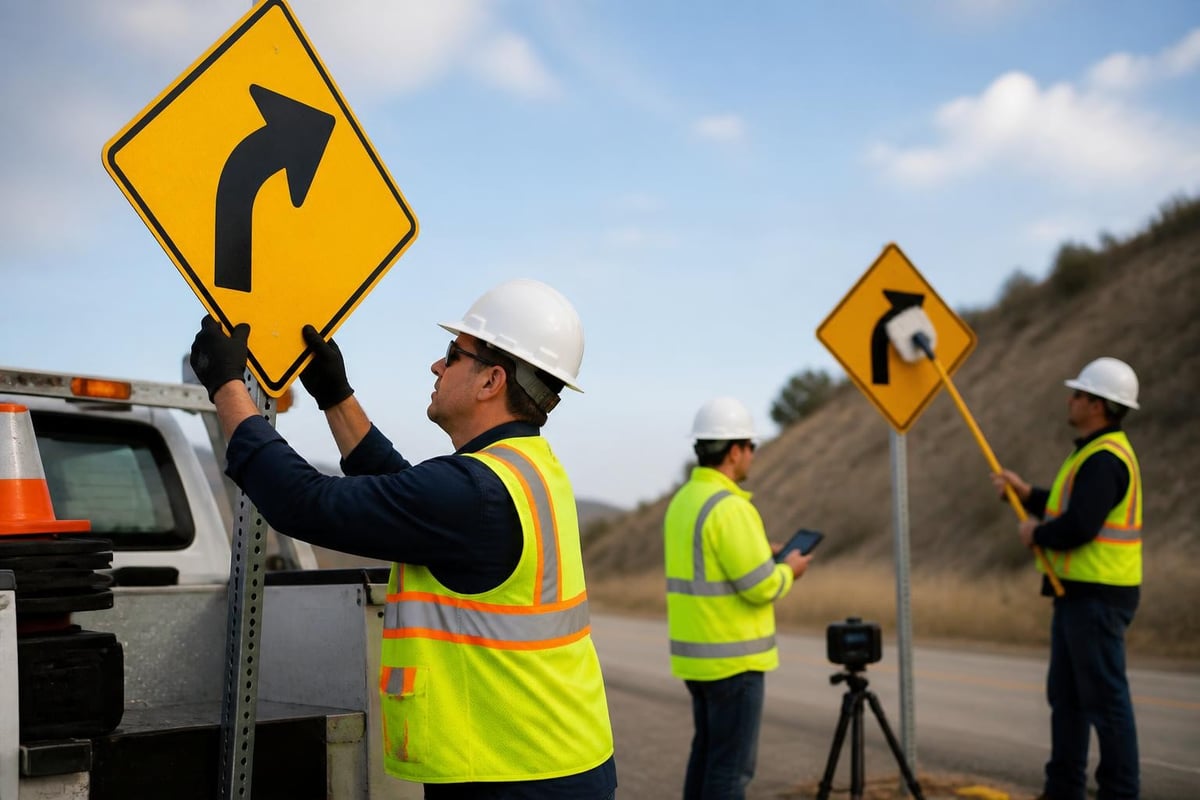
Roadsigns require systematic maintenance programmes to ensure continued effectiveness. Degradation occurs gradually, often escaping casual notice until signs fail to meet minimum performance standards.
Inspection Protocols
Regular inspections identify signs requiring cleaning, repair, or replacement. Inspection programmes typically include:
- Visual assessment of sign face condition, mounting integrity, and visibility
- Retroreflectivity measurements using calibrated instruments
- Documentation of deficiencies and maintenance actions
- Prioritisation based on sign importance and condition
- Scheduled replacement before failure occurs
Proactive maintenance proves more cost-effective than reactive replacement whilst maintaining consistent safety levels across the road network.
Global Perspectives on Road Safety
The World Health Organization's road safety resources emphasise that effective traffic signing constitutes a critical component of comprehensive road safety systems. Countries with well-maintained, standardised roadsigns demonstrate significantly lower accident rates than those with inconsistent or deteriorated signage infrastructure.
International harmonisation efforts continue advancing towards greater consistency in sign design and application. While complete global standardisation remains elusive due to regional variations and established practices, convergence around core principles improves safety for international travellers and establishes best practices for emerging transportation systems.
Regional Variations and Adaptations
Despite international standards, regional variations persist based on local traffic patterns, cultural factors, and historical precedent. Some jurisdictions employ bilingual signs, whilst others incorporate unique symbols relevant to local conditions. Climate considerations also drive material and design adaptations in extreme environments.
Manufacturing Excellence and Quality Control
Professional roadsigns manufacturing demands precision, consistency, and adherence to exacting specifications. Quality control processes verify dimensional accuracy, colour matching, retroreflectivity performance, and durability.
Modern manufacturing facilities employ computer-controlled cutting systems, precision screen printing, and automated application of retroreflective sheeting. Each production stage includes inspection points ensuring compliance with applicable standards and specifications.
Material Selection and Specifications
Substrate materials must provide adequate strength, flatness, and corrosion resistance throughout the expected service life. Aluminium alloys dominate due to their excellent strength-to-weight ratio, weather resistance, and compatibility with retroreflective sheeting systems.
Retroreflective sheeting grades range from engineering grade for temporary applications to diamond grade microprismatic materials for critical permanent installations. Selection depends on sign importance, expected service life, and environmental conditions.
Integration with Broader Signage Systems
Whilst roadsigns serve specific traffic management functions, they exist within broader visual communication ecosystems. Consistency in design language, quality standards, and professional execution across all signage types strengthens overall effectiveness.
Commercial properties benefit from applying traffic signing principles to internal wayfinding systems. Clear hierarchy, consistent symbology, and strategic placement create intuitive navigation experiences. Billboard signs and other commercial displays complement rather than compete with regulatory traffic signage when properly designed and positioned.
Future Developments and Emerging Technologies
Connected vehicle technology promises revolutionary changes in how roadsigns communicate with drivers. Vehicle-to-infrastructure (V2I) systems enable direct digital transmission of sign information to onboard displays, potentially supplementing or eventually replacing some physical signage.
Autonomous vehicles present both challenges and opportunities for roadsigns. While self-driving systems rely primarily on digital mapping and sensor data, physical signs provide redundant information and serve human drivers sharing the same roads during the extended transition period.
Smart materials research explores signs that adapt to environmental conditions, adjusting brightness, colour temperature, or content based on ambient light, weather, or traffic patterns. These innovations may enhance effectiveness whilst reducing energy consumption and maintenance requirements.
Professional Implementation Considerations
Successful roadsigns programmes require coordination among multiple stakeholders including traffic engineers, sign designers, manufacturers, installers, and maintenance personnel. Each contributor brings specialised knowledge essential to overall system performance.
Professional certification programmes ensure that individuals responsible for sign planning, design, and installation possess necessary competencies. Continuing education keeps practitioners current with evolving standards, materials, and best practices.
Budget allocation must account for initial installation costs, ongoing maintenance expenses, and periodic replacement. Lifecycle cost analysis often reveals that investing in higher-quality materials and professional installation reduces long-term expenses whilst improving performance and safety outcomes.
Roadsigns represent far more than simple traffic control devices; they embody sophisticated design principles, rigorous standards, and ongoing technological innovation that collectively save countless lives every year. Whether you require traffic management solutions, commercial wayfinding, or branded displays, Signshoponline delivers professional signage products manufactured to exacting standards with materials and craftsmanship that ensure lasting performance and effectiveness.


