

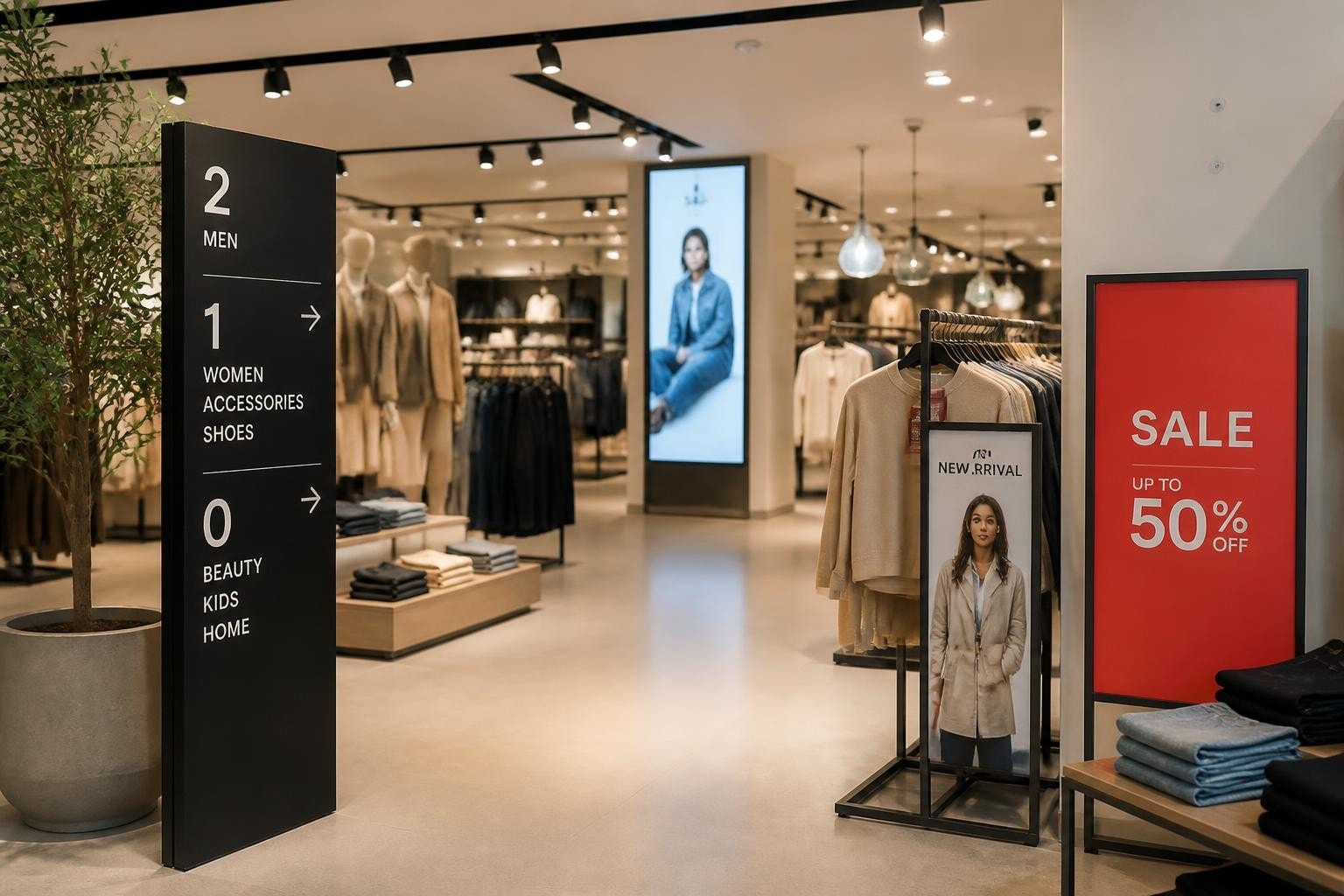
Retail environments demand clear, compelling communication at every customer touchpoint. Signage in retail serves multiple critical functions simultaneously: guiding shoppers through physical spaces, highlighting promotional offers, reinforcing brand identity, and ultimately influencing purchasing decisions. When executed strategically, retail signage transforms ordinary shopping trips into engaging experiences that drive conversion, build loyalty, and differentiate stores from competitors. Understanding the psychology, design principles, and practical applications of retail signage has become essential for businesses seeking to maximise their physical presence in an increasingly digital marketplace.
The Strategic Role of Signage in Retail Environments
Signage in retail functions as a silent salesperson, working around the clock to communicate value propositions and guide customer behaviour. Research demonstrates that well-designed signage directly impacts sales performance, with studies showing that promotional signs can increase product sales by up to 20% during campaign periods.
Building Brand Identity Through Consistent Visual Language
Every sign within a retail space contributes to the overall brand perception. Consistency in typography, colour palettes, and messaging across all signage creates a cohesive brand experience that customers recognise and trust. This visual consistency extends from exterior fascia signs through to shelf-edge pricing labels, creating a unified environment that reinforces brand positioning.
Key elements of brand-consistent retail signage include:
- Typography that reflects brand personality (modern sans-serif, traditional serif, playful script)
- Colour schemes aligned with brand guidelines and psychological associations
- Tone of voice in messaging (formal, friendly, technical, aspirational)
- Material choices that communicate quality positioning (premium metals versus budget plastics)
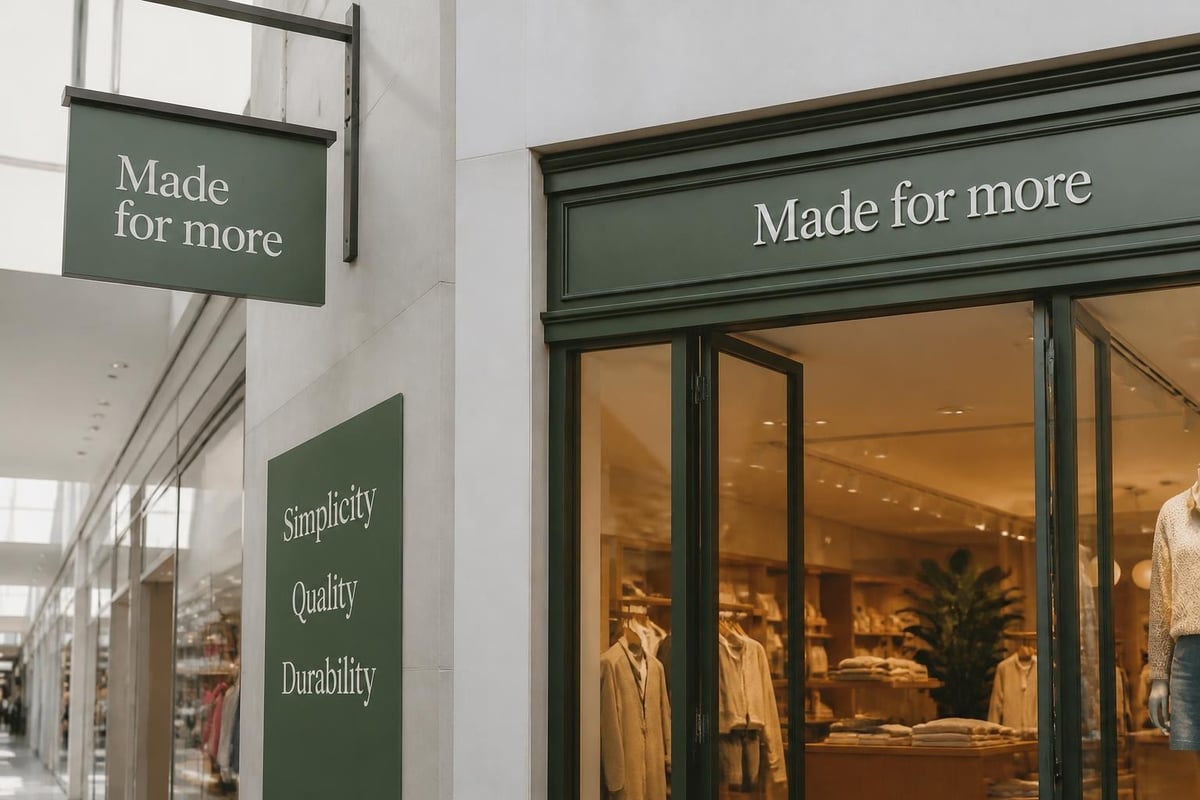
The International Council of Shopping Centers offers practical guidance on creating effective retail signage that balances brand consistency with attention-grabbing design. Their research confirms that stores with coherent visual merchandising strategies, including signage, achieve higher customer satisfaction scores and improved conversion rates.
Categories of Signage in Retail Spaces
Understanding the different categories of retail signage helps businesses deploy the right solution for each specific need. Each category serves distinct purposes within the customer journey.
Wayfinding and Directional Signage
Navigation systems within retail environments reduce customer frustration and increase exploration of the entire space. Department stores, shopping centres, and large-format retailers particularly benefit from clear wayfinding that helps customers locate specific categories, facilities, and exits efficiently.
| Signage Type | Primary Function | Typical Placement | Design Priority |
|---|---|---|---|
| Directory boards | Overview of store layout | Entrance areas | Clarity and hierarchy |
| Hanging aisle markers | Department identification | Ceiling suspension | Visibility from distance |
| Floor graphics | Directional guidance | High-traffic pathways | Durability and contrast |
| Exit indicators | Safety and navigation | Regulatory positions | Compliance and legibility |
Promotional and Point-of-Sale Signage
These high-impact displays communicate offers, new arrivals, and calls-to-action that drive immediate purchasing decisions. Promotional signage in retail must balance attention-grabbing design with message clarity, ensuring customers quickly understand the value proposition.
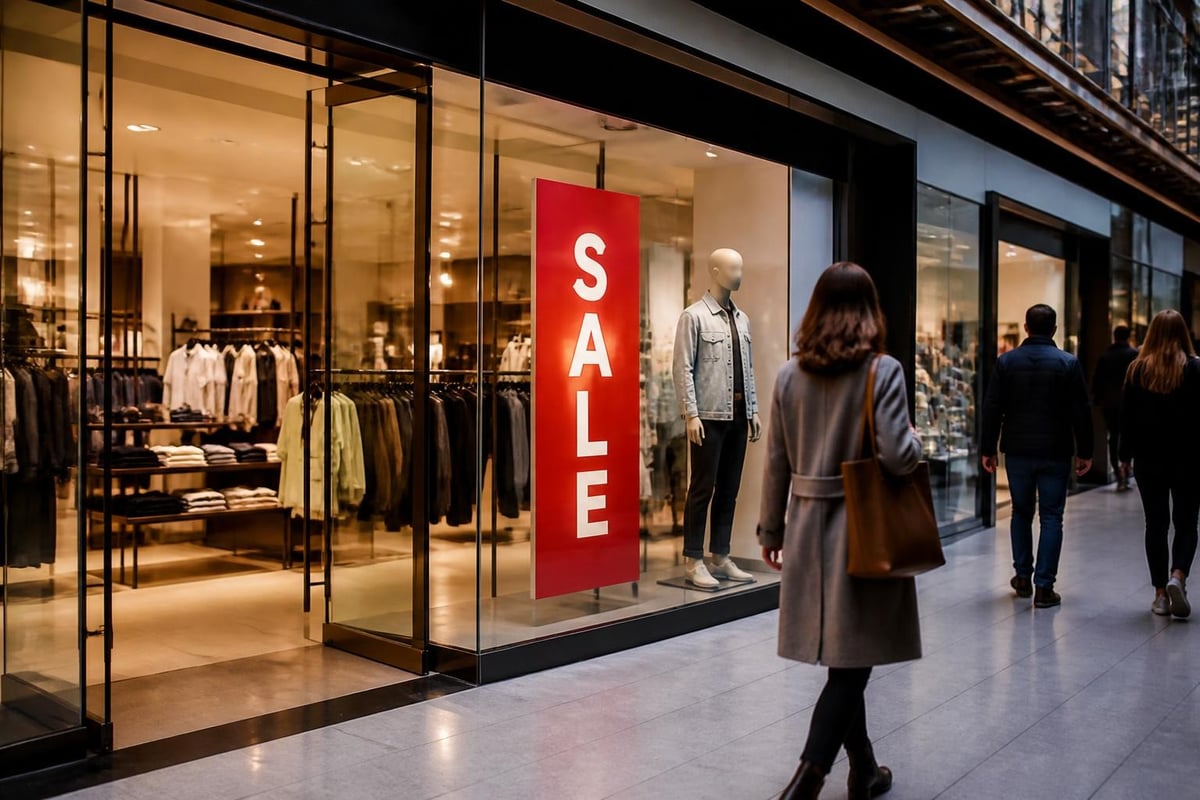
Window displays and promotional banners create the critical first impression that determines whether potential customers enter the store. Research on price perception and left-digit effects reveals how the presentation of pricing information on signage significantly influences purchasing behaviour, with consumers responding more favourably to prices ending in .99 or .95.
Informational and Compliance Signage
Retail spaces require various informational signs that communicate policies, product details, and legal requirements. These signs, whilst often overlooked in design discussions, play essential roles in customer service and regulatory compliance.
Essential informational signage includes:
- Product specifications and ingredient lists
- Return policy statements
- Operating hours and service availability
- Health and safety notices
- Accessibility information
The U.S. Access Board provides comprehensive technical requirements for accessibility signage, including tactile characters, Braille, and placement standards that ensure retail environments serve all customers effectively. Whilst focused on American regulations, these principles inform international best practices for inclusive retail design.
Digital Signage Revolution in Modern Retail
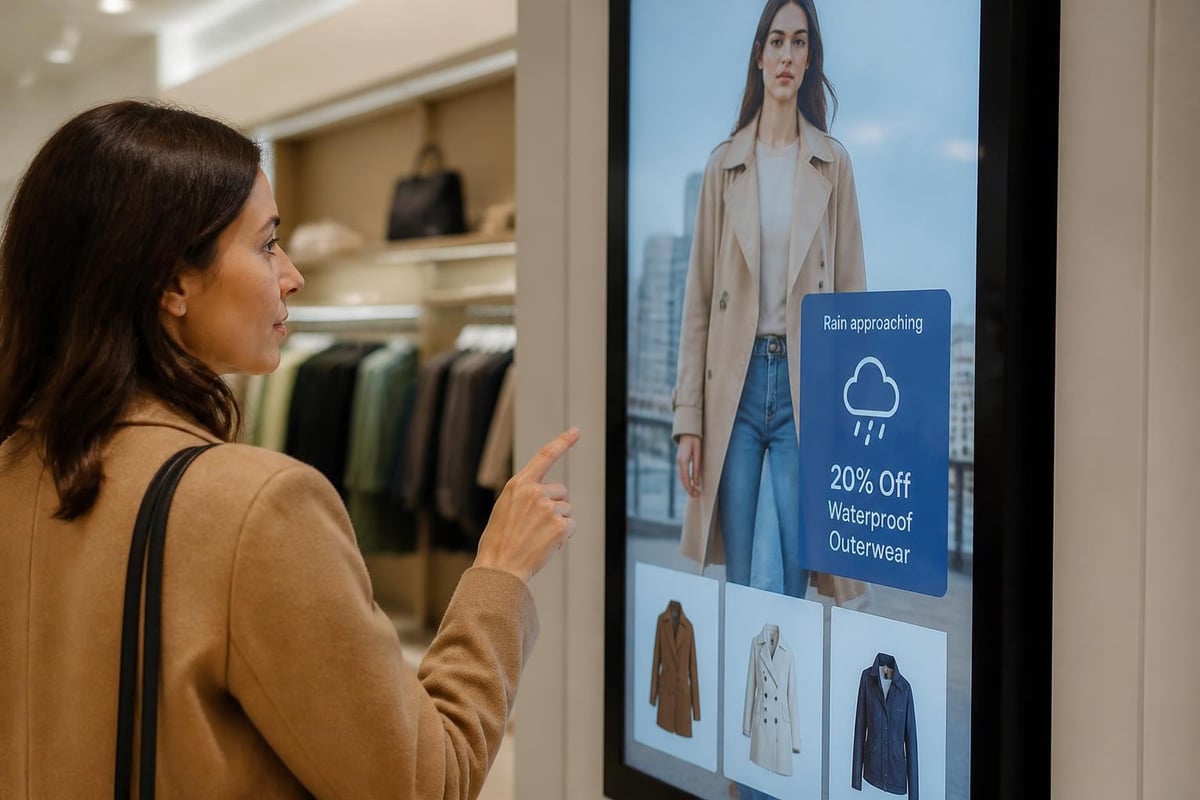
The integration of digital displays has fundamentally transformed signage in retail, creating dynamic content opportunities that static signs cannot match. Digital signage enables real-time updates, personalised messaging, and interactive experiences that respond to customer behaviour and environmental factors.
Content Management and Dynamic Messaging
Digital signage systems allow retailers to schedule content based on time of day, day of week, or even specific events and weather conditions. Morning commuters might see breakfast promotions, whilst evening shoppers encounter dinner-related offers, all managed through centralised content management platforms.
According to reporting on in-store retail media technology, retailers are increasingly viewing digital signage as advertising inventory, creating new revenue streams by selling space to brand partners whilst maintaining control over the customer experience.
Interactive and Responsive Display Technologies
Touch-screen displays, QR-code integration, and beacon-triggered content create engaging experiences that bridge physical and digital shopping. Customers can access extended product information, check stock availability, or even complete purchases directly through interactive signage terminals.
The customer experience implications of these technologies extend beyond novelty, with research showing that interactive displays increase dwell time and product consideration, particularly for high-involvement purchases where customers seek detailed specifications before committing.
Design Principles for High-Performing Retail Signage
Effective signage in retail balances aesthetic appeal with functional communication. Several established design principles consistently deliver superior performance across diverse retail environments.
Hierarchy and Readability
Visual hierarchy ensures customers process information in the intended order: attention-grabbing headline first, supporting details second, call-to-action third. Typography choices dramatically impact readability, with sans-serif fonts generally performing better for distance viewing whilst serif fonts can convey premium positioning for closer-range informational signs.
Readability guidelines for retail signage:
- One inch of letter height per 10 feet of viewing distance as a baseline calculation
- High contrast between text and background (minimum 70% difference in value)
- Limited word count (maximum seven words for quickly-scanned promotional signs)
- Logical information grouping with white space separation between distinct messages
Colour Psychology and Attention Management
Colour choices in retail signage influence both attention capture and emotional response. Red creates urgency and excitement, making it effective for clearance and limited-time offers. Blue communicates trust and reliability, suitable for policy information and brand messaging. Yellow demands attention and conveys optimism, ideal for highlighting new arrivals or special features.
Illuminated solutions such as lightbox signage enhance visibility in low-light conditions and draw attention in cluttered visual environments, making them particularly valuable for exterior applications and internal feature displays. The consistent, even illumination of lightboxes ensures messages remain legible throughout operating hours, from bright daylight through to evening shopping periods.

| Colour | Psychological Association | Best Retail Applications | Visibility Ranking |
|---|---|---|---|
| Red | Urgency, excitement, appetite | Sale signs, clearance, food retail | High |
| Blue | Trust, calm, professionalism | Corporate messaging, service information | Medium |
| Yellow | Optimism, attention, caution | New arrivals, warnings, impulse categories | Very High |
| Green | Health, nature, permission | Organic products, eco-messaging, proceed actions | Medium-High |
| Black | Luxury, sophistication, authority | Premium brands, exclusivity messaging | Low (requires contrast) |
Material Selection and Durability Considerations
The physical materials used in retail signage directly impact longevity, maintenance requirements, and brand perception. Material choices must account for installation environment, expected lifespan, and budget constraints whilst maintaining visual appeal.
Indoor Versus Exterior Applications
Interior signage enjoys protected conditions that allow for delicate materials and finishes. Paper-based posters, foam boards, and lightweight plastics perform adequately when shielded from weather and direct sunlight. Exterior signage faces UV exposure, temperature fluctuations, moisture, and wind loading, demanding weather-resistant materials such as aluminium composite panels, acrylic, and marine-grade vinyls.
Retailers operating across multiple locations benefit from banner stands and portable display solutions that maintain consistency whilst allowing for location-specific messaging. These systems provide professional presentation with straightforward setup and breakdown, supporting seasonal campaigns and promotional events.
Maintenance and Lifecycle Planning
Signage in retail requires ongoing maintenance to preserve effectiveness. Faded graphics, burnt-out illumination, and damaged mounting hardware create negative brand impressions that undermine marketing investments. Establishing maintenance schedules with regular inspections ensures signs continue performing their intended functions.
Typical maintenance intervals:
- Monthly: Visual inspection of all signs for damage or performance issues
- Quarterly: Cleaning of illuminated signs and replacement of failed lamps
- Annually: Comprehensive assessment of structural mounting and electrical connections
- Biannually: Evaluation of graphic content relevance and replacement planning
Regulatory Compliance and Accessibility Standards
Legal requirements significantly influence signage in retail, with regulations governing safety information, accessibility features, and truthfulness in advertising. Non-compliance risks penalties, customer alienation, and potential litigation.
The ADA guidance on accessibility extends beyond digital properties to physical environments, requiring retail spaces to provide accessible information through appropriate signage. This includes tactile and Braille signage at permanent rooms and spaces, appropriate colour contrast for visually impaired customers, and mounting heights that accommodate wheelchair users.
Mandated Signage Requirements
Specific retail sectors face additional signage obligations beyond general accessibility standards. Research from implementation studies in mandated retail signage documents the practical challenges of compliance, including visibility requirements, placement specifications, and monitoring protocols that ensure regulations achieve their intended outcomes.
Food retailers must display allergen information, nutritional data, and origin labelling. Retailers selling age-restricted products require clear point-of-sale notices about verification requirements. Building safety regulations mandate emergency exit signage with specific illumination, sizing, and placement parameters.
Measuring Signage Effectiveness and Return on Investment
Sophisticated retailers track signage performance through various metrics that connect communication investments to business outcomes. This data-driven approach enables continuous improvement and justifies ongoing signage budgets.
Quantitative Performance Indicators
Sales lift analysis compares product performance before and after new signage implementation, isolating the impact of improved communication. Category sales, basket size, and conversion rates provide measurable indicators of signage effectiveness.
Foot traffic patterns captured through sensors or video analytics reveal whether wayfinding signage successfully distributes customers throughout the space or if concentrated traffic suggests navigation failures.
Dwell time measurements at specific displays indicate engagement levels, with longer viewing duration generally correlating with higher consideration and purchase likelihood.
Qualitative Assessment Methods
Customer surveys and observational research complement quantitative data by uncovering perceptions and pain points. Questions about ease of navigation, clarity of promotional offers, and overall shopping experience satisfaction provide actionable insights for signage improvements.
Mystery shopping programmes specifically evaluate signage visibility, message comprehension, and consistency across multiple locations, identifying training opportunities and design refinements.
Integration with Omnichannel Retail Strategies
Modern signage in retail extends beyond standalone communication, integrating with broader omnichannel marketing efforts that connect physical and digital customer touchpoints. QR codes on shelf signage link to extended product information, video demonstrations, and online reviews, enriching the in-store research process.
The National Retail Federation research on retail trends highlights how leading retailers coordinate in-store signage with mobile apps, social media campaigns, and e-commerce platforms, creating consistent messaging across all channels whilst leveraging the unique strengths of each medium.
Social Media Amplification Through Instagrammable Moments
Strategic placement of visually striking signage creates photo opportunities that customers share on social platforms, extending brand reach beyond the physical store. Feature walls, artistic installations, and creatively designed promotional displays generate organic social content that attracts new customers whilst reinforcing brand identity among existing followers.
Hashtag prompts on signage encourage social sharing whilst allowing retailers to track user-generated content and engagement levels. This transforms static signage into interactive marketing assets that contribute to digital strategies.
Future Trends Shaping Retail Signage
Emerging technologies and changing consumer expectations continue reshaping signage in retail. Understanding these developments helps businesses future-proof their visual communication investments.
Artificial intelligence enables personalised signage that adapts based on detected demographics, time of day, or even individual customer recognition through loyalty programme integration. Privacy considerations require careful implementation, but the potential for relevant, timely messaging represents significant advancement over one-size-fits-all approaches.
Sustainability concerns influence material choices, with retailers increasingly selecting recyclable substrates, energy-efficient illumination, and longer-lasting solutions that reduce replacement frequency. Customers notice and appreciate environmental responsibility, with sustainable signage choices contributing to broader corporate social responsibility narratives.
Augmented reality applications overlay digital information onto physical environments through smartphone cameras, transforming simple directional signs into rich, interactive experiences. Early adopters experiment with AR wayfinding, virtual product try-on features activated by scanning signage, and gamified shopping experiences that increase engagement and dwell time.
Strategic signage in retail combines thoughtful design, appropriate technology selection, and continuous performance evaluation to create environments that guide, inform, and persuade customers effectively. Whether implementing traditional printed solutions, advanced digital displays, or hybrid approaches, success depends on understanding customer needs, maintaining brand consistency, and measuring outcomes against clear objectives. Signshoponline delivers comprehensive signage solutions tailored to retail environments, from eye-catching promotional displays and durable exterior signs to sophisticated digital systems that transform customer experiences. Explore their full range of custom retail signage options to elevate your store's visual communication and drive measurable business results.


